





— Blogs —
—Products—
 Consumer hotline +8618073152920
WhatsApp:+8615367865107
Address:Room 102, District D, Houhu Industrial Park, Yuelu District, Changsha City, Hunan Province, China
Product knowledge
Time:2026-09-23 11:00:00 Popularity:176
Quick Answer: RAS water quality monitoring should distinguish the water experienced by the stock from the performance of the treatment loop. Measure dissolved oxygen and temperature where fish or shrimp are exposed, track pH and nitrogen-related conditions around biofiltration, and add salinity, solids or other measurements where the production process requires them. Select instruments against the actual operating and alarm levels, not the largest available measurement range.
A recirculating aquaculture system reuses water through a treatment sequence that may include solids removal, biofiltration, gas exchange, oxygenation and disinfection. Equipment order and operating conditions vary. Draw the actual loop before deciding where probes belong; a sensor package for a shrimp nursery can differ from one for a freshwater fish grow-out installation.
One reading at the common return may describe treated supply water while missing an oxygen problem inside a heavily loaded tank. Conversely, a tank outlet cannot by itself explain whether a biofilter or oxygenation stage is performing as intended. Give each measurement a process location and a question to answer.
| Measurement location | Useful observations | Decision supported |
|---|---|---|
| Culture tank or representative outlet | DO, temperature and relevant pH or salinity | Check stock exposure and respond to an abnormal tank condition. |
| Biofilter inlet and outlet | Appropriate nitrogen measurements, pH, temperature and oxygen context | Investigate treatment performance rather than relying on one downstream value. |
| After solids separation | Turbidity or a suitable solids measurement | Track changes associated with separator operation and cleaning. |
| Makeup water and mixing point | Temperature, conductivity, salinity and required source-water checks | Check changes introduced by replenishment or blending. |
| Oxygenation and circulation equipment | Equipment status, flow and appropriate water measurements | Distinguish a command from confirmed water or oxygen delivery. |
Online recirculating aquaculture sensors complement, rather than remove, a sampling program. Nitrite, alkalinity, carbon dioxide and other parameters may require additional instruments or periodic tests. A package covering several convenient channels is not automatically a complete assessment of fish tank water quality.
Dissolved oxygen monitoring needs a representative, continuously wetted point. Avoid mounting directly in a bubble plume merely because the location is easy to reach. Also avoid stagnant pockets that do not represent the stock. Confirm the location by comparing readings at relevant tank positions under normal circulation and feeding conditions.
A good oxygen value immediately after oxygenation does not prove that the same value persists throughout the culture tank. Keep circulation status and stock loading in the operating context. When the value falls, the operator needs to know whether water delivery, oxygen supply or the measurement itself has failed.
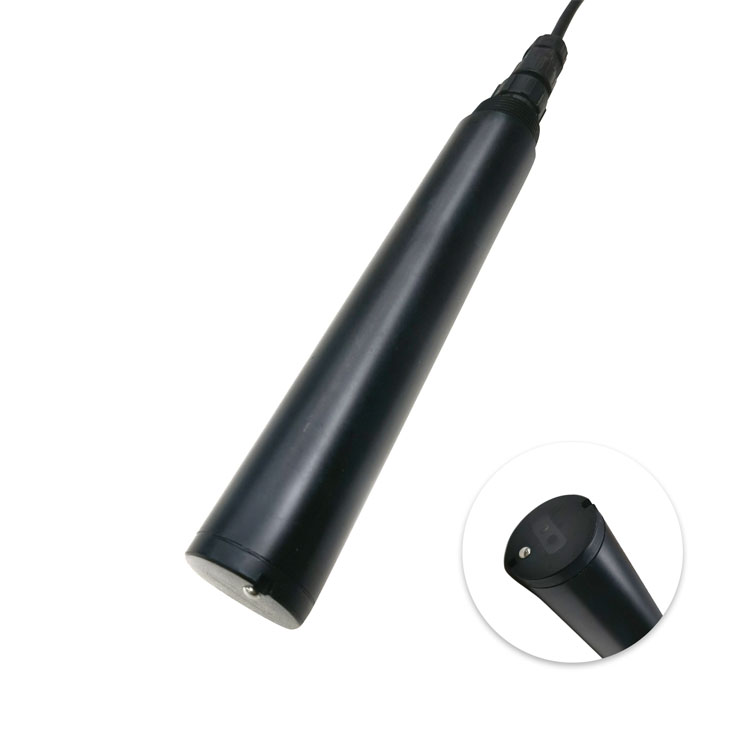
The NiuBoL NBL-WQ-DO-4A uses fluorescence-based oxygen measurement. It does not consume oxygen at the sensing surface, but its optical cap still needs inspection and a representative contact with water. Temperature and salinity settings must be appropriate to the water; compensation does not make a fouled or bubble-obstructed sensing surface reliable.
| NBL-WQ-DO-4A characteristic | Selected specification | Meaning in a RAS installation |
|---|---|---|
| DO range / resolution | 0-20 mg/L / 0.01 mg/L | Resolution is not the uncertainty at a low-oxygen alarm. |
| Accuracy | +/-2% FS; temperature +/-0.3 degrees C | For a 20 mg/L full scale, the DO term is +/-0.4 mg/L, not 2% of every reading. |
| Working conditions | 0-45 degrees C; pressure below 0.2 MPa | Check process temperature and pressure independently of enclosure protection. |
| Power | 12-24 VDC configuration; less than 0.3 W at 12 V | Include the actual logger, communications and other sensor loads separately. |
| Output | RS485 / Modbus RTU; 4-20 mA optional | Order the interface supported by the receiving controller. |
| Mechanical arrangement | IP68 immersion probe; 5 m cable; POM and 316L stainless steel body | Provide a removable mount and protect cable joints; confirm wetted-material suitability. |
Alarm thresholds must be set for the species, life stage and production method by the farm's responsible technical team. Allow for measurement uncertainty and response delay. A threshold placed too close to the minimum acceptable condition may leave little time for action, even when the instrument meets its stated specification.
Ammonium, total ammonia nitrogen and un-ionized ammonia are not interchangeable display labels. Establish the reporting basis of each instrument and laboratory method before comparing them. The fraction present as un-ionized ammonia depends on water chemistry, including pH and temperature; a compensation feature is not evidence that every relevant correction is implemented.
The NBL-WQ-NHN-4S is an ammonium ion-selective sensor with selectable 0-100 or 0-1000 mg/L ranges. Its stated accuracy is +/-10% or +/-1 mg/L, with the percentage reference and applicable rule to be agreed for the configuration. A 0.01 mg/L display increment on the lower range does not establish suitability for a much smaller alarm increment.
Check an ammonia sensor at the actual concentrations and water matrix required by the project, particularly in saline or ionically complex water. Use paired samples and the appropriate reference method. Where the required low-level discrimination is beyond the chosen electrode's demonstrated performance, select another measurement approach rather than relying on extra decimal places.
Biofilter monitoring also needs pH and alkalinity context. A stable pH reading alone does not measure alkalinity or confirm nitrogen removal. If inlet and outlet measurements are compared, account for hydraulic travel time and changing feed load; two samples taken at the same clock time may not represent the same parcel of water.
Aquaculture salinity measurement is relevant to brackish and marine production, makeup-water blending and shrimp RAS monitoring. Conductivity responds to dissolved ions, while salinity is derived using a selected conversion and reference conditions. Record the unit and method rather than treating PSU, g/L and conductivity units as interchangeable.
For freshwater fish, conductivity may reveal a change in the water or dosing process without identifying the chemical responsible. It does not directly measure ammonia or alkalinity. For saline systems, confirm the sensor range and compensation settings across the expected operating band.
Turbidity can help trend solids-related changes, but NTU is not a universal suspended-solids concentration. Feed particles, fine waste and bubbles can affect optical readings differently. Establish the local relationship if a solids estimate is needed, and investigate an unexpected rise against filter status, cleaning events and water appearance.
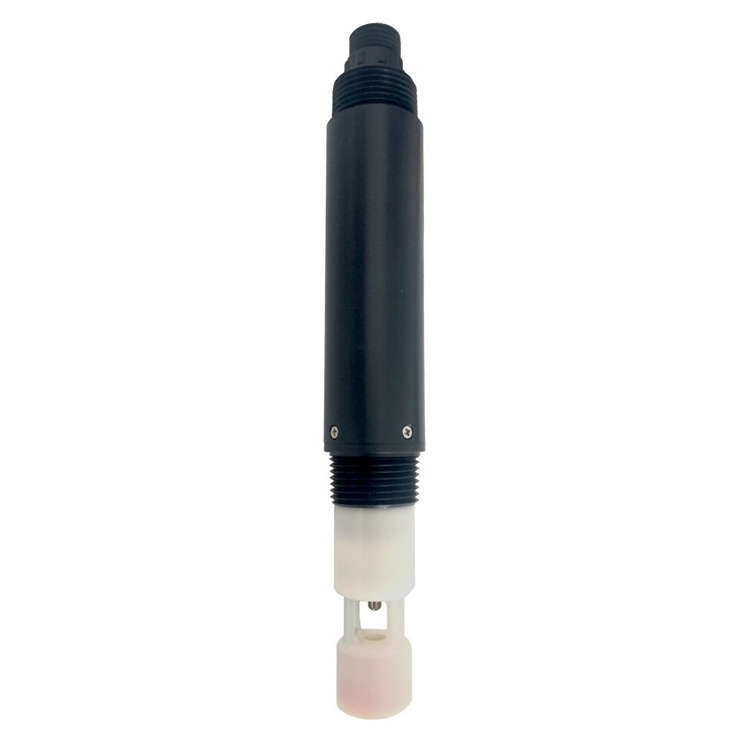
A modular arrangement with separate DO, pH, conductivity and turbidity probes allows different locations and replacement schedules. An integrated NiuBoL NBL-WQ-MPS-5A configuration can combine selected measurements with automatic cleaning at one suitable point. Its optional channels must be listed in the order; an eight-parameter capability does not mean every unit contains every probe.
The MPS-5A supply is 12 VDC +/-5%, with a stated 5 W consumption at 12 V and a standard 5 m cable. Do not place that configuration directly on a 24 V sensor bus. Match supply tolerance, cable voltage drop and cleaning-cycle demand before sharing power with other equipment.
Automatic brushing can help manage surface deposits, but it does not remove all calibration or service work. Check brush wear, fouling around probe openings and whether the mount allows removal without interrupting essential circulation. Separate a cleaning event from a process alarm if the selected instrument temporarily invalidates readings during service.
RS485 / Modbus RTU integration requires the actual address, serial settings, register map, units and invalid-value handling. Use a PLC, RTU, controller or data logger capable of reading the selected instruments; there is no requirement to route a RAS through a weather-station logger.
Test a failed sensor and an interrupted network separately. The system should not turn an unavailable DO channel into a valid zero or keep an old normal value looking current. Essential aeration, circulation and protection need a locally designed control arrangement, not dependence on a phone receiving a cloud notification.
For a side-stream installation, verify that sample flow continues and quantify transport delay where it matters. A clean sample chamber can display plausible water quality while being isolated from the process by a closed valve. Mark the channel unavailable when its sample is not representative.
Commission the measurement locations and data path before enabling automatic actions. Compare appropriate reference readings, check timestamps and observe normal feeding, cleaning and equipment cycles. Then simulate loss of a channel or communication under an approved test procedure and confirm who receives each alarm.
For quotation, send NiuBoL the species, life stage, water type, tank and treatment layout, operating ranges, proposed alarm levels and receiving interface. Identify the channels required continuously and those covered by sampling. Ask for the actual configured probes, holders, cleaning parts, cable lengths and commissioning scope instead of comparing packages only by parameter count.
Not automatically. Loading, circulation and local oxygen demand can differ. Decide whether the point represents treated supply, a specific tank or a combined return, and add locations when the operating decision requires them.
Prioritize conditions that can change faster than the farm can inspect them, with DO and temperature commonly important. The final list depends on stock, process and response requirements; other parameters may need additional online instruments or sampling.
No. Check stated uncertainty, selectivity and comparisons at the required concentration. More decimal places do not establish the ability to distinguish a small change near an action level.
No. pH and buffering capacity are different properties. Maintain the alkalinity checks required by the biofilter management program rather than inferring them from one pH number.
Yes, especially in brackish or marine water. Confirm how the selected DO sensor receives or uses salinity information. A built-in compensation feature does not necessarily include a live salinity measurement.
No. Inspect the cleaner, sensing surfaces and consumables, and perform the relevant verification and calibration. Set service intervals from observed fouling instead of assuming one interval fits every RAS.
No. Alarm delivery can be delayed or unavailable. Keep essential equipment response local and test the operator escalation route as a separate function.
Compare the same locations, installed channels, accuracy requirements and service scope. Include mounts, power, controller, cleaning parts and commissioning; a bare probe price is not an installed monitoring system price.
RAS water quality monitoring is useful when each measurement describes a defined process point and supports a timely response. Specify realistic sensor performance at the farm's operating levels, preserve the distinction between nitrogen forms and other water properties, and validate the complete installation before relying on automatic alarms or control.
Prev:Aquaculture Water Quality Monitoring System: Power Loss and Aerator Feedback
Next:Industrial Wastewater Monitoring Points from Influent to Final Discharge
Related recommendations
Sensors & Weather Stations Catalog
 Agriculture Sensors and Weather Stations Catalog-NiuBoL.pdf
Weather Stations Catalog-NiuBoL.pdf
Agriculture Sensors Catalog-NiuBoL.pdf
Water Quality Sensor Catalog-NiuBoL.pdf
Related products
 Combined air temperature and relative humidity sensor
 TDR Soil Moisture & Temperature Sensor for irrigation| RS485 |4-20mA| NBL-S-THR
 Soil pH sensor RS485 soil Testing instrument soil ph meter for agriculture |NBL-S-PH
 Wind Speed sensor Output Modbus/RS485/Analog/0-5V/4-20mA
 Tipping bucket rain gauge for weather monitoring auto rainfall sensor RS485/Outdoor/stainless steel
 Pyranometer Solar Radiation Sensor 4-20mA/RS485


Screenshot, WhatsApp to identify the QR code
WhatsApp number:+8615367865107
(Click on WhatsApp to copy and add friends)

