





— Blogs —
—Products—
 Consumer hotline +8618073152920
 WhatsApp:+8615367865107
Address:Room 102, District D, Houhu Industrial Park, Yuelu District, Changsha City, Hunan Province, China
Product knowledge
Time:2025-12-22 14:22:13 Popularity:795
Water is the lifeblood of Earth's ecosystems. In the field of water quality monitoring, there is a parameter that intuitively reflects the abundance of dissolved substances in water like a “fingerprint”—that is conductivity. The magnitude of conductivity directly depends on the concentration of dissolved salts (electrolytes) in water. Whether controlling the concentration multiple of industrial circulating water or detecting the purity of drinking water, conductivity is a core indicator for assessing water quality conditions.
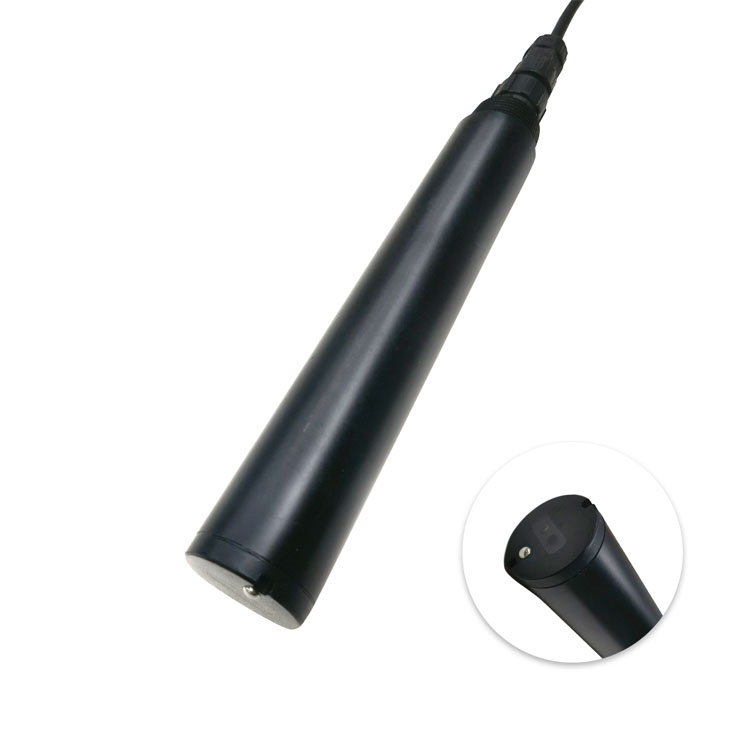
To achieve precise and real-time perception of water quality, the NBL-DDM-206A digital conductivity sensor launched by NiuBoL Technology, with its excellent stability, high-precision measurement capabilities, and convenient integration features, has become the preferred solution in the smart water affairs field.
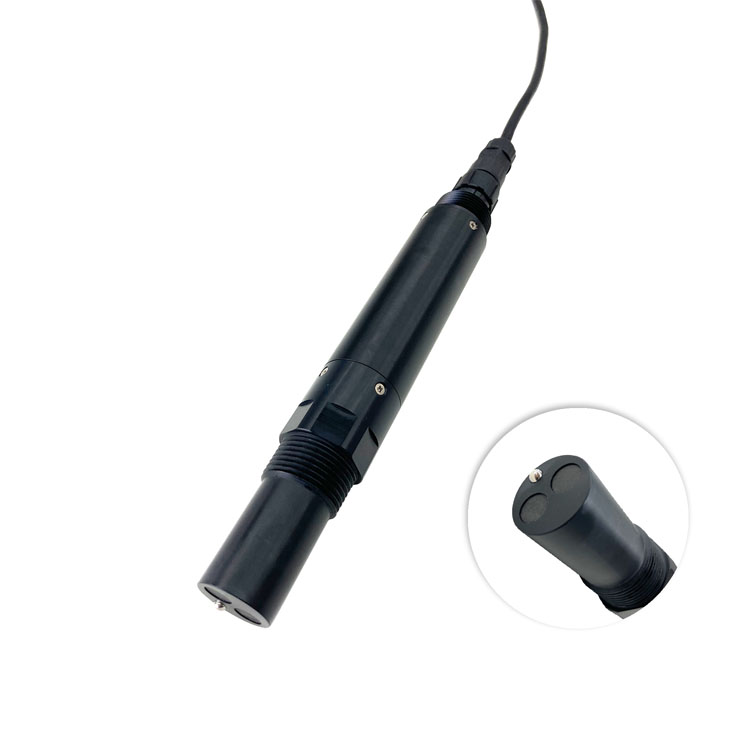
Definition and Measurement Object
A water conductivity sensor is a precision instrument used to measure the ability of a liquid to conduct current. The NBL-DDM-206A not only measures conductivity (EC value) but also synchronously converts total dissolved solids (TDS) content and water temperature through built-in algorithms.
Measurement Principle: From Ion Migration to Data Conversion
The basis of conductivity measurement is the migration of ions under an electric field.
Electrode Method Principle: The sensor usually adopts a two-electrode or multi-electrode structure. When a stable AC voltage is applied between two electrodes, positive and negative ions in the solution move directionally to form current. The magnitude of the current is proportional to the ion concentration in the solution.
Conductivity Cell Constant (K): Different measurement ranges correspond to different electrode geometries. NiuBoL provides multiple constant options such as K=0.1, 1.0, 10.0 to adapt to different needs from ultrapure water to high-salinity wastewater.
Automatic Temperature Compensation: Solution conductivity is greatly affected by temperature. The NBL-DDM-206A has a built-in Pt1000 temperature sensor that captures temperature changes in real-time and performs automatic compensation, ensuring measurement results are converted to values at standard temperature (usually 25°C) under different temperature differences.
The NBL-DDM-206A design balances precision and durability, mainly consisting of the following parts:
Sensing Electrode: Default uses SUS316L stainless steel material with excellent corrosion resistance; the housing uses high-performance ABS material, ensuring overall lightweight and robustness.
Signal Processing Unit: Internally integrates high-impedance amplification circuits and digital processing chips, converting weak electrical signals into stable digital data.
Digital Output Interface: Adopts standard RS-485 communication method, capable of long-distance signal transmission with extremely strong anti-electromagnetic interference capability.
Physical Interface: Adopts 3/4 NPT pipe thread design; this standardized industrial interface makes it extremely convenient for both immersion and pipeline installation.
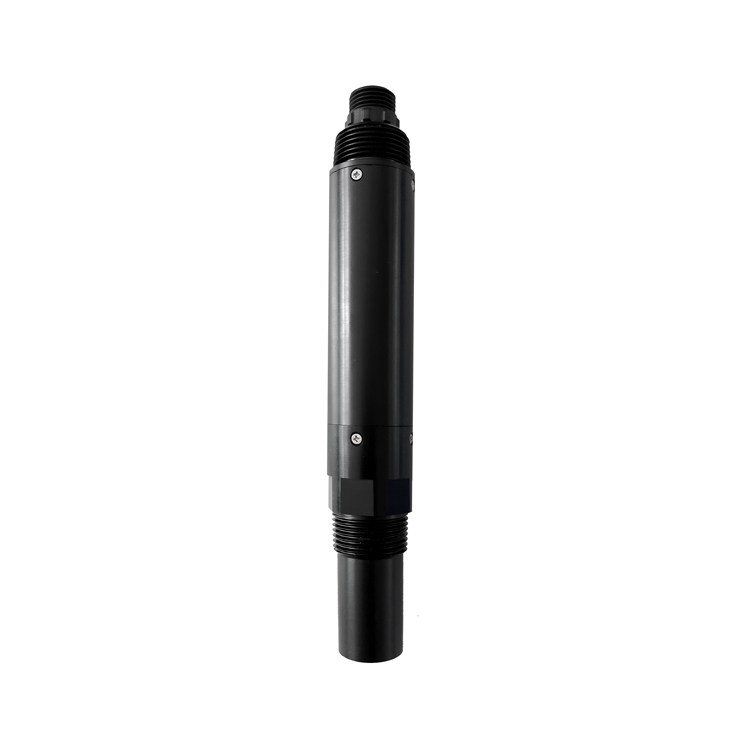
To facilitate system integrators and end users, the key technical parameters of NBL-DDM-206A are summarized in the table below:
| Parameter | Specification |
|---|---|
| Measurement Parameters | Conductivity (EC), TDS, Temperature |
| Measurement Range - Conductivity | 0~20 μS/cm / 0~200 μS/cm / 0~5000 μS/cm / 0~200 mS/cm |
| Measurement Range - TDS | 0-10 mg/L to 0-3000 mg/L (depending on electrode constant) |
| Measurement Accuracy | ±1.5% FS (Conductivity), ±0.3℃ (Temperature) |
| Output Protocol | RS-485 (Modbus/RTU) |
| Power Supply Requirements | 12~24V DC |
| Protection Level | IP68 (supports long-term immersion in water) |
| Operating Conditions | Ambient Temperature: 0~50℃, Pressure < 0.6MPa |
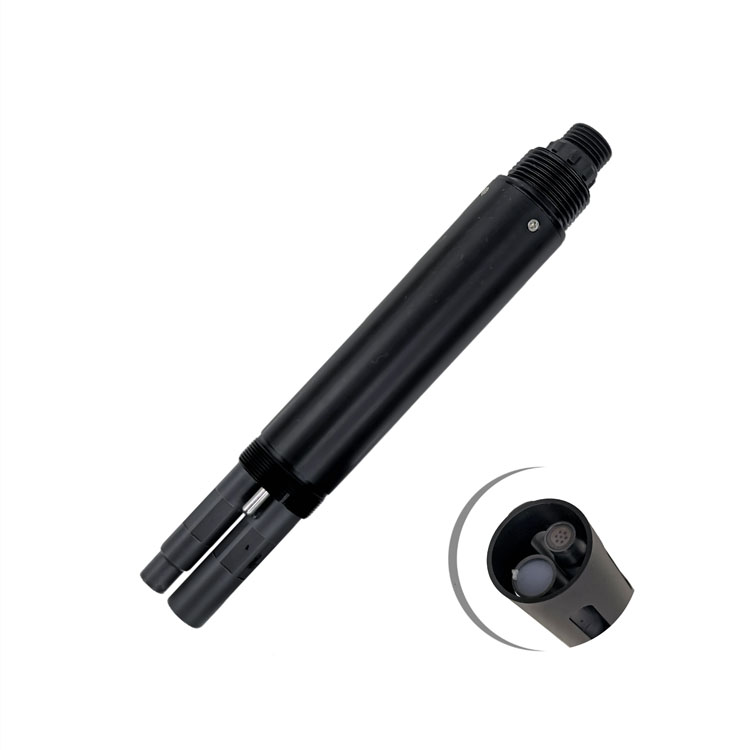
Efficiency and Convenience Brought by Digitization
The NBL-DDM-206A outputs standard digital signals, directly connectable to PLC, DCS, industrial control computers, or various IoT gateways. Compared to analog signals, it eliminates attenuation from long-distance transmission, making data acquisition more accurate.
Excellent Stability and Repeatability
The sensor exhibits extremely high repeatability under complex conditions, with highly consistent multiple measurement results. Low power consumption design (only 0.2W) enables long-term endurance in field solar-powered monitoring stations.
Diverse Electrode Adaptation
Users can flexibly choose electrodes with different constants based on expected water quality concentration:
K=0.1: Suitable for low-concentration water quality, such as boiler makeup water and pure water systems.
K=1.0: Suitable for conventional drinking water, surface water, and industrial circulating water.
K=10.0: Suitable for high-concentration sewage, seawater, or high-salinity industrial water treatment.
Strong Tolerance Capability
Features IP68 protection level, not only dustproof but also resistant to long-term immersion erosion. SUS316L material wetted parts ensure chemical stability in various water supply and industrial water environments.
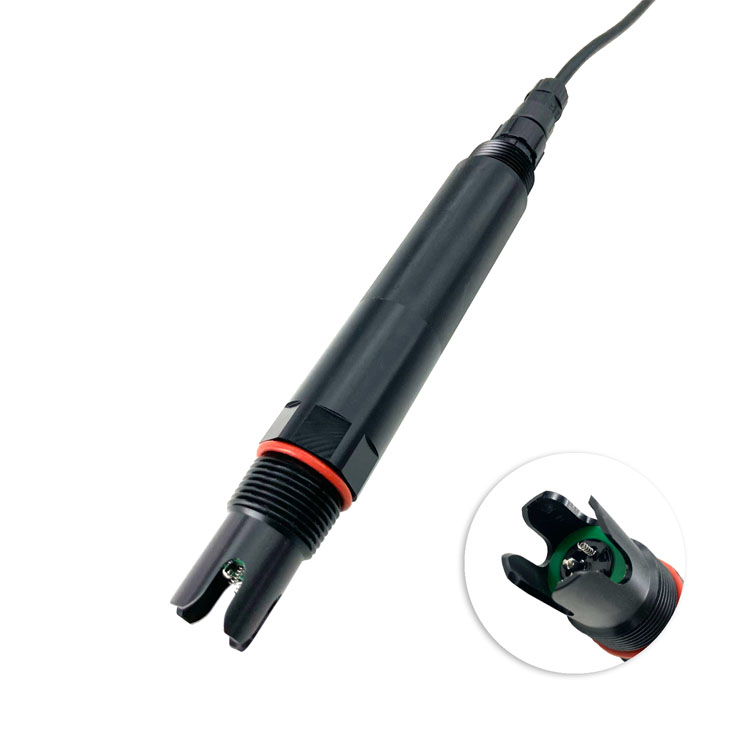
Drinking Water Monitoring: Real-time monitors salt content in water plant effluent, pipeline network water, and terminal supply water to ensure drinking water safety.
Surface Water and Environmental Monitoring: Used in river and lake monitoring stations to assess water mineralization degree and pollution risk.
Industrial Process Control: Monitors industrial water quality in chemical, power, food, and other industries to prevent equipment corrosion or scaling.
Smart Agriculture: Monitors EC value of fertilizer solution in water-fertilizer integration systems for precise fertilization.
Installation Method
The sensor supports immersion and submersible installation. Through 3/4 NPT thread, it can be easily fixed in tanks, sinks, or beside stable-flow pipelines. Recommend installation in areas with stable flow and no bubble accumulation.
Daily Maintenance
Cleaning Method: If attachments on electrode surface, gently remove with soft brush (strictly prohibit sharp metal to avoid scratching electrode surface), then rinse with distilled water.
Storage Notes: Long-term unused electrodes should keep measurement window clean and store in dry, cool place.
Calibration Process
Recommend regular two-point calibration to maintain accuracy:
Zero Point Calibration: Clean and dry the sensor, place vertically in air, perform zero correction after value stabilizes.
Slope Calibration: Place sensor vertically in standard solution, ensure probe at least 2 cm from container bottom and side walls, perform slope correction based on standard liquid value.
Q1: What is the relationship between conductivity and TDS?
A: TDS (Total Dissolved Solids) refers to all solid substances dissolved in water. There is a linear correlation between conductivity and TDS, usually converted by formula TDS = k * EC, where the k coefficient varies slightly with different salt components in water quality. NiuBoL sensors have built-in scientific conversion coefficients.
Q2: Why must conductivity measurement include temperature compensation?
A: Because solution viscosity decreases with rising temperature, ion migration speed increases, causing conductivity to rise with temperature. Without compensation, the same salt content water would produce huge differences in winter and summer measurements.
Q3: Can SUS316L electrodes be used in seawater?
A: SUS316L has good corrosion resistance, suitable for most industrial and natural water bodies. For extremely high-salinity long-term immersion applications, recommend selecting K=10.0 electrode and increasing maintenance frequency to prevent scaling.
Q4: How far can RS485 output signals transmit?
A: RS485 communication can transmit 1200 meters in ideal conditions. Through NiuBoL's digital processing, data integrity and no packet loss are ensured within hundreds of meters without relays.
Q5: Does the sensor require frequent calibration?
A: The NBL-DDM-206A has excellent stability. For conventional surface water monitoring, recommend calibration every 3-6 months; for industrial wastewater and other scaling-prone environments, recommend monthly electrode cleanliness checks and calibration as needed.
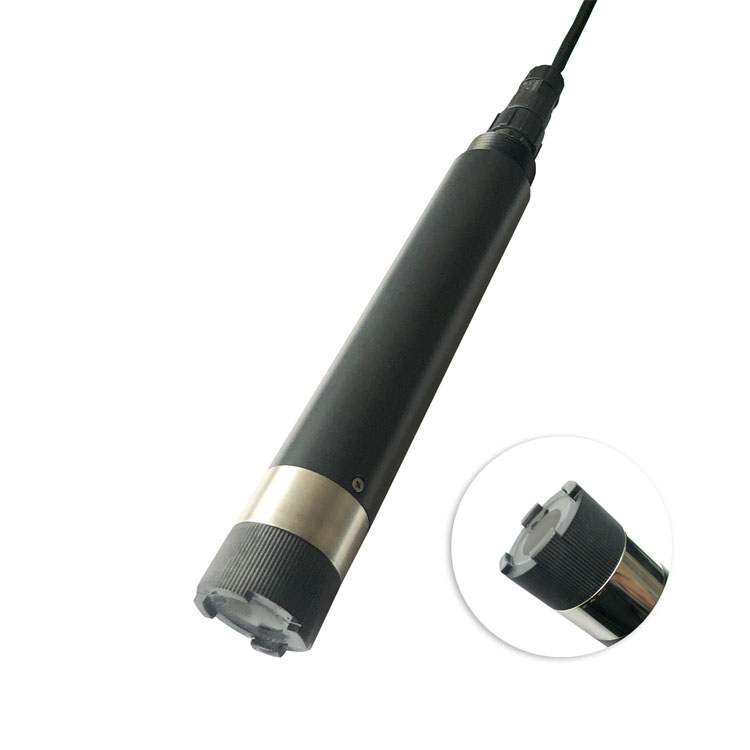
In today's pursuit of digital and refined water resource management, the NiuBoL NBL-DDM-206A conductivity sensor, with its high precision, multi-constant options, and strong Modbus compatibility, transforms complex hydrochemical indicators into intuitive, precise data streams. It not only simplifies monitoring processes but also provides solid technical assurance for environmental decisions through long-term stable data feedback.
Whether building urban smart water networks or optimizing factory water treatment efficiency, NiuBoL can provide professional and reliable perception solutions.
Measurement Indicators: Conductivity / Total Dissolved Solids (TDS) / Temperature
Measurement Units: μS/cm, mS/cm (Conductivity) / mg/L (TDS) / ℃ (Temperature)
Protocol: Modbus RTU
Interface: RS-485
Power Supply: 12-24V DC
Protection: IP68 (Deep Waterproof)
Power Consumption: 0.2W (Ultra-Low Power Design)
Thread Specification: 3/4 NPT
Related recommendations
Sensors & Weather Stations Catalog
 Agriculture Sensors and Weather Stations Catalog-NiuBoL.pdf
Weather Stations Catalog-NiuBoL.pdf
Agriculture Sensors Catalog-NiuBoL.pdf
Water Quality Sensor Catalog-NiuBoL.pdf
Related products
 Combined air temperature and relative humidity sensor
 TDR Soil Moisture & Temperature Sensor for irrigation| RS485 |4-20mA| NBL-S-THR
 Soil pH sensor RS485 soil Testing instrument soil ph meter for agriculture |NBL-S-PH
 Wind Speed sensor Output Modbus/RS485/Analog/0-5V/4-20mA
 Tipping bucket rain gauge for weather monitoring auto rainfall sensor RS485/Outdoor/stainless steel
 Pyranometer Solar Radiation Sensor 4-20mA/RS485

Screenshot, WhatsApp to identify the QR code
WhatsApp number:+8615367865107
(Click on WhatsApp to copy and add friends)

