





— Blogs —
—Products—
 Consumer hotline +8618073152920
 WhatsApp:+8615367865107
Address:Room 102, District D, Houhu Industrial Park, Yuelu District, Changsha City, Hunan Province, China
Product knowledge
Time:2026-01-10 16:12:49 Popularity:1108
In the aquaculture industry, there is a saying: "Raise fish by first raising water, raise water by first raising oxygen." Dissolved Oxygen (DO), refers to oxygen in molecular form dissolved in water. It is not only the material basis for the survival of aquatic organisms such as fish, shrimp, and crabs but also the core indicator for measuring water self-purification capacity and evaluating water quality.
The sources of dissolved oxygen in water mainly include atmospheric infiltration, plant photosynthesis, and artificial oxygenation supply. However, dissolved oxygen in water is not constant; it is like the "capital reserve" of the water body, always in a dynamic balance between consumption and replenishment. For modern high-yield, high-density aquaculture farms, how to accurately grasp and maintain high levels of dissolved oxygen directly determines the final production efficiency.
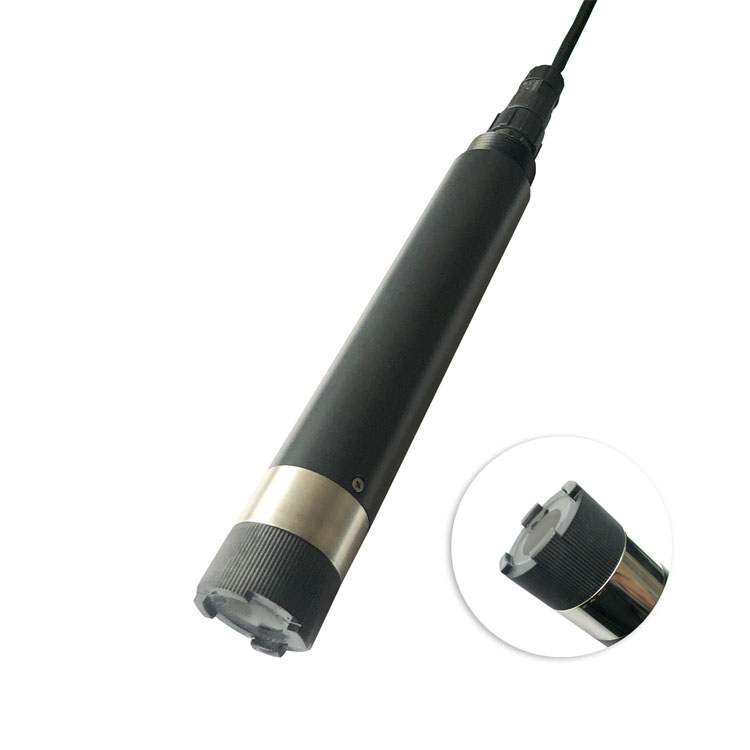
Many farmers focus on feed quality but often overlook the deep influence of dissolved oxygen on feed conversion ratio. The level of dissolved oxygen directly affects the feeding desire, digestion and absorption rate, and growth speed of fish and shrimp.
1. Reduce Feed Conversion Ratio and Save Feed Costs
According to authoritative experimental data, when dissolved oxygen in water decreases from 4mg/L to 3mg/L, the feed conversion ratio of fish doubles. This means that to grow the same amount of meat, double the feed is required in low-oxygen environments, resulting in huge economic waste.
2. Accelerate Growth Cycle
Fish grown in water with dissolved oxygen of 7mg/L grow 20% to 30% faster than those in 4mg/L environments. Sufficient oxygen promotes metabolism in cultured organisms, shortens the pond-out cycle, and improves capital turnover rate.
3. Enhance Immunity and Survival Rate
When dissolved oxygen reaches above 5mg/L, fish and shrimp have strong appetite and their immune systems are at their best. Conversely, long-term hypoxia leads to physiological hypoxia, floating head, and even mass mortality. Therefore, maintaining dissolved oxygen between 5mg/L and 7mg/L is the "golden standard" for achieving high returns in modern high-yield aquaculture.
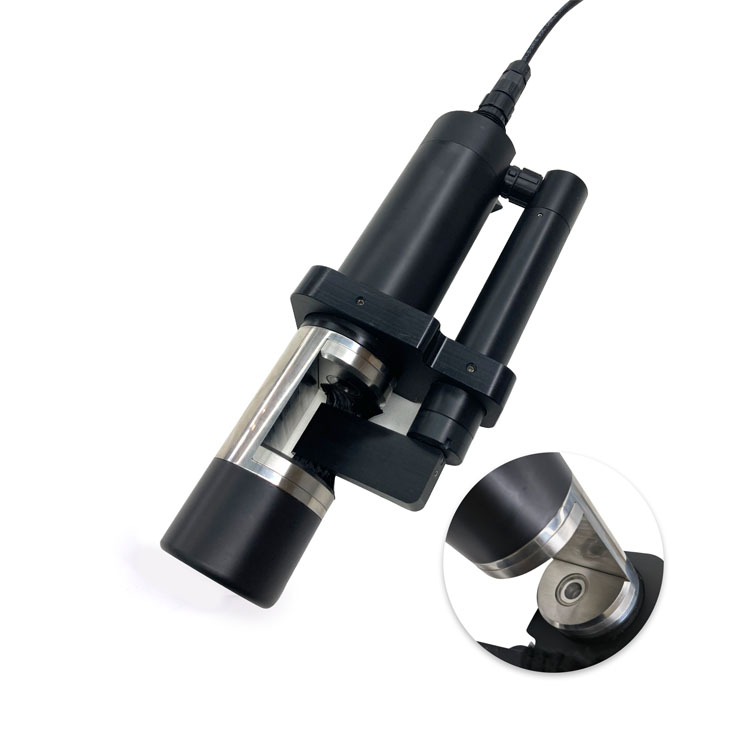
In actual monitoring, dissolved oxygen readings are interfered with by various physical factors. Understanding these factors is the premise for selecting appropriate monitoring equipment.
Temperature has dual effects on dissolved oxygen:
Physical Property Influence: Warm water has much lower oxygen solubility than cold water. As water temperature rises, oxygen molecules gain kinetic energy and are more likely to escape the water surface.
Sensor Scattering Influence: For optical sensors, temperature changes affect the scattering rate of fluorescent substances. For every degree of increase or decrease, the scattering rate fluctuates by about 1.5%. Therefore, NiuBoL sensors all have built-in high-precision thermistors for real-time temperature compensation through software algorithms, ensuring data authenticity.
When salt content in water increases, the binding force between water molecules and ions strengthens, squeezing the space for oxygen molecules and reducing oxygen solubility. For example, at the same air pressure, freshwater at 25°C has about 8.26mg/L dissolved oxygen, while seawater (36ppt) at the same temperature has only 6.72mg/L. In seawater aquaculture monitoring, manual input or sensor algorithm salinity compensation is necessary.
Air pressure directly affects the driving force of oxygen infiltration into water. In high-altitude areas, although the oxygen proportion in air is still about 21%, the total air pressure decreases, leading to reduced oxygen partial pressure. A 100% saturated water sample at sea level shows significantly lower saturation readings at over 1000 meters above sea level.
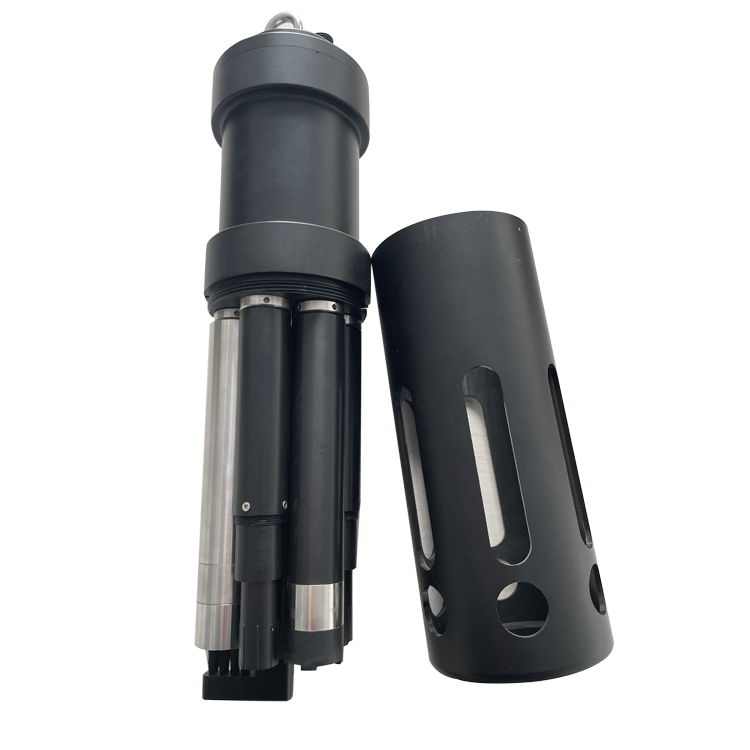
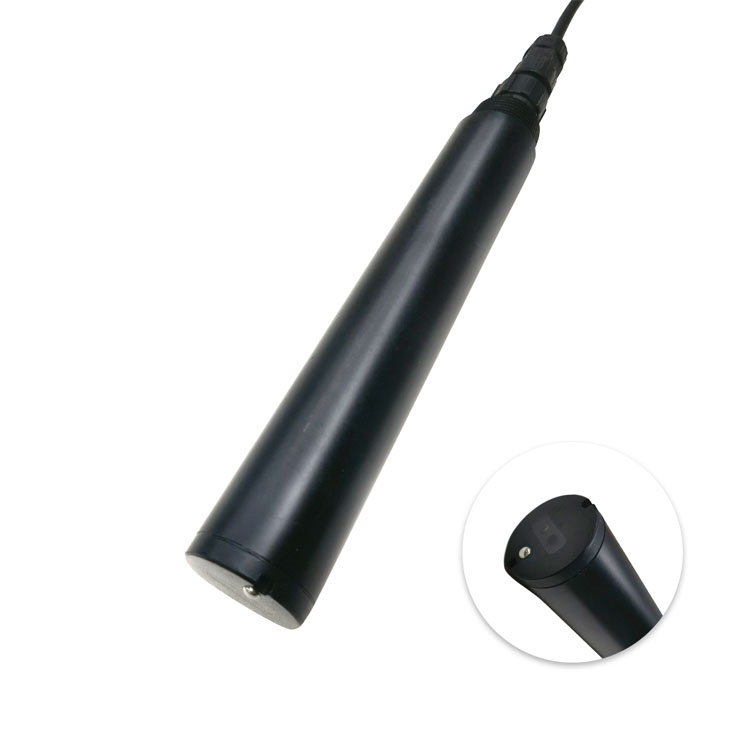
In response to the pain points of traditional membrane electrode sensors requiring frequent electrolyte replacement, being limited by flow velocity, and easily interfered with, NiuBoL has developed the NBL-RDO-206 integrated online fluorescent dissolved oxygen sensor.
The sensor is based on the "quenching principle" of specific substances on excited fluorescence. The fluorescent membrane head at the sensor front is irradiated by blue light to emit red light. Oxygen molecules collide with the excited fluorescent substance, causing fluorescence quenching. By detecting the phase difference between red and blue light and comparing it with the internal calibration curve, the precise oxygen molecule concentration can be calculated.
Maintenance-Free Design: No need to fill electrolyte, no polarization process, fluorescent membrane head replacement is extremely simple.
More Accurate Measurement: Does not consume oxygen, so it works normally even in completely static water bodies and is not interfered with by chemicals such as sulfides.
Highly Intelligent: Built-in Pt1000 temperature sensor supports automatic temperature compensation. It also reserves salinity compensation parameter settings, flexibly adapting to freshwater and seawater environments.
Rugged and Durable: Adopts POM or 316L stainless steel shell, IP68 protection level, supports submersible installation, suitable for harsh outdoor aquaculture environments.
Standard Industrial Interface: Uses RS-485 interface and Modbus RTU communication protocol, easily integrates into automatic control systems for smart closed-loop control with aerators.
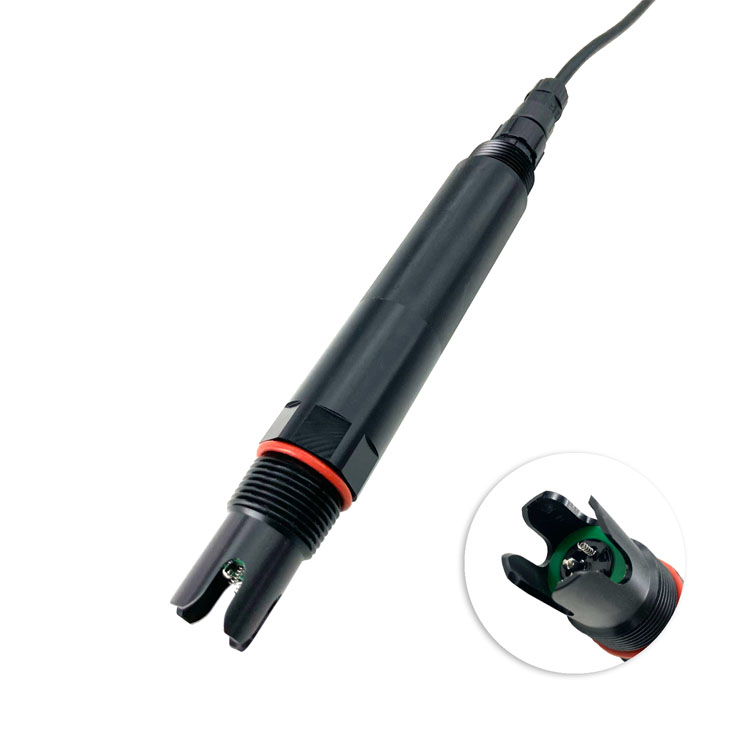
To allow integrators and technicians to more intuitively understand device performance, we have organized the core specifications of NBL-RDO-206 as follows:
| Technical Parameter | Specification |
|---|---|
| Model | RDO-206 |
| Shell Material | POM, ABS/PC alloy, 316L stainless steel |
| Measurement Principle | Fluorescence method |
| Range | 0~20.00 mg/L (0~200% saturation, 25℃) |
| Resolution | 0.01mg/L, 0.1℃ |
| Accuracy | ±2%, ±0.3℃ |
| Response Time (T90) | <30s |
| Minimum Detection Limit | 0.08mg/L |
| Calibration Method | Two-point calibration |
| Cleaning Method | / |
| Temperature Compensation | Automatic temperature compensation (Pt1000) |
| Output Method | RS-485 (Modbus RTU) |
| Storage Temperature | -5~65℃ |
| Operating Conditions | 0~50℃, ≤0.2MPa |
| Installation Method | Submersible installation, 3/4 NPT |
| Power Consumption | 0.2W@12V |
| Power Supply | 12~24V DC |
| Protection Level | IP68 |
| Fluorescent Membrane Head Lifespan | 1 year (under normal use) |
| Cable Length | 5 meters, other lengths customizable |
Q1: Why must I choose a fluorescent sensor instead of a cheaper membrane sensor?
A: Membrane sensors (electrolytic method) require continuous water flow over the probe to replenish consumed oxygen, and the membrane is prone to damage and sulfide contamination, with very high maintenance costs. NiuBoL's fluorescent sensor works accurately even in still water, requiring only simple maintenance once a year or longer, with lower long-term comprehensive costs.
Q2: How to determine if the sensor in my culture pond needs calibration?
A: Usually recommended every 3–6 months. Due to the minimal drift of NBL-RDO-206, it can even run longer in clean water. If data shows abnormal jumps or obviously inconsistent with fish behavior logic, promptly check membrane head fouling and perform two-point calibration.
Q3: Does salinity compensation need frequent adjustment?
A: If you are farming in fixed freshwater or seawater environments, just input the average local salinity value during initial setup. Unless there is a significant change in water source salinity (such as near-shore farming affected by rainfall), no frequent changes are needed.
Q4: If the fluorescent membrane head is covered by algae or biofilm during long-term operation, what specific impact will it have on measurement values?
A: This is the most common challenge in field monitoring. When algae or biofilm covers the membrane head, it forms a local "micro-environment". During the day, local dissolved oxygen at the membrane head will be falsely high due to algal photosynthesis; at night, it will drop sharply due to respiration, causing measurement values to not represent the real water body. NiuBoL recommends the RDO-206 version with automatic cleaning brush for heavily eutrophic water bodies, regularly cleaning via mechanical brush to ensure the probe always contacts real flowing water samples, avoiding false data generation.
Q5: What is the practical significance of the RDO-206 sensor's response time T90 < 30s in actual farming control?
A: T90 refers to the time required for the sensor to reach 90% of stable reading. In automatic systems linked with aerators, response speed is crucial. If response is too slow (some inferior sensors take minutes), aerator startup will have obvious lag when dissolved oxygen drops rapidly, potentially causing fish and shrimp stress reactions. NiuBoL's fast response capability ensures the control system can achieve "second-level linkage", precisely maintaining dissolved oxygen levels within the set range for true smart regulation.
Q6: Why does RDO-206 use RS-485 Modbus RTU protocol, and what are its advantages in remote monitoring?
A: RS-485 is a mature industrial-grade bus standard with the greatest advantage of strong anti-interference and long transmission distance (theoretically up to 1200 meters), very suitable for aquaculture farms with large motor interference and long wiring distances. Modbus RTU is an open standard protocol, meaning NiuBoL sensors can seamlessly connect to more than 95% of PLCs, data collectors (RTUs), or IoT cloud gateways on the market. Even if you later want to expand the system or change monitoring platforms, the sensors can continue to be used, greatly protecting user hardware investment.

Dissolved oxygen is not only the oxygen that sustains fish and shrimp life but also the "measuring ruler" for evaluating energy conversion efficiency in aquaculture systems. In modern farming modes pursuing high density and low cost, relying on naked-eye observation of "floating head" to decide whether to turn on aerators is already outdated.
By deploying an automatic monitoring system with NiuBoL RDO-206 as the core, farmers can real-time control every milligram change in dissolved oxygen. This not only directly saves large amounts of feed money by reducing feed conversion ratio but also minimizes farming risks. As your technical partner, NiuBoL recommends emphasizing automatic temperature and salinity compensation functions when building monitoring systems and choosing truly industrial-grade sensors that can withstand field environment tests.
Do you need to know how to link NiuBoL dissolved oxygen sensors with aerators to achieve automated "on-demand oxygenation" solutions? Welcome to consult us for detailed system integration guides.
Prev:NiuBoL Meteorological Monitoring System: Uses, Installation Guide, and Technical Features
Next:NiuBoL Automatic Soil Moisture Monitoring System: Full-Scenario Application Guide
Related recommendations
Sensors & Weather Stations Catalog
 Agriculture Sensors and Weather Stations Catalog-NiuBoL.pdf
Weather Stations Catalog-NiuBoL.pdf
Agriculture Sensors Catalog-NiuBoL.pdf
Water Quality Sensor Catalog-NiuBoL.pdf
Related products
 Combined air temperature and relative humidity sensor
 TDR Soil Moisture & Temperature Sensor for irrigation| RS485 |4-20mA| NBL-S-THR
 Soil pH sensor RS485 soil Testing instrument soil ph meter for agriculture |NBL-S-PH
 Wind Speed sensor Output Modbus/RS485/Analog/0-5V/4-20mA
 Tipping bucket rain gauge for weather monitoring auto rainfall sensor RS485/Outdoor/stainless steel
 Pyranometer Solar Radiation Sensor 4-20mA/RS485

Screenshot, WhatsApp to identify the QR code
WhatsApp number:+8615367865107
(Click on WhatsApp to copy and add friends)

