





— Blogs —
—Products—
 Consumer hotline +8618073152920
WhatsApp:+8615367865107
Address:Room 102, District D, Houhu Industrial Park, Yuelu District, Changsha City, Hunan Province, China
Product knowledge
Time:2025-03-25 09:50:16 Popularity:2245
PV weather station standards should be identified by the applicable document, edition and project requirement. A general reference to IEC or WMO does not establish that a complete monitoring system meets a specified class. Match each claim to the named equipment, installation, acquisition method and supporting evidence before accepting a quotation.

A project specification may request a weather station complying with IEC requirements without naming the monitoring task or edition. That wording leaves room for different interpretations of sensor selection, system scope and acceptance. Resolve it before comparing offers, particularly where the station feeds a plant-performance analysis.
IEC 61724-1:2021 concerns terminology, equipment and methods for PV performance monitoring and analysis, including monitoring-system classes. It is a system-monitoring reference, not a blanket certificate attached to every instrument bearing an RS485 connector.
Use the edition and requirements specified for the project. A list of standard names without a defined assessment scope is insufficient. Where a particular class or clause is required, evaluate it against the applicable document; do not infer a complete conformity checklist from a brief product description.
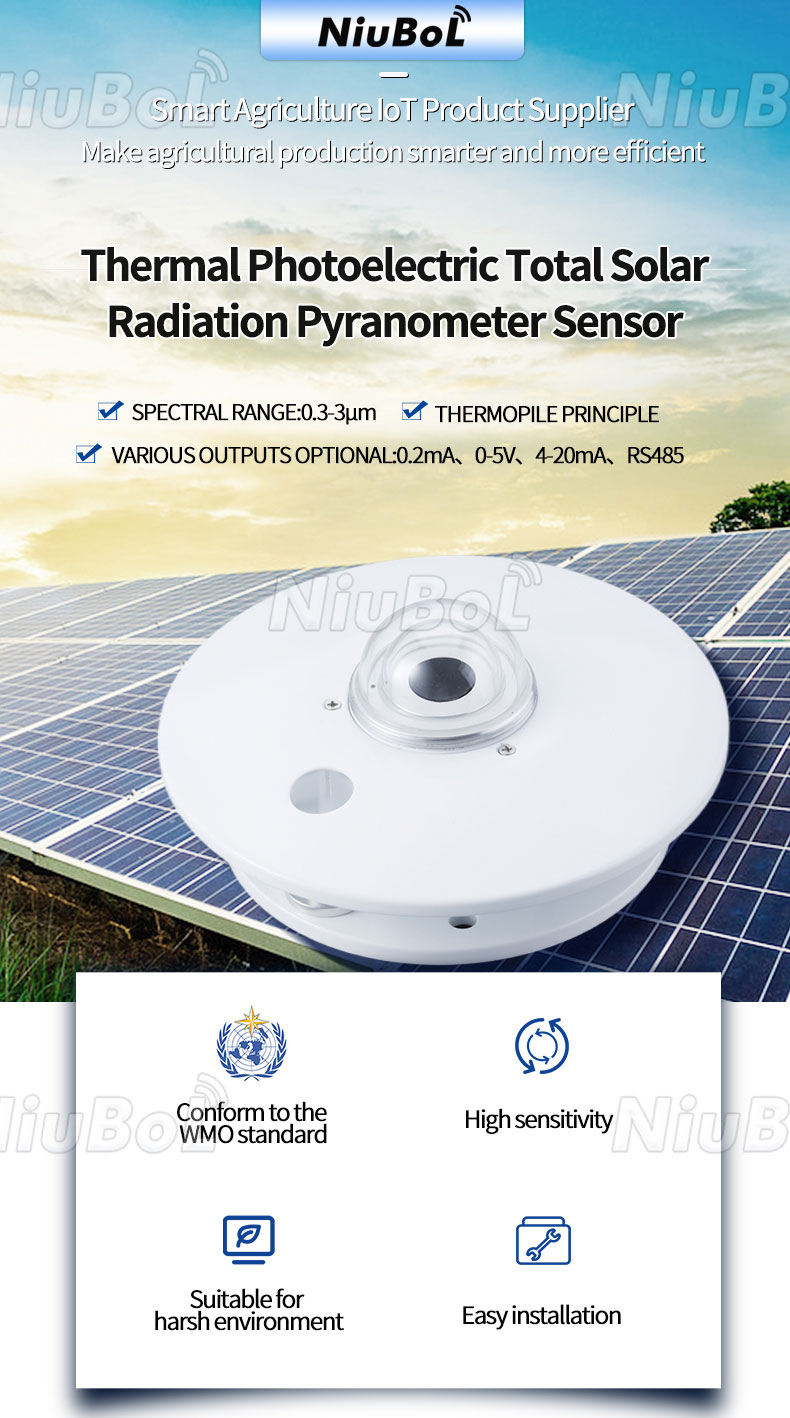
The NBL-W-HPRS pyranometer has a stated range of 0-2000 W/m² and spectral range of 0.3-3 µm. These describe particular instrument characteristics. They do not independently establish its classification, calibration uncertainty or suitability for every performance-monitoring requirement.
Separate range, response, stated errors and calibration evidence. A 1 W/m² display increment or a broad measuring span does not establish a complete uncertainty budget. If the project requires a specific instrument classification or test report, obtain evidence for the exact proposed model and configuration rather than assigning the classification from a similar product.
| Evidence item | Question to resolve | Insufficient substitute |
|---|---|---|
| Applicable requirement | Which document, edition, class or project limit applies? | A general IEC/WMO phrase |
| Model-specific performance | Does the proposed version meet the required characteristics? | A family brochure or resolution figure alone |
| Calibration | Which instrument, points, uncertainty and date does the record cover? | An unrelated serial number or unspecified calibration promise |
| Installation | Do the sensing plane, location and attachment support the required observation? | A laboratory result without site information |
| Acquisition and records | Are scaling, timing, statistics and unavailable periods handled correctly? | A live dashboard or successful connection alone |
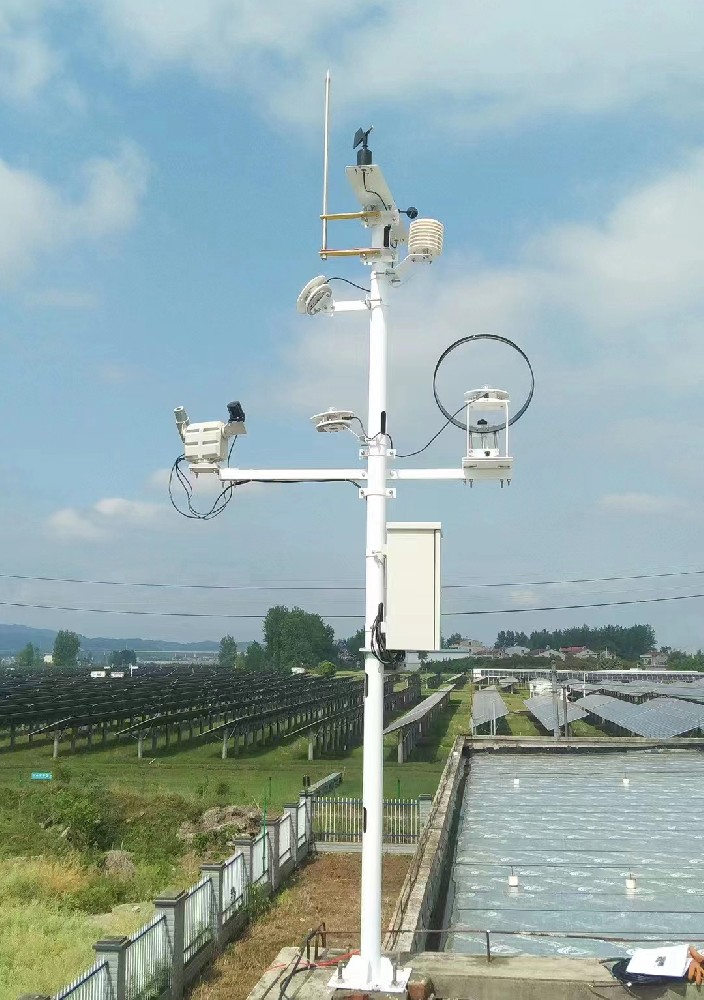
A station is an assembly. The instruments, signal conversion, logger configuration and installation all influence the result. A good sensor connected to the wrong conversion does not provide an acceptable channel. Equally, a successful system communication test does not establish the sensor's physical accuracy.
| Example component | Selected specification | Additional evidence needed for the project |
|---|---|---|
| NBL-W-HPRS | 0-2000 W/m²; response ≤35 seconds to 99%; selected analog or RS485 output | Required performance/classification evidence and calibration scope |
| NBL-W-PPT | -50°C to 100°C; stated accuracy ±0.5°C; selected analog or RS485 output | Installed contact, position, conversion and required temperature evidence |
| NBL-W-LBTH | Air temperature -40°C to 80°C, ±0.5°C; humidity 0-100% RH, ±5% RH | Shield exposure and the atmospheric quantities required |
| TG462 / TG462S | Three RS485 ports; eight 12-bit analog inputs; DC 5-35 V input; IP30 | Delivered software, channel mapping, record definitions and a suitable weatherproof cabinet |
The table identifies components for configuration review, not a declaration that the assembly meets an unspecified monitoring class. If the required evidence is unavailable, resolve that gap before naming the equipment in a compliant offer.
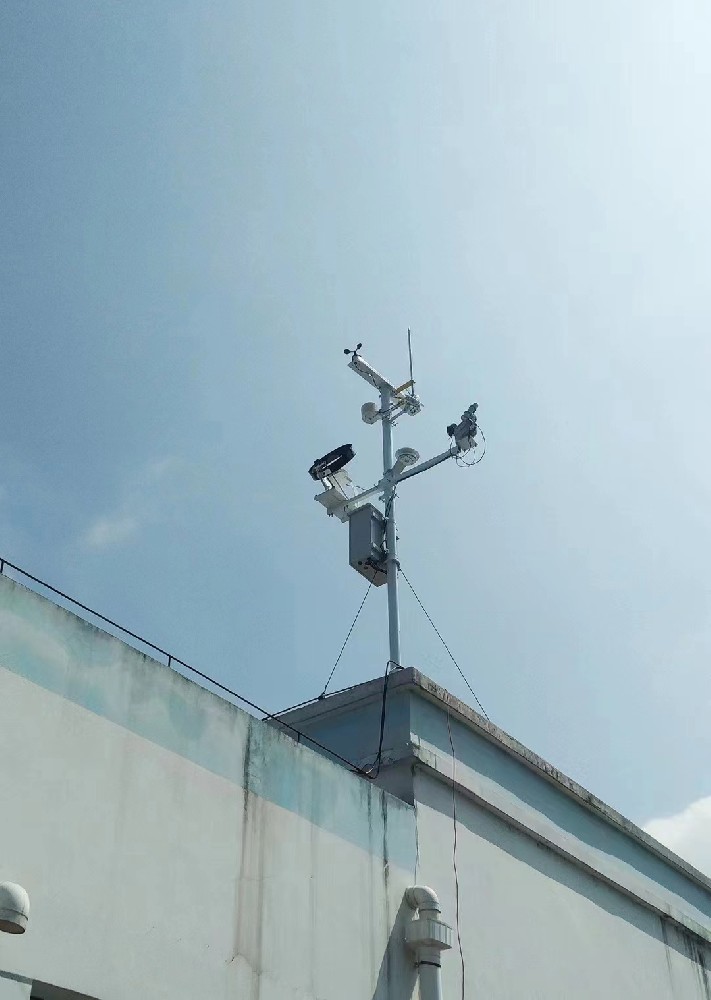
RS485 Modbus RTU can carry measurements from compatible selected sensor versions to a PLC, RTU or logger. Check the register map, scaling and settings for the actual delivered instruments. Analog outputs need the correct receiver and conversion.
Protocol compatibility says little about the required sensing plane, calibration or observation interval. Treat a successful read as an acquisition result. Retain the separate checks needed to establish the physical measurement and the complete monitoring record.
For integration work, connect these checks to the PV weather station acceptance tests. Assess monitoring uncertainty using the actual equipment, conversion and calculation. A generic percentage cannot settle every acceptance decision.
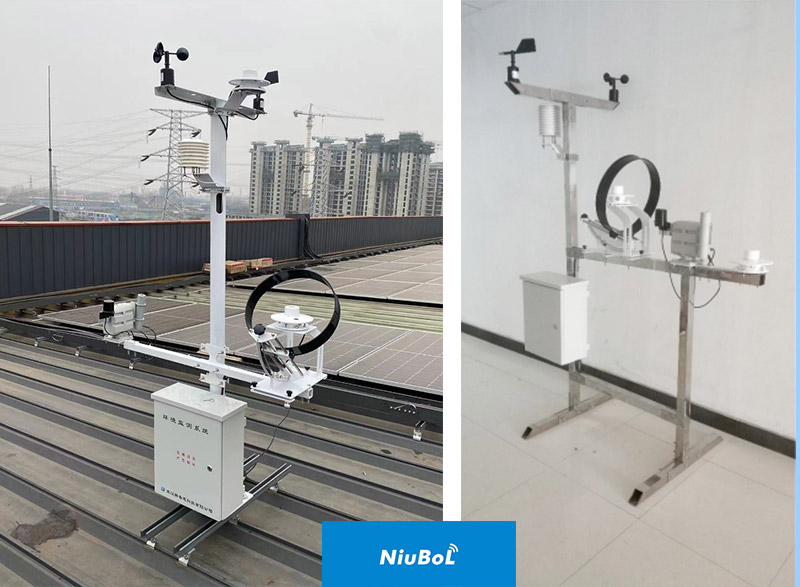
Document the irradiance sensor's plane, orientation and relevant shading. Identify the array or condition it represents. A horizontal observation and a plane-of-array observation are not interchangeable merely because both are reported in W/m².
For module temperature, retain the probe location and attachment method. A detached contact probe may still provide a live number without measuring the intended surface properly. Air temperature is a different quantity, and a successful temperature register read does not establish adequate thermal contact.
Keep the photographs and configuration records associated with the installed channel identity. Record later changes in sensor, bracket, location or conversion. Otherwise the original acceptance evidence can become disconnected from the configuration operating at the plant.
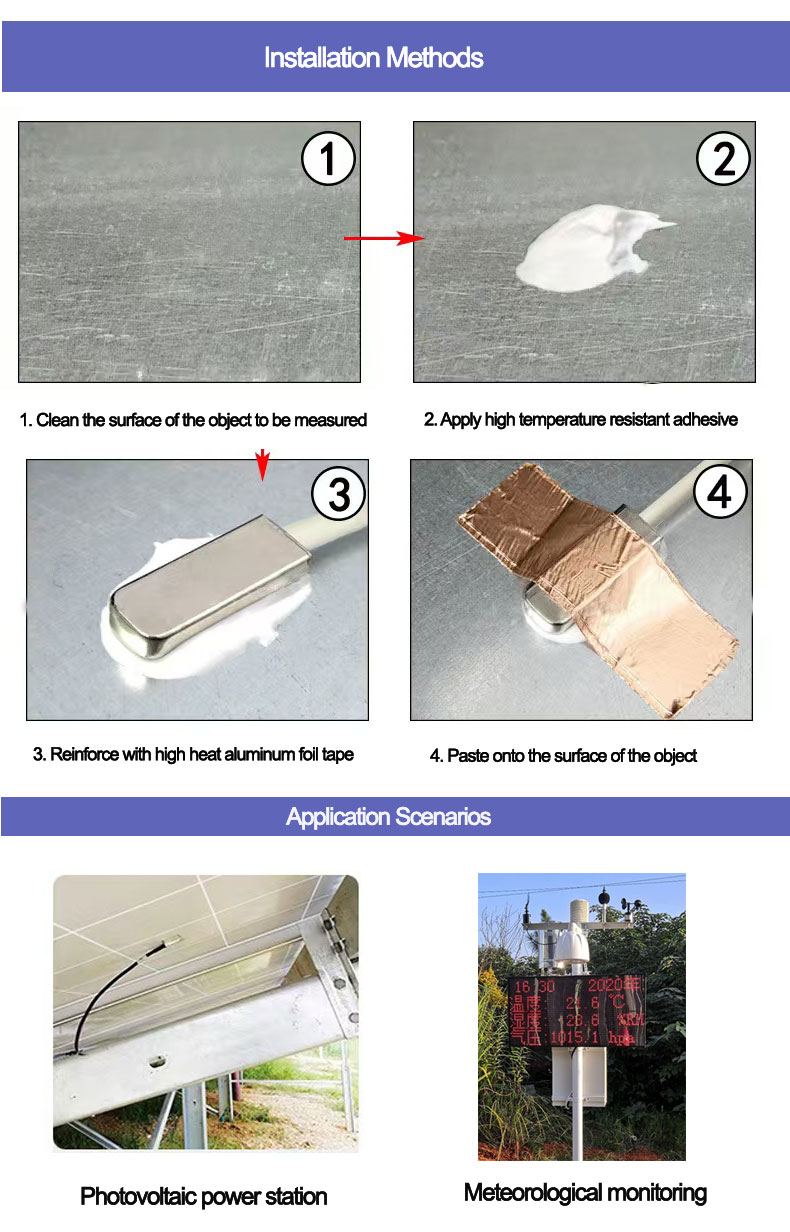
Separate equipment supply, calibration, installation review, acquisition configuration and any independent assessment in the quotation. State who supplies each item and what result is required for acceptance. A sensor-only price cannot fairly be compared with an offer including field work and documented system tests.
Send NiuBoL the applicable specification and edition, required monitoring quantities, proposed planes and data destination. Identify any required classifications or reports before model selection. Do not assume certification, third-party testing, a calibration interval or a particular project class is included unless the evidence and supply scope support it.
No. Identify the applicable document, edition, requirement and assessment scope. Match the evidence to the proposed model and installed monitoring system rather than relying on a general phrase.
No. Range is one characteristic. Classification, calibration and other required performance evidence must be assessed separately against the actual project requirements.
It cannot establish the calibration of a different instrument. Check identity, measured points, uncertainty and scope, and keep the record associated with the installed unit.
No. It supports the defined communication task. Measurement performance, exposure, timing, record quality and any required conformity assessment remain separate questions.
Identify the gap and resolve it before claiming conformity. This may require a different instrument, additional testing or a clarified project requirement; a broader marketing statement does not close the gap.
Review changes that affect the observation, including instrument replacement, mounting plane, temperature contact, scaling or record processing. Keep the effective change time and repeat the checks relevant to that change.
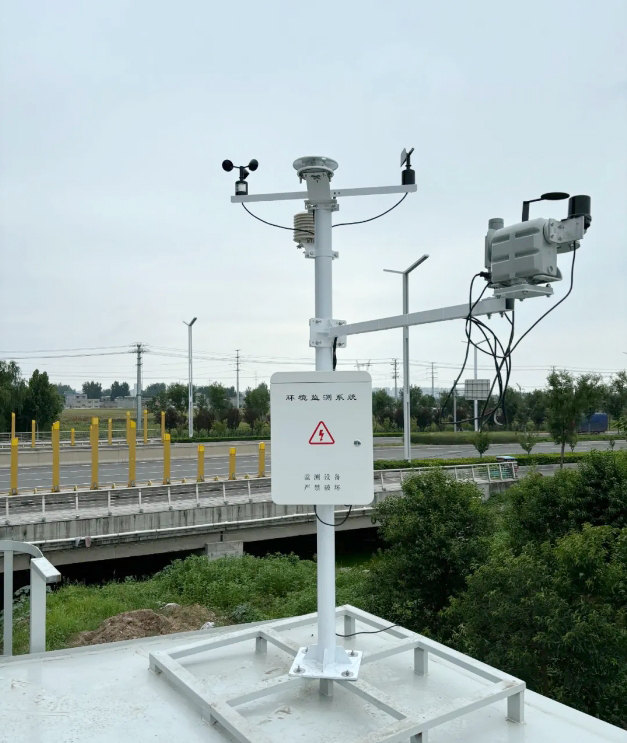
PV weather station standards are useful when the required scope and evidence are explicit. Match the named NiuBoL configuration, installation and data path to the project requirements. Separate documented conformity from a general reference to a standard, and resolve evidence gaps before acceptance.
 NBL-W-HPRS-Solar-Radiation-Sensor-Instruction-Manual-V3.0.pdf
NBL-W-SRS-Solar-radiation-sensor-instruction-manual-V4.0.pdf
Prev:Weather Station Clearance: Why One 10 m Rule Does Not Fit Every Sensor
Next:Soil Moisture Sensors and Soil Moisture Monitoring Stations
Related recommendations
Sensors & Weather Stations Catalog
Agriculture Sensors and Weather Stations Catalog-NiuBoL.pdf
Weather Stations Catalog-NiuBoL.pdf
Agriculture Sensors Catalog-NiuBoL.pdf
Water Quality Sensor Catalog-NiuBoL.pdf
Related products
 Combined air temperature and relative humidity sensor
 TDR Soil Moisture & Temperature Sensor for irrigation| RS485 |4-20mA| NBL-S-THR
 Soil pH sensor RS485 soil Testing instrument soil ph meter for agriculture |NBL-S-PH
 Wind Speed sensor Output Modbus/RS485/Analog/0-5V/4-20mA
 Tipping bucket rain gauge for weather monitoring auto rainfall sensor RS485/Outdoor/stainless steel
 Pyranometer Solar Radiation Sensor 4-20mA/RS485


Screenshot, WhatsApp to identify the QR code
WhatsApp number:+8615367865107
(Click on WhatsApp to copy and add friends)

