





— Blogs —
—Products—
 Consumer hotline +8618073152920
 WhatsApp:+8615367865107
Address:Room 102, District D, Houhu Industrial Park, Yuelu District, Changsha City, Hunan Province, China
Product knowledge
Time:2026-04-20 14:52:20 Popularity:392
In the governance system of pharmaceutical and chemical wastewater, the coagulation treatment process is the core of the entire pretreatment and backend purification system. Due to the characteristics of high salinity, high-concentration organic matter, and drastic fluctuations in composition of pharmaceutical wastewater, how to accurately distinguish and apply “coagulation” and “flocculation” technologies directly affects the stability and operating costs of projects delivered by system integrators.
NiuBoL is committed to providing reliable perception-layer equipment for engineering companies and IoT solution providers. By real-time monitoring of water quality parameters, complex chemical reaction mechanisms are transformed into controllable automation engineering logic.
In commercial procurement and engineering design, clearly understanding the physical and chemical processes behind the terms is the first step in building an efficient system.
Coagulation refers to the instantaneous process in which colloids destabilize and form tiny aggregates.
Mechanism: Mainly by adding inorganic salt agents (such as PAC, PFS), through compression of the electric double layer, adsorption-electrostatic neutralization, etc., the electrostatic repulsion between colloidal particles is eliminated, allowing them to collide and aggregate.
Engineering Characteristics: Occurs in the initial mixing stage after dosing and requires intense hydraulic or mechanical stirring (fast mixing).
Flocculation refers to the process in which destabilized colloids or tiny suspended particles aggregate into large floc particles (alum flowers) under dynamic drive.
Mechanism: Mainly through the adsorption bridging and net sweeping action of polymer agents (such as PAM), tiny flocs are connected together through long-chain structures.
Engineering Characteristics: Occurs after coagulation and requires lower stirring intensity (slow mixing) to prevent the formed flocs from being broken by shear force.
Conglomeration is the general term for the two stages of coagulation and flocculation. In B2B projects, the coagulation system covers the complete physical and chemical process from chemical dosing and mixing reaction to the formation of large floc particles.
Compared with ordinary industrial wastewater, pharmaceutical and chemical wastewater poses higher requirements on the coagulation process due to its characteristics:
High inorganic salt inhibition: Extremely high concentrations of Cl⁻ and SO₄²⁻ (some exceeding 100,000 mg/L) in the wastewater produce high osmotic pressure. Although this is beneficial for destabilization, it may also cause abnormal hydrolysis of chemicals.
High COD load: Large-molecule organic matter coats the surface of colloids, interfering with the adsorption bridging of chemicals and causing a sharp increase in chemical consumption.
Interference from harmful components: Toxic substances such as nitrogen heterocycles and phenols have specific chemical properties and may undergo side reactions with coagulants, reducing precipitation efficiency.

Without using high-cost Zeta potential meters or SCD charge detectors, system integrators can achieve precise coagulation control through logical algorithms using NiuBoL’s basic water quality sensor combinations.
| Monitoring Parameter | Sensor Technology Type | Application Value | Communication Protocol |
|---|---|---|---|
| pH Value | Industrial Composite Electrode | Control chemical hydrolysis: The optimal coagulation effect of PAC/PFS depends on the pH range. Automatic acid-base adjustment is achieved through pH monitoring. | RS485 (Modbus-RTU) |
| Conductivity | Industrial Inductive Type (TDS) | Early warning of salinity shock: Real-time monitoring of salinity changes to automatically adjust coagulant dosing ratio and prevent biochemical system collapse. | RS485 (Modbus-RTU) |
| Online Turbidity | 90° Scattered Light Method | Efficiency feedback: Installed at the sedimentation tank outlet to evaluate flocculation and sedimentation effect in real time as a feedback reference for dosing adjustment. | RS485 (Modbus-RTU) |
| Ultrasonic Flowmeter | Non-contact / Insertion Type | Proportional dosing: Calculate chemical dosing ratio (PPM value) in real time according to raw water flow to achieve constant load dosing. | RS485 / 4–20mA |
Coagulation tank (fast mixing): Stirring gradient G value is recommended to be controlled at 700–1000 s⁻¹, with reaction time of 10–30 seconds.
Flocculation tank (slow mixing): G value should gradually decrease from 70 s⁻¹ to 10 s⁻¹, with reaction time of 15–30 minutes.
For high-salt pharmaceutical and chemical wastewater, it is recommended to first judge whether pre-dilution or forced desalination is needed through conductivity sensors, and then perform coagulation treatment.
Chemical sequence: Strictly follow the order of “first add coagulant (PAC/PFS) for destabilization, then add flocculant (PAM) for bridging”.
Use the RS485 bus of NiuBoL sensors to collect data to an edge gateway and control variable frequency dosing pumps through PLC. When abnormal turbidity increase is detected, the system automatically increases PAM dosing by 5%–10% for compensatory treatment.
A: Although the industry commonly uses the term “flocculant”, they must be distinguished when designing dosing rooms and reaction tanks. Coagulation focuses on “destabilization”, while flocculation focuses on “growth”. Distinguishing them helps reasonably allocate stirring power.
A: Extremely significant. Aluminum and iron salt coagulants can only form efficient hydrated metal oxides within a specific pH range. If pH is too low, the chemicals are difficult to hydrolyze; if pH is too high, the flocs are prone to re-dissolution.
A: Although high salinity helps compress the electric double layer, it also changes the polarity of the solution, causing the long chains of organic polymer flocculants (PAM) to curl, reducing the effective length of adsorption bridging. Therefore, more chemicals are required.
A: Our pH sensors use industrial fast-response electrodes with a response time of ≤30 seconds. Combined with PLC, they can achieve high-precision closed-loop dosing control.
A: This is usually because the stirring intensity in the flocculation stage is too high, causing floc breakage, or due to surface-active substances in the wastewater that make the flocs too light. It is recommended to optimize by reducing the terminal stirring speed and monitoring real-time turbidity.
A: RS485 supports daisy-chain wiring, and a single bus can connect up to 32 NiuBoL sensors, greatly saving engineering wiring costs. Its digital signal has extremely high stability in complex electromagnetic environments.
A: It is recommended to introduce ORP (oxidation-reduction potential) control monitored by NiuBoL before coagulation, first reduce organic load through advanced oxidation (such as Fenton), and then perform coagulation treatment, which can save more than 30% of chemicals.
A: We focus on the research and development of water quality monitoring sensors and communication modules. As a manufacturer, we provide core sensing components for system integrators to help partners build intelligent dosing systems with their own brands.
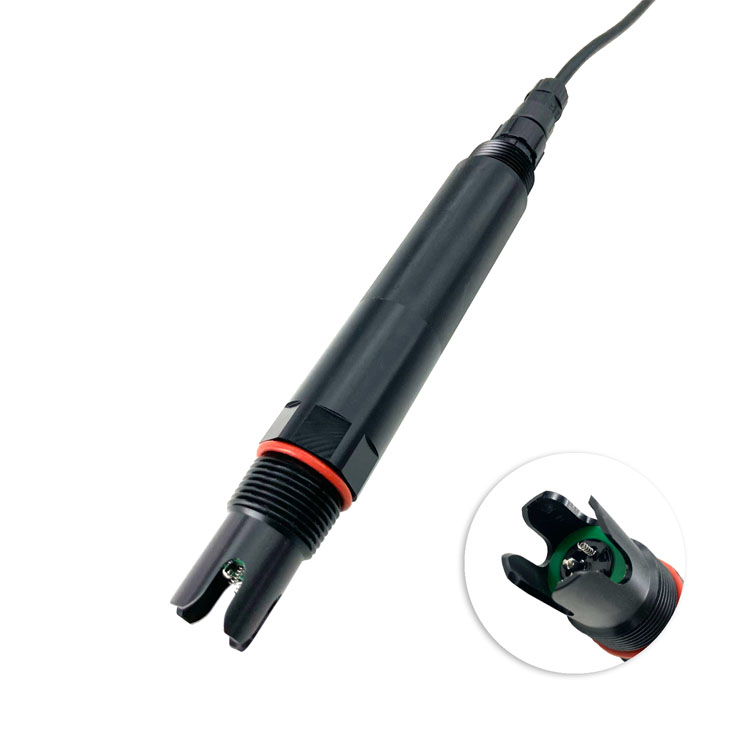
The complexity of pharmaceutical and chemical wastewater determines that its treatment process cannot rely on a single empirical model. By deeply understanding the microscopic mechanisms of coagulation and flocculation, and combining NiuBoL’s stable and reliable pH, conductivity, and turbidity monitoring technology, engineering companies can achieve a leap from “empirical dosing” to “precise dosing”.
In today’s pursuit of green pharmaceuticals and efficient environmental protection, digital water quality monitoring is not only a guarantee of compliant discharge but also the key for system integrators to establish technical barriers in the industrial water treatment market.
 NBL-RDO-206 Online Fluorescence Dissolved Oxygen Sensor.pdf
NBL-COD-208 Online COD Water Quality Sensor.pdf
NBL-CL-206 Water Quality Sensor Online Residual Chlorine Sensor.pdf
Related recommendations
Sensors & Weather Stations Catalog
Agriculture Sensors and Weather Stations Catalog-NiuBoL.pdf
Weather Stations Catalog-NiuBoL.pdf
Agriculture Sensors Catalog-NiuBoL.pdf
Water Quality Sensor Catalog-NiuBoL.pdf
Related products
 Combined air temperature and relative humidity sensor
 Soil Moisture Temperature sensor for irrigation|NBL-S-THR
 Soil pH sensor RS485 soil Testing instrument soil ph meter for agriculture |NBL-S-PH
 Wind Speed sensor Output Modbus/RS485/Analog/0-5V/4-20mA
 Tipping bucket rain gauge for weather monitoring auto rainfall sensor RS485/Outdoor/stainless steel
 Pyranometer Solar Radiation Sensor 4-20mA/RS485

Screenshot, WhatsApp to identify the QR code
WhatsApp number:+8615367865107
(Click on WhatsApp to copy and add friends)

