





— Blogs —
—Products—
 Consumer hotline +8618073152920
WhatsApp:+8615367865107
Address:Room 102, District D, Houhu Industrial Park, Yuelu District, Changsha City, Hunan Province, China
Product knowledge
Time:2026-02-03 14:39:33 Popularity:671
Residual chlorine monitoring after a water supply shutdown requires more than waiting for the number on the display to change. A powered sensor can continue reporting the water trapped in its flow cell while the sample line has stopped. When supply returns, the line, cell and measurement must recover before the result is treated as a current process observation. For a NiuBoL NBL-WQ-CL installation, define that recovery sequence alongside the normal monitoring arrangement.
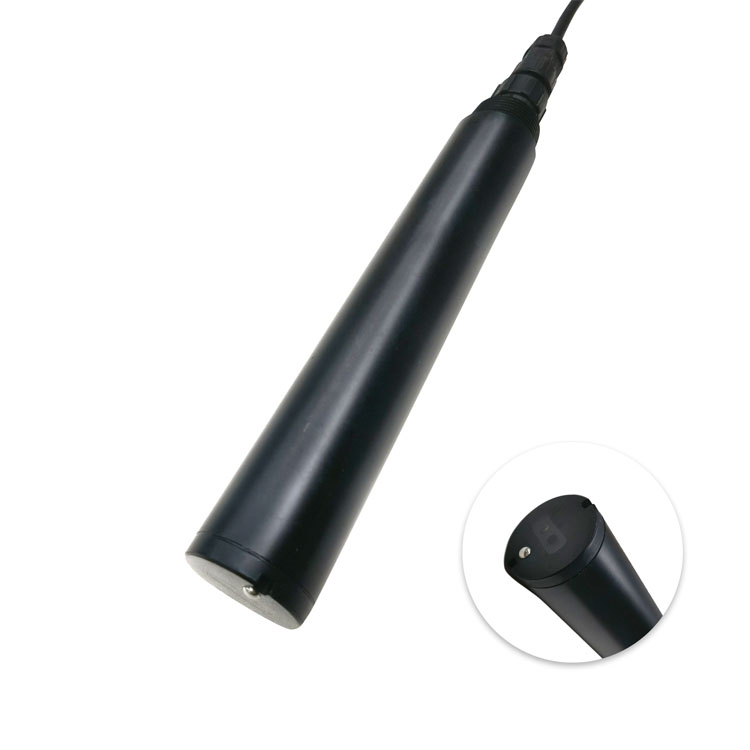
A plant can lose its sample supply while the main process continues, or the whole water system can stop. Those events have different operating consequences. A failed sample pump or closed isolation valve can leave the analyzer looking healthy electrically. Conversely, a communications outage can hide a working local measurement without stopping water flow. Establish which condition occurred before deciding whether the concentration itself changed.
Chlorine in stagnant sample water can change through reactions with the water and wetted surfaces. Its value therefore need not represent the current main when flow is absent. A low result in an isolated cell is not enough to justify increased dosing into the process. Provide an appropriate flow or sample-availability indication and keep it separate from the sensor's communications status.
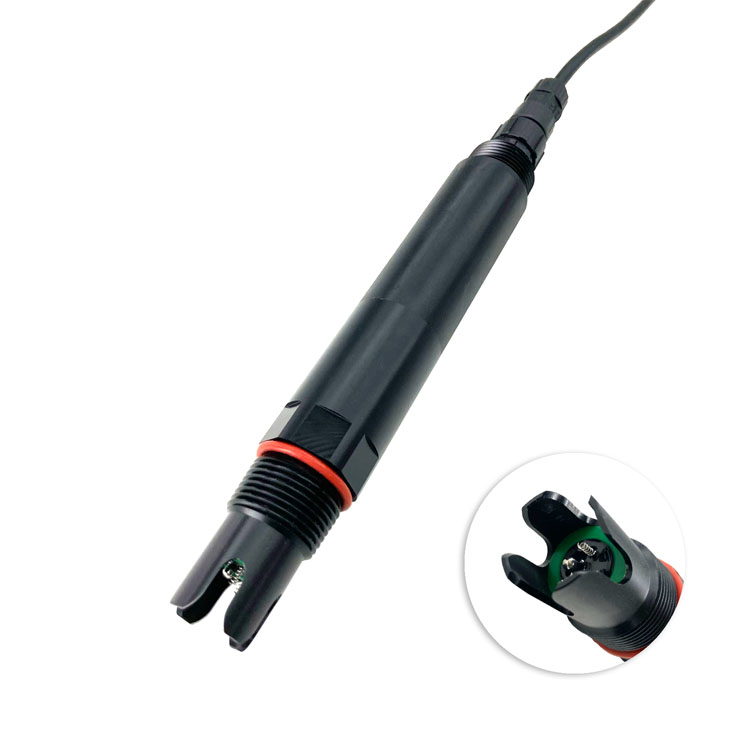
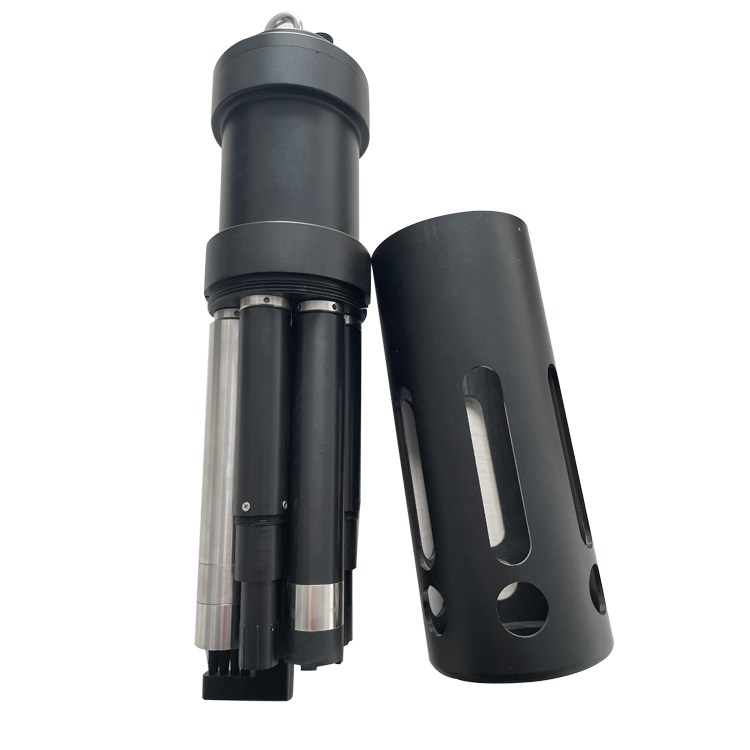
The turbidity instrument illustrated above and the other water-quality probes on this page are complementary channels, not substitutes for confirming a live chlorine sample. A turbidity or oxygen channel may remain current at a different sample point while the chlorine loop has stopped. Do not create one station-wide valid flag that conceals a failed individual sample route.
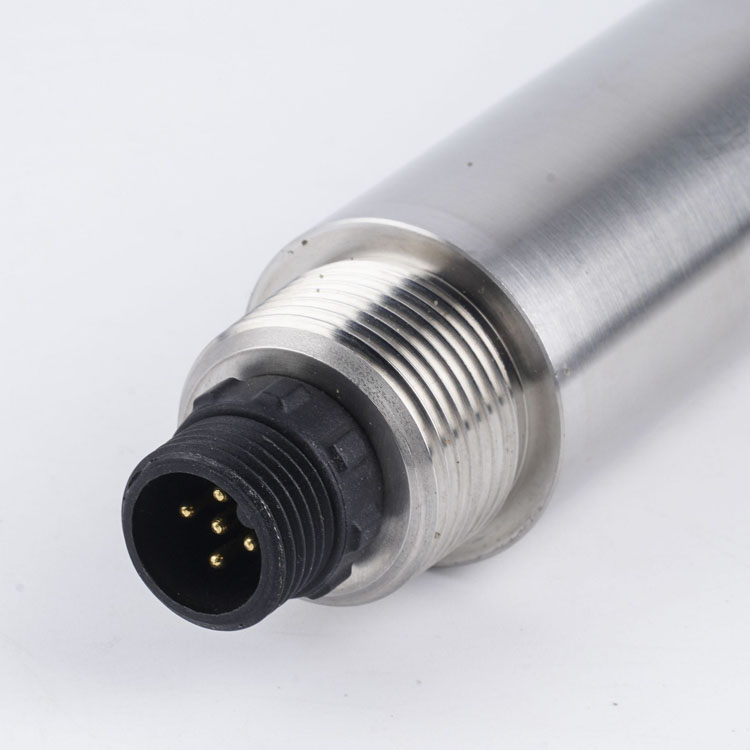
The NBL-WQ-CL residual chlorine sensor uses the constant-voltage method and reports an HClO-based measurement. HClO is hypochlorous acid; it must not be relabeled as total chlorine. The matching flow cell, sample renewal and reporting basis remain important after restart. An IP68 rating does not establish permission for unrestricted insertion into a pressurized main.
| CL item | Specified information | Restart check |
|---|---|---|
| Range and resolution | 0-2.000 mg/L HClO; 0.001 mg/L | Identify excursions rather than silently clipping a value |
| Accuracy | +/-5% or +/-0.05 mg/L; temperature +/-0.5 C | Use an agreed reference basis and tolerance |
| Sample flow | 30-60 L/h | Measure restored flow through the actual cell |
| Pressure | Below 0.1 MPa | Check pressure reduction and outlet backpressure |
| Water conditions | 5-50 C; pH 4-9 | Check water reaching the cell after flushing |
| Supply and power | 12-24 V DC, +/-10%; 0.2 W at 12 V | Separate power recovery from sample recovery |
| Output | RS485 Modbus RTU | Verify fresh observations and channel validity |
| Materials and protection | POM and PTFE; IP68 | Inspect the cell, cable entries and seals |
| Cable | Standard 5 m; 6 mm outside diameter | Confirm jacket suitability and protected terminations |
Temperature compensation does not remove the need to consider pH or the chlorine fraction. If the disinfectant regime changed during the shutdown, review the measurement requirement before returning the old tag to service. A sensor useful for an HClO observation is not automatically a total-chlorine or chloramine analyzer.

Identify the volume from takeoff to the sensor, including tubing, fittings and any chambers. For a hypothetical 12 m line with a 6 mm internal diameter, the tube alone holds about 0.339 L: pi x 0.003 squared x 12 x 1000. At 30 L/h, or 0.5 L/min, its nominal displacement time is about 41 seconds. At 60 L/h it is about 20 seconds. The flow cell and other fittings add volume.
One calculated displacement is not a universal flushing criterion. Mixing, dead legs, air, surface demand and the condition of water entering the takeoff can extend recovery. Inspect the sample arrangement and verify fresh-water arrival using a suitable site procedure. If the sample passes through a storage chamber, a simple tube-volume calculation alone does not describe its exchange behavior.
The model's below-30-second response specification is separate from transport through that line. It also does not include application filtering or operator notification. Do not promise that the whole monitoring point is current 30 seconds after a valve opens. Establish the observed recovery time for the assembled installation under relevant conditions.
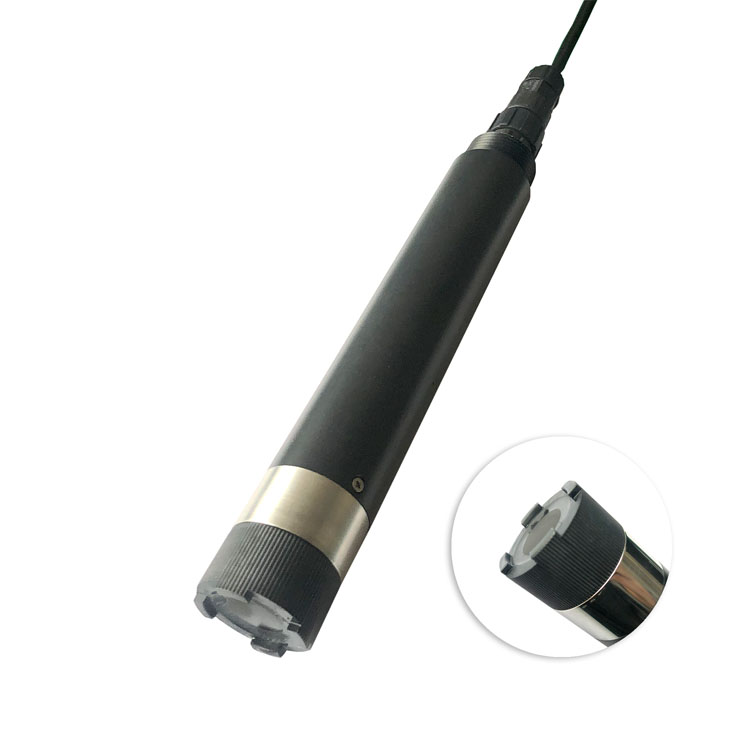
First inspect the physical installation before restoring flow. Check cell condition, leaks, cable damage and any change to pressure-control settings. Follow the site's isolation and water-system restart procedures. Do not apply a rapid pressure change to a cell intended for controlled low-pressure flow. Confirm that the sample outlet is clear and the drain or return path is in its intended state.
Next restore and measure sample flow, remove trapped air by the approved arrangement, and establish that representative water reaches the measuring region. Keep the concentration identified as recovering while that condition is unconfirmed. Observe stability and compare with an appropriate fresh reference taken at a relevant point and time. The EPA online chlorine analyzer comparison method emphasizes matched sampling point and time; it does not establish approval of this particular probe.
Finally, check that the PLC, RTU or data logger receives a new observation with the correct units and status. Release alarm or control use only under the site's approved criteria. The return of network traffic, water flow and an accepted concentration should be distinguishable events. A receipt timestamp by itself does not demonstrate a representative sample.
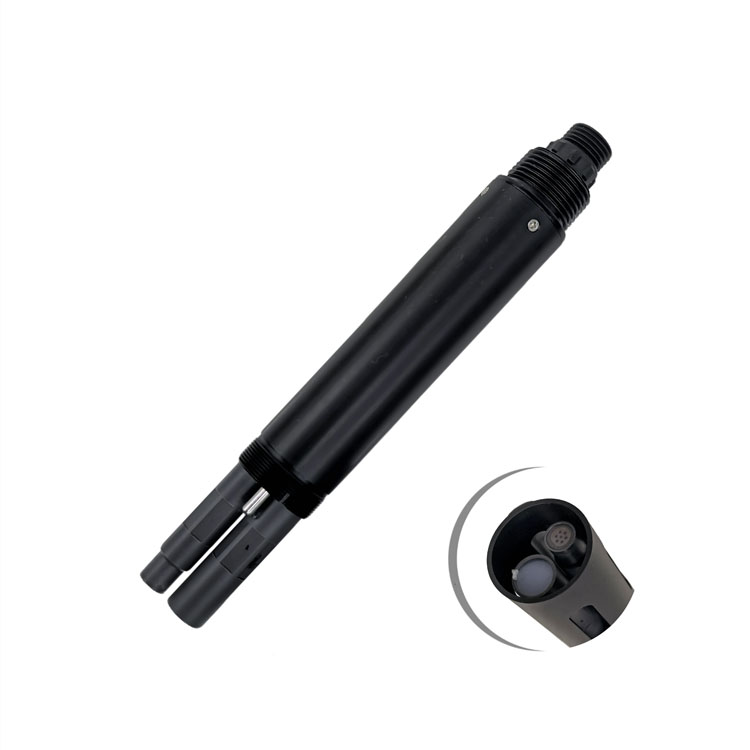
A new NBL-WQ-CL electrode, or one returned from long storage, requires activation in tap water for 24 hours before use. That preparation requirement should not be recast as a mandatory 24-hour activation after every brief sample interruption. Assess the actual condition and follow the procedure applicable to the supplied electrode. Arrange service advice if it dried out, froze, was contaminated or was stored incorrectly.
Evaluate electrode condition and any contamination after a prolonged interruption using the applicable service procedure. Restart should not automatically trigger a calibration write. A reading influenced by stagnant water, a blocked inlet or a wrong reference will not be corrected reliably by changing slope. Inspect sample conditions and reference validity before deciding that instrument calibration is at fault.
The residual chlorine instrument shown next is one channel in the station. Related ammonia, COD and dissolved-oxygen devices have different recovery and service requirements. Releasing one measurement does not release them all. Keep maintenance notes and unavailable periods associated with the actual sensor rather than an undifferentiated station record.
During a safe commissioning test, interrupt the sample indication or use an approved simulation and confirm that the controller identifies the channel as unavailable. An unchanged digital number should not override a confirmed loss of sample flow. Keep its last valid value for historical context, with its original time, rather than replacing it with zero or passing it off as a new observation.
The appropriate control response depends on the plant and must be defined by the responsible process engineer. It may use a supervised fallback, independent checks or inhibited automatic action, with the required safeguards. The procedure needs to cover both loss of measurement and the ongoing water-treatment requirement. A single default action cannot be assumed safe for every failed sample or process state.
Test the recovery path as well: restored flow, fresh sample, accepted reference comparison where required, and a deliberate release state. Confirm that historical backfilled records cannot unexpectedly trigger present-time dosing decisions. If an interlock uses a separate flow switch, include its fault and maintenance conditions in acceptance rather than assuming the chlorine probe measures flow internally.
For intermittent or remote supply, the cost of the probe is only one part of a functional monitoring point. Identify the sample-flow indication, pressure controls, cell, supply, logger logic and service access. State how the station will be checked during shutdowns and who can approve restart. Do not assume those functions are included with a digital sensor.
Send NiuBoL the sample schematic, expected shutdown pattern, takeoff pressure, tubing dimensions, normal flow and receiving controller. Include the disinfectant regime and reference measurement. This allows the proposed configuration to address real recovery constraints without promising a fixed restart delay or unattended dosing behavior unsupported by the installation.
It can remain powered and immersed in trapped water. Successful RS485 communication confirms a data connection, not sample renewal. Use a separate assessment of sample availability before accepting the result as representative of the process.
No. Confirm fresh-water arrival, stable flow, pH, measurement basis and a suitable reference before attribution. Stagnant sample water and transport delay can produce a result that does not describe the current process.
No universal rule follows from the new-electrode and long-storage preparation requirement. Evaluate the interruption, electrode condition and applicable procedure. A damaged or dried electrode needs appropriate assessment rather than an assumed timer.
Use it as an estimate to investigate, not automatic proof of representative recovery. Include cell volume, mixing and actual inlet conditions, then establish a suitable site-specific return-to-service criterion.
No. Missing or unrepresentative water is a validity condition, not a measured zero. Preserve status and last-valid time, and use the process engineer's approved control response rather than an invented low-residual signal.
Show that sample loss is detected, stale readings are identifiable and recovery requires the defined physical and analytical checks. Include alarm delivery and any controller interlock separately from the probe's measurement test.
Residual chlorine monitoring after a water supply shutdown needs verified sample renewal as well as a functioning sensor. Use the NBL-WQ-CL in its matching flow-cell conditions, account for transport and stabilization, and keep concentration separate from sample validity. A deliberate recovery process is more useful than assuming a powered display is a current measurement.
 NBL-RDO-206 Online Fluorescence Dissolved Oxygen Sensor.pdf
NBL-COD-208 Online COD Water Quality Sensor.pdf
NBL-WQ-CL Water Quality Sensor Online Residual Chlorine Sensor.pdf
Prev:Railway Automatic Weather Station: Route Exposure and Data Handover
Next:Hydropower Ecological Discharge Monitoring: Low-Flow Verification
Related recommendations
Sensors & Weather Stations Catalog
Agriculture Sensors and Weather Stations Catalog-NiuBoL.pdf
Weather Stations Catalog-NiuBoL.pdf
Agriculture Sensors Catalog-NiuBoL.pdf
Water Quality Sensor Catalog-NiuBoL.pdf
Related products
 Combined air temperature and relative humidity sensor
 TDR Soil Moisture & Temperature Sensor for irrigation| RS485 |4-20mA| NBL-S-THR
 Soil pH sensor RS485 soil Testing instrument soil ph meter for agriculture |NBL-S-PH
 Wind Speed sensor Output Modbus/RS485/Analog/0-5V/4-20mA
 Tipping bucket rain gauge for weather monitoring auto rainfall sensor RS485/Outdoor/stainless steel
 Pyranometer Solar Radiation Sensor 4-20mA/RS485


Screenshot, WhatsApp to identify the QR code
WhatsApp number:+8615367865107
(Click on WhatsApp to copy and add friends)

