





— Blogs —
—Products—
 Consumer hotline +8618073152920
WhatsApp:+8615367865107
Address:Room 102, District D, Houhu Industrial Park, Yuelu District, Changsha City, Hunan Province, China
Product knowledge
Time:2025-12-17 13:52:19 Popularity:1031
Aquaculture sensor spares should be selected by the failure or service task they cover, not only by connector appearance. A dissolved oxygen cap, an ammonium electrode and a complete digital probe are different spare items. Confirm model compatibility, conditioning or calibration requirements and the temporary monitoring arrangement before removing a working pond sensor.
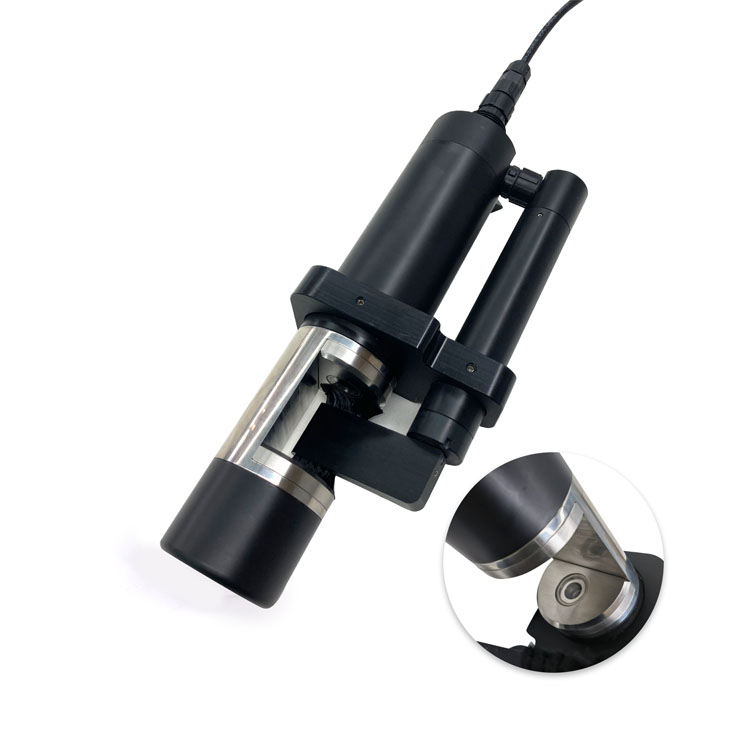
Cleaning a probe, replacing its sensing element and replacing its complete transmitter create different interruptions. A spare cap may shorten an optical-service job but cannot repair a damaged cable or failed electronics. A complete spare probe can cover more faults, provided that it is correctly configured and ready for use.
For each pond or tank, identify which measurements require continuous availability and which can wait for scheduled service. Base that decision on the farm's operating plan and qualified aquaculture advice rather than a universal sensor package. Agree how operators will obtain independent observations while a critical channel is unavailable.
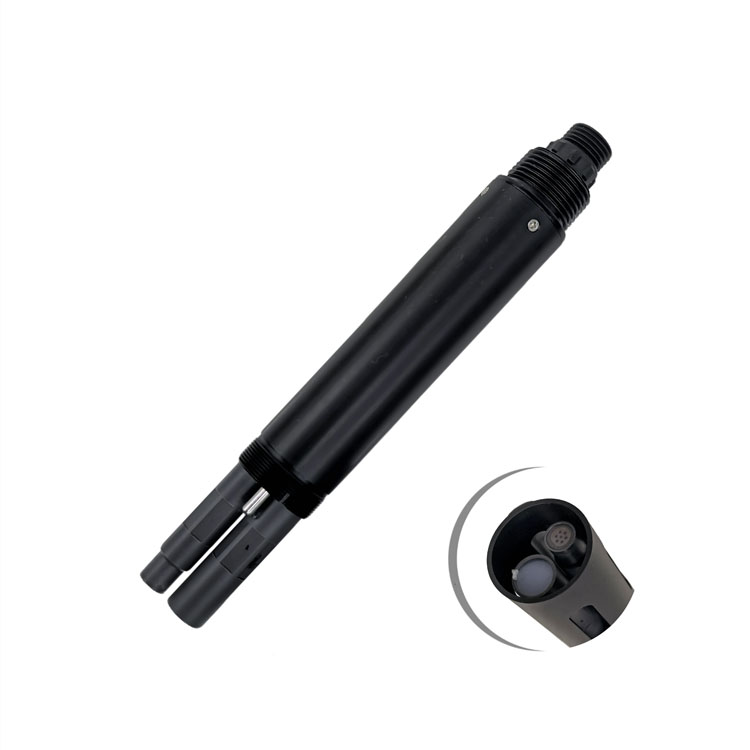
The NiuBoL NBL-WQ-NHN uses an ammonium ion-selective electrode. Its sensing element, conditioning and reference arrangement differ from an optical dissolved oxygen probe. A reagent-free measurement still needs maintenance and performance checks; it is not a reason to omit spare-electrode planning.
| Monitoring item | Spare or service item to confirm | Compatibility question |
|---|---|---|
| Optical dissolved oxygen | Correct fluorescent cap; complete probe if required for fault coverage | Does the cap match the exact probe version, and what calibration is required after fitting? |
| Ammonium ISE | Matched electrode or complete sensor; approved conditioning and verification materials | Can the replacement be conditioned and checked before it is needed in the pond? |
| pH, where specified | Matched electrode/probe and appropriate buffers and storage accessories | Are the sensing element, transmitter and calibration procedure compatible? |
| Optical turbidity or transparency | Approved cleaning and mechanical service items; complete instrument if needed | Are the optical geometry, range and channel definition the same? |
| Power, cable and acquisition | Compatible supply, protected connection parts or acquisition spare | Does the proposed spare cover a common system failure rather than only one sensing element? |
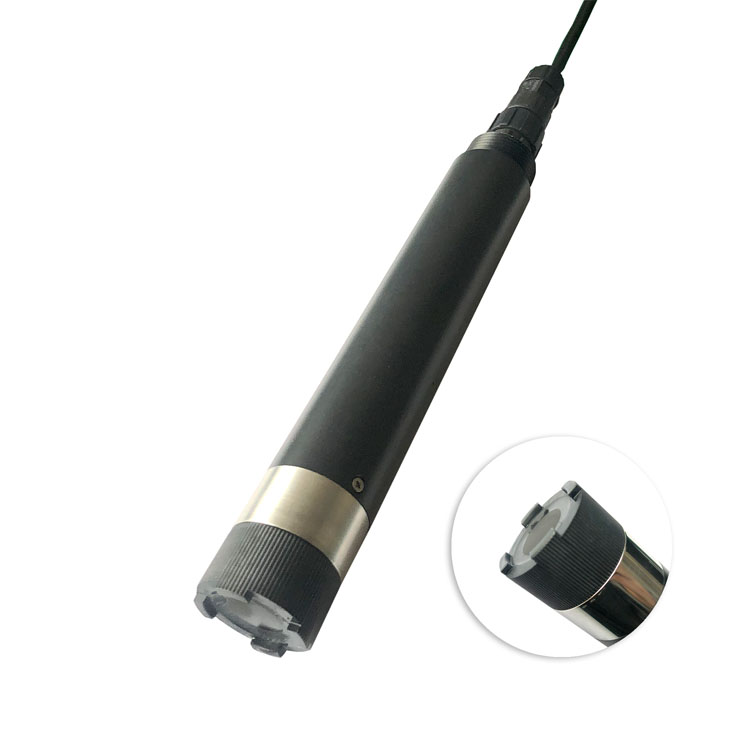
The NBL-WQ-DO optical sensor measures dissolved oxygen through fluorescence quenching without consuming oxygen at its sensing cap. It needs no electrolyte. That does not make a dirty, bubbled or badly located probe representative of the pond. After service, check both instrument response and the installed exposure.
| Parameter | NBL-WQ-DO | NBL-WQ-NHN |
|---|---|---|
| Principle | Optical fluorescence method | Ammonium ion-selective electrode |
| Measurement range | 0-20 mg/L DO | Selected 0-10, 0-100 or 0-1000 mg/L configuration |
| Accuracy interpretation | +/-2% full scale, equivalent to +/-0.4 mg/L over the 0-20 mg/L span | Stated +/-10% or +/-1 mg/L; obtain the percentage basis and applicable selection rule for the order |
| Supply | 12-24 V DC | 12-24 V DC |
| Digital interface | RS485 Modbus RTU | RS485 Modbus RTU; confirm any ordered analog option separately |
| Environment | 0-45 deg C; pressure below 0.2 MPa | Confirm application conditions and water chemistry for the selected ISE configuration |
| Power and protection | Below 0.3 W at 12 V; IP68 | 0.2 W at 12 V; IP68 |
| Standard cable | 5 m | 5 m |
Do not substitute another sensor family solely because its range or connector looks similar. The register map, decimal scaling, status handling and compensation settings may differ. Keep the part identifier and delivered configuration with each spare so a service team does not have to identify it from a product photograph.
Record the installed channel settings before replacement, including address, serial format, measurement unit and applicable compensation. Configure the spare without creating an address collision on an active bus. A PLC or data logger should distinguish a channel under service from a confirmed normal water condition.
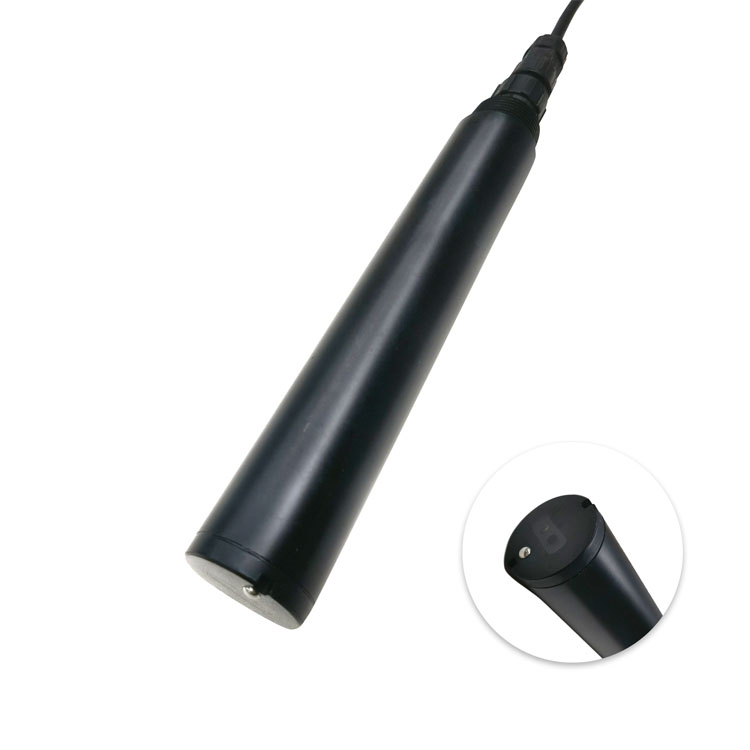
For dissolved oxygen, a stored salinity-compensation value is not a salinity measurement. Check that the replacement carries the appropriate setting for the water being monitored. For an ammonium ISE, do not relabel the result as un-ionized ammonia toxicity. The reporting basis and any conversion need separate definition and suitable supporting measurements.
Turbidity and transparency are also separate optical quantities. Replacing one with the other does not preserve the original channel simply because both respond to water clarity. Where a multiparameter assembly is used, confirm which modules are actually installed and which can be serviced independently.
Sensor availability supports monitoring, but a spare probe does not establish automatic aerator, feeder or water-exchange control. Any controller must have its own approved logic, fault handling and equipment feedback. Confirm what happens during probe service and how the operator knows that a new reading is valid before automatic actions resume.
A residual-chlorine channel may be relevant to a separately designed treated-intake or disinfection process. It is not a standard substitute for pond DO, pH or ammonium monitoring. The separate instruments illustrated here should be selected around the actual measurement task, not assumed to form a mandatory package for every aquaculture site.
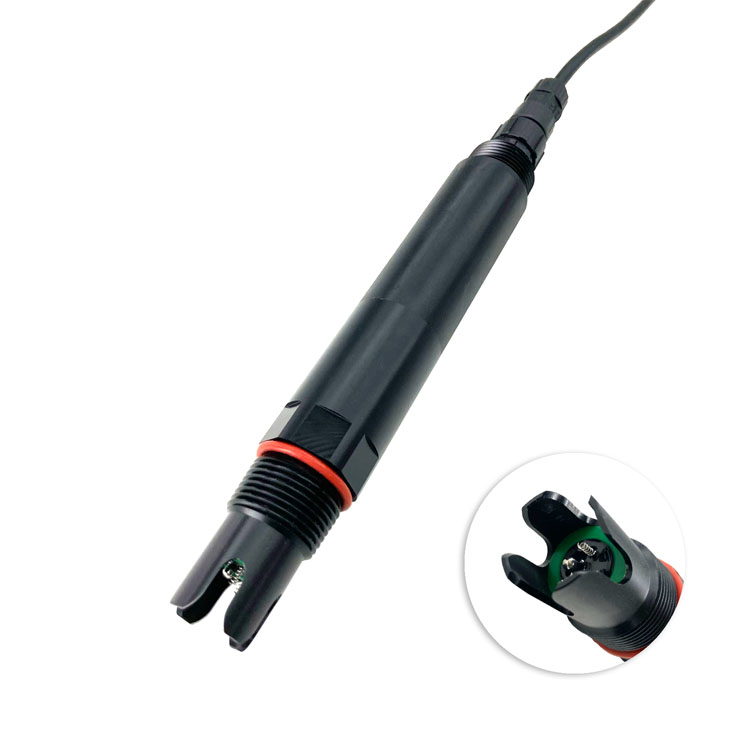
Check physical condition, connector identity and the specified storage or conditioning requirements on receipt. Demonstrate communication and an appropriate reference check before putting the unit into reserve. Keep the date and result with its identifier. A sealed box does not establish that a stored electrode is ready for immediate use.
After replacement, record the last valid old measurement, service interval and first verified new measurement. Compare local and received values, examine bubbles or deposits and restore the intended mounting position. Keep the gap visible rather than interpolating through it as if the removed probe had continued measuring.
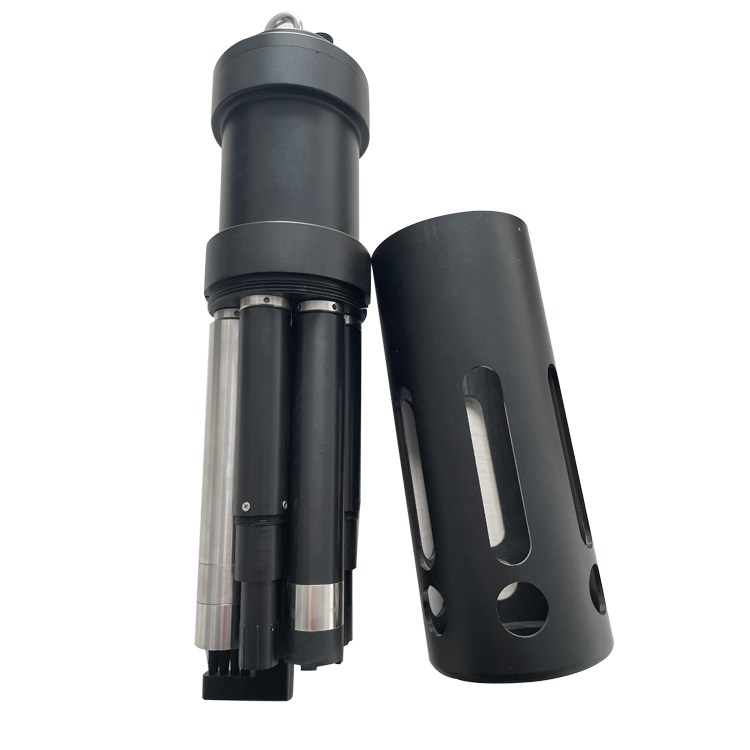
It covers the specified cap-service task, not every probe failure. A damaged cable, failed electronics or broken housing may require a complete probe. Decide the spare scope from the faults and downtime the project needs to cover.
Only where compatibility is explicitly established for the exact versions. Check the sensing element, electronics, firmware requirements and calibration procedure. A matching thread or connector alone is insufficient.
Do not assume so. Confirm storage, conditioning and calibration requirements for the delivered electrode. Plan those steps before the installed unit is removed when uninterrupted monitoring is important.
No. Preserve channel definitions and necessary configuration, but perform the appropriate verification and calibration for the replacement. Calibration coefficients belonging to a different sensing element are not automatically transferable.
Provide installed model and version, sensing element identifiers, water conditions, connector photographs and required fault coverage. State whether the request is for a cap, electrode, complete probe or acquisition component. NiuBoL can then review compatibility and the preparation needed before service.
Useful aquaculture sensor spares cover identifiable service tasks and can be returned to operation with verified data. Match the component to the exact model, plan temporary monitoring and preserve channel meaning during replacement. A prepared spare and a defined return-to-service check are more valuable than an unidentified probe kept in storage.
Prev:Hydrological Station Site Survey: Flood Exposure, Echo Paths and Service Access
Next:NiuBoL COD Sensor Ultraviolet Absorption Principle and Smart Application
Related recommendations
Sensors & Weather Stations Catalog
 Agriculture Sensors and Weather Stations Catalog-NiuBoL.pdf
Weather Stations Catalog-NiuBoL.pdf
Agriculture Sensors Catalog-NiuBoL.pdf
Water Quality Sensor Catalog-NiuBoL.pdf
Related products
 Combined air temperature and relative humidity sensor
 TDR Soil Moisture & Temperature Sensor for irrigation| RS485 |4-20mA| NBL-S-THR
 Soil pH sensor RS485 soil Testing instrument soil ph meter for agriculture |NBL-S-PH
 Wind Speed sensor Output Modbus/RS485/Analog/0-5V/4-20mA
 Tipping bucket rain gauge for weather monitoring auto rainfall sensor RS485/Outdoor/stainless steel
 Pyranometer Solar Radiation Sensor 4-20mA/RS485


Screenshot, WhatsApp to identify the QR code
WhatsApp number:+8615367865107
(Click on WhatsApp to copy and add friends)

