





— Blogs —
—Products—
 Consumer hotline +8618073152920
 WhatsApp:+8615367865107
Address:Room 102, District D, Houhu Industrial Park, Yuelu District, Changsha City, Hunan Province, China
Product knowledge
Time:2025-12-17 14:02:30 Popularity:823
Water quality is the cornerstone of ecological environment and public health. Among many water quality assessment parameters, COD (Chemical Oxygen Demand) is recognized as a key indicator for measuring organic pollutant content in water bodies.

COD's Definition and Significance: COD refers to the amount of oxygen consumed by substances in water bodies that can be oxidized by chemical oxidants. The unit is usually milligrams per liter (mg/L).
High COD values mean high organic pollutant concentrations in water bodies; these pollutants consume large amounts of dissolved oxygen during decomposition, harming aquatic organisms and possibly indicating industrial or domestic wastewater discharge issues.
Therefore, COD is core data for environmental departments to assess water pollution degree, regulate industrial wastewater discharge, and guide sewage treatment plant operational efficiency.
Limitations of Traditional COD Detection Methods
Traditional COD detection methods, such as high-temperature sulfuric acid oxidation method (GB/T 11914), open reactor method, etc., although standard methods, have inherent defects:
Time-Consuming and Labor-Intensive: Must sample and take back to laboratory, undergo tedious steps like heating, oxidation, titration, unable to achieve real-time monitoring.
Secondary Pollution: Requires strong acids (sulfuric acid), strong oxidants (potassium dichromate or potassium permanganate), etc., reagents; operation dangerous and produces secondary chemical waste pollution.
Poor Timeliness: Result feedback lags, unable to make immediate response and control to sudden water pollution events.
To overcome these limitations, innovative companies represented by NiuBoL have launched a new generation of water quality COD sensors, achieving reagent-free, real-time, online automated monitoring.
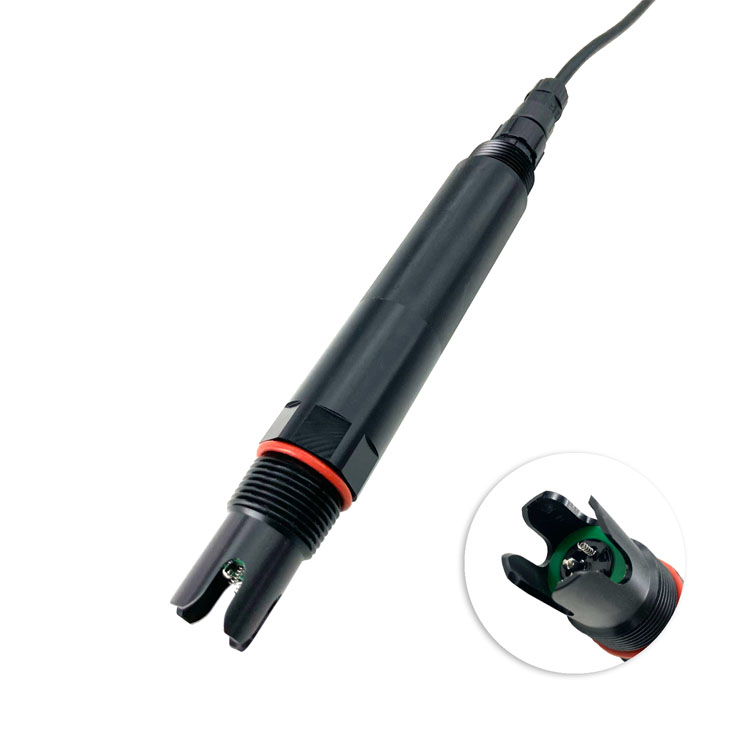
NiuBoL COD sensor adopts leading dual-wavelength ultraviolet absorption method as its core measurement principle, completely free from chemical reagent constraints.
Core Basis: Many organic substances dissolved in water (especially aromatic compounds, compounds with carbon double or triple bonds) have strong absorption for specific wavelengths (such as 254nm) of ultraviolet light.
Measurement Mechanism: The sensor emits 254nm ultraviolet light to irradiate the water sample; organic substances absorb part of the light energy, causing transmitted light intensity to weaken. The sensor calculates organic pollutant concentration in water by measuring the intensity difference between incident and transmitted light, according to Lambert-Beer Law, and then infers COD value.
To eliminate other interfering factors in water bodies, NiuBoL COD sensor adopts dual-wavelength technology:
Ultraviolet Light (254nm): Used to measure COD content (organic absorption).
Reference Light (specific wavelength): Used to measure water turbidity. Suspended particles (turbidity) in water bodies also scatter and attenuate light. By measuring turbidity attenuation with reference light, the sensor can use built-in algorithms to compensate for turbidity interference, ensuring accuracy and stability of COD measurement.
| Characteristic | Advantage Description |
|---|---|
| No Reagents Required | No need to add chemical reagents, no secondary pollution, economical and environmentally friendly, safe operation. |
| Real-Time Online | Sustainable uninterrupted water quality monitoring, fast response time (T90 < 30s). |
| Integrated Measurement | Can simultaneously measure multiple water quality parameters such as COD, turbidity, and temperature, integrated design. |
| Self-Cleaning Capability | Built-in cleaning brush prevents biological attachment and pollutant accumulation, excellent long-term monitoring stability. |
| Low Power Consumption and Anti-Interference | Low power design, equipped with RS-485 interface and Modbus/RTU protocol, strong anti-interference capability. |
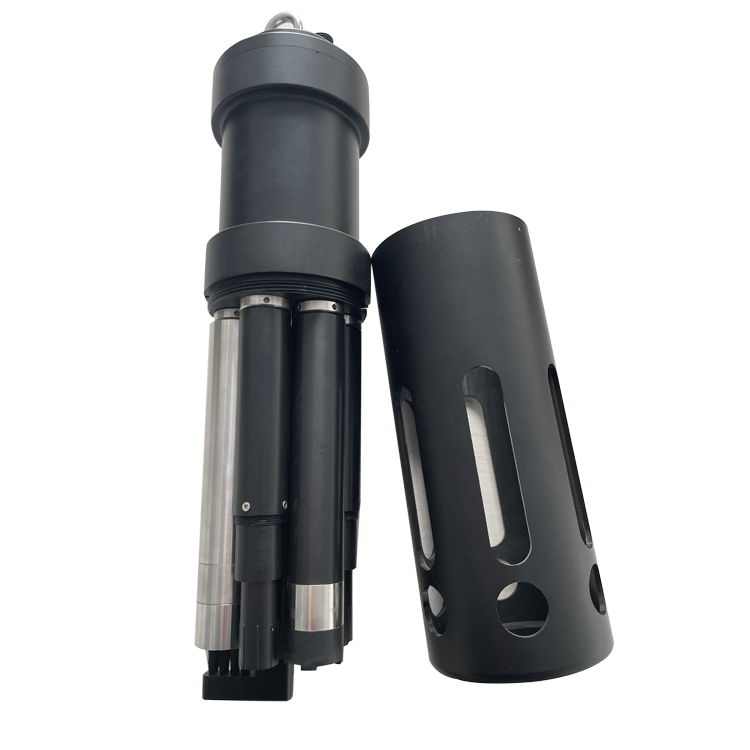
As an industrial-grade online sensor, NiuBoL COD-408-S design and parameters fully meet high-precision requirements in complex environments.
| Parameter Item | Specifications (COD-408-S) |
|---|---|
| Measurement Principle | Dual-wavelength ultraviolet absorption method |
| Main Range | 0~200.0 mg/L (COD); 0~200.0 NTU (turbidity) |
| Optional Range | 0~500.0 mg/L, 0~1500.0 mg/L, etc. |
| Accuracy | ±5% of reading (0-200mg/L range); temperature ± 0.3℃ |
| Response Time (T90) | < 30s |
| Minimum Detection Limit | 0.2mg/L (0-200mg/L range) |
| Output Method | RS-485 (Modbus RTU), 4-20mA (optional) |
| Protection Level | IP68 |
| Housing Material | 316L stainless steel (corrosion-resistant) |
| Power Supply | 12~24V DC (low power consumption) |
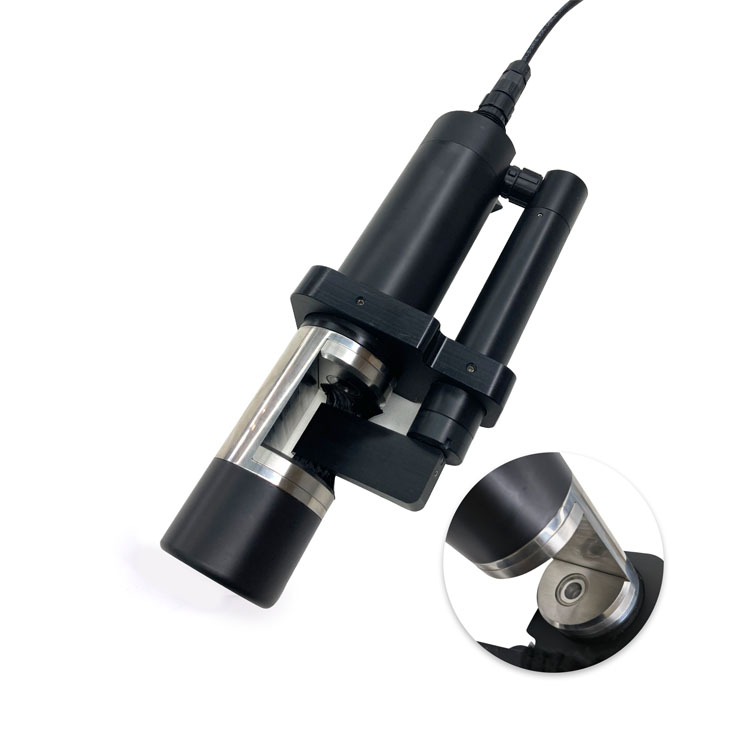
COD-408-S adopts sturdy 316L stainless steel housing and IP68 protection level, ensuring reliability for long-term submersible installation. Its key structural design is the built-in self-cleaning brush.
Self-Cleaning Brush Role: In water bodies, the sensor's measurement window is prone to microbial attachment forming biofilms or coverage by suspended particles, causing light path attenuation and affecting measurement accuracy. The self-cleaning brush can automatically clean the measurement window periodically, greatly improving the sensor's long-term online monitoring stability and data reliability, achieving maintenance-free and long-cycle use goals.
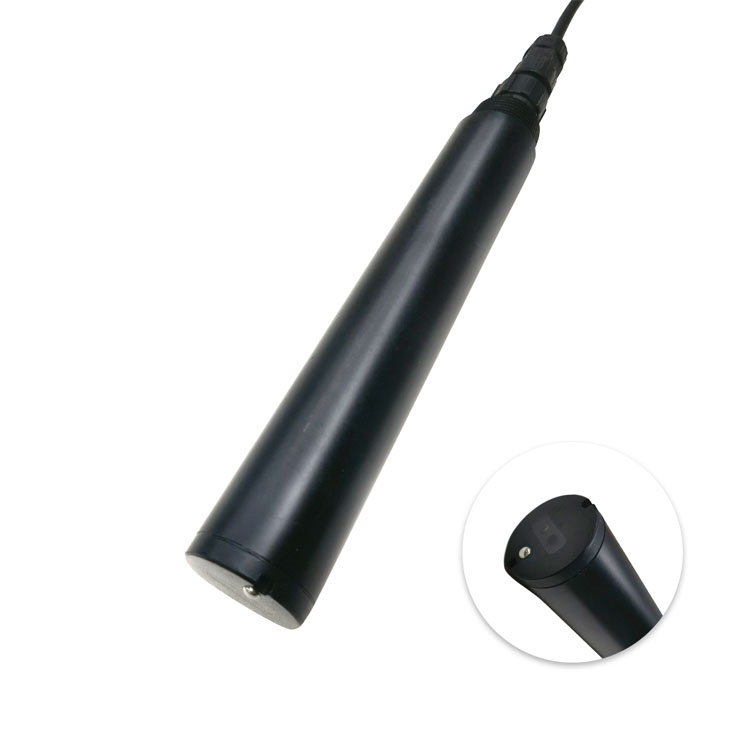
The efficiency of COD sensors makes them play an important role in various aspects of environmental protection and industrial production:
Application Scenarios: Chemical plants, paper mills, printing and dyeing plants, food processing plants, etc., producing high-concentration organic wastewater enterprises.
Application Value: Real-time monitoring of enterprise discharge outlet wastewater COD concentration, ensuring discharged water quality meets national standards. Upon exceeding standards, the system immediately warns and can link with automatic interception or treatment systems to avoid environmental penalties, achieving precise, continuous supervision of discharge processes.
Application Scenarios: Urban sewage treatment plant influent, aeration tank, and effluent.
Application Value:
Influent Monitoring: Quickly grasp influent load (COD concentration), guiding treatment process adjustments.
Process Optimization: Monitor aeration tank COD degradation efficiency, optimize aeration amount, achieve energy-saving operation.
Effluent Assurance: Real-time monitoring of effluent COD, ensuring compliant discharge.
Application Scenarios: Monitoring stations for important water areas such as rivers, lakes, reservoirs.
Application Value: Timely grasp organic pollution trends and changes in water bodies, providing scientific basis for water resource management and sudden pollution event tracing and handling.
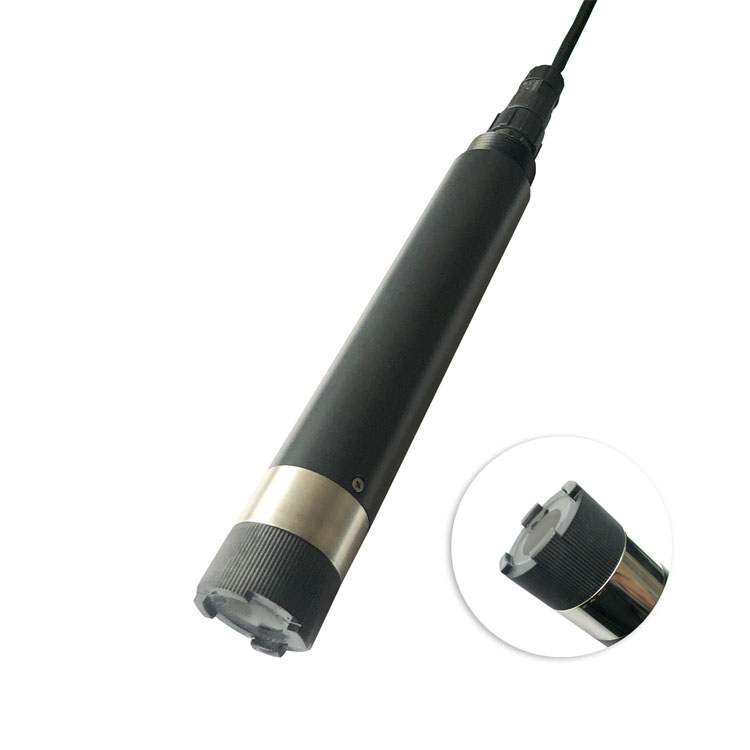
Since NiuBoL NBL-COD-408-S adopts reagent-free, self-cleaning design, its maintenance workload is greatly reduced.
| Maintenance Task | Suggested Maintenance Frequency | Key Explanation |
|---|---|---|
| Self-Cleaning Brush Maintenance | Every 18 months factory return for inspection and maintenance | After 18 months of continuous operation, return to factory to replace dynamic sealing device and check cleaning brush status. |
| Sensor Outer Surface Cleaning | Periodic (depending on water dirtiness) | Rinse with tap water or wipe with damp soft cloth. Stubborn dirt can be cleaned with household detergent. |
| Cable Inspection | Periodic | Check if cable is taut or damaged, ensuring normal sensor power and communication. |
Notes: The sensor interior contains sensitive optical and electronic components, avoid severe mechanical impact.
The sensor requires periodic calibration to maintain precision, usually using two-point calibration:
Zero-Point Calibration (Turbidity): Performed in zero turbidity liquid, execute when value stabilizes.
Slope Calibration (Turbidity/COD): Performed in appropriate standard solution (e.g., high-concentration turbidity standard liquid or COD simulation standard liquid), used to adjust sensor response slope.
The breakthrough in COD sensor technology marks the formal entry of water quality monitoring from traditional time-consuming and labor-intensive modes into a new era of real-time, reagent-free, automated smart monitoring. NiuBoL NBL-COD-408-S, with its dual-wavelength ultraviolet absorption method, self-cleaning brush, 316L anti-corrosion housing, and IP68 protection integration advantages, provides stable, reliable, and cost-effective solutions for industrial discharge, sewage treatment, and environmental monitoring.
In the future, COD sensors will deeply integrate with IoT and big data platforms to form stronger prediction and diagnostic capabilities, comprehensively assisting continuous improvement of water environment quality.
Q1: Why can ultraviolet absorption method measure COD?
A1: The ultraviolet absorption method measures the absorption degree of organic substances in water to 254nm ultraviolet light. Although not the “oxygen consumption” measured by traditional chemical oxidation methods, in many water bodies (such as municipal sewage, surface water), there is a good linear correlation between COD and ultraviolet absorption values. By professionally calibrating the sensor and establishing data models, absorption values can be accurately converted to COD concentrations.
Q2: How does NiuBoL COD sensor eliminate turbidity interference?
A2: NiuBoL COD sensor adopts dual-wavelength design. One light path measures COD, the other reference light (non-254nm) mainly measures attenuation caused by suspended particles. Through built-in algorithms, the system can separate and deduct turbidity interference to the light signal, obtaining purer COD measurement values.
Q3: Does this sensor require frequent cleaning and maintenance?
A3: No. One of the biggest advantages of NBL-COD-408-S is the built-in cleaning brush. The cleaning brush automatically cleans the measurement window, minimizing biological attachment and dirt accumulation, greatly extending the maintenance cycle, achieving true maintenance-free and long-cycle operation.
 NBL-RDO-206 Online Fluorescence Dissolved Oxygen Sensor.pdf
NBL-COD-208 Online COD Water Quality Sensor.pdf
NBL-CL-206 Water Quality Sensor Online Residual Chlorine Sensor.pdf
Prev:Smart Aquaculture Environmental Monitoring Solution and High-Precision Sensor
Next:NiuBoL Fluorescence Dissolved Oxygen Sensor: Core Technology, Applications
Related recommendations
Sensors & Weather Stations Catalog
Agriculture Sensors and Weather Stations Catalog-NiuBoL.pdf
Weather Stations Catalog-NiuBoL.pdf
Agriculture Sensors Catalog-NiuBoL.pdf
Water Quality Sensor Catalog-NiuBoL.pdf
Related products
 Combined air temperature and relative humidity sensor
 TDR Soil Moisture & Temperature Sensor for irrigation| RS485 |4-20mA| NBL-S-THR
 Soil pH sensor RS485 soil Testing instrument soil ph meter for agriculture |NBL-S-PH
 Wind Speed sensor Output Modbus/RS485/Analog/0-5V/4-20mA
 Tipping bucket rain gauge for weather monitoring auto rainfall sensor RS485/Outdoor/stainless steel
 Pyranometer Solar Radiation Sensor 4-20mA/RS485

Screenshot, WhatsApp to identify the QR code
WhatsApp number:+8615367865107
(Click on WhatsApp to copy and add friends)

