





— Blogs —
—Products—
 Consumer hotline +8618073152920
 WhatsApp:+8615367865107
Address:Room 102, District D, Houhu Industrial Park, Yuelu District, Changsha City, Hunan Province, China
Product knowledge
Time:2026-04-01 10:19:29 Popularity:671
With the acceleration of global urbanization, urban management is undergoing a profound transformation from "extensive" to "refined and dynamic." In this process, smart cities, as the core form of next-generation urban informatization, aim to alleviate "big city diseases" such as traffic congestion and environmental pollution through the deep integration of the Internet of Things (IoT), big data, and artificial intelligence.
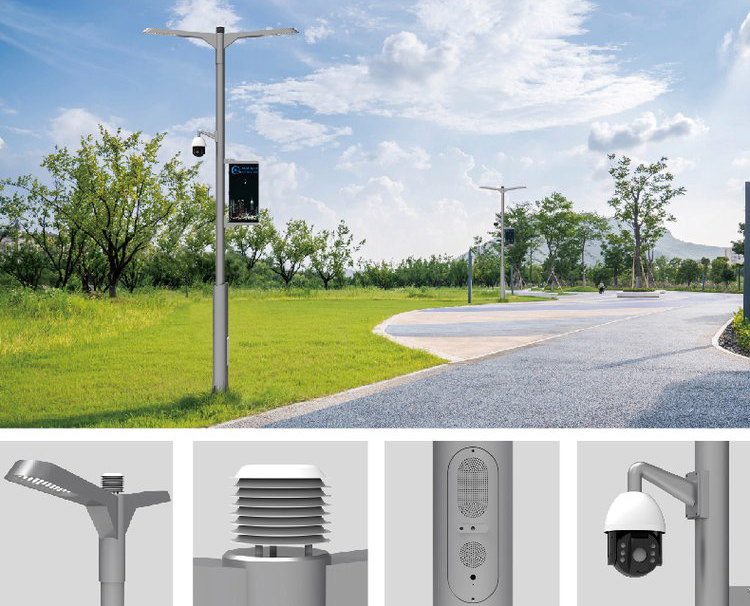
As the most densely distributed public infrastructure in cities, street lamp poles are no longer merely carrying lighting functions. Using lamp poles as carriers and integrating NiuBoL smart lamp pole meteorological sensors to build a city-wide micro-environment perception network has become the preferred solution for system integrators and urban project contractors to achieve "one pole, multiple uses, and resource sharing."

Smart lamp pole meteorological sensors are highly integrated monitoring instruments specially designed for complex urban environments. They break the limitations of traditional weather stations—large size, easy wear, and difficult maintenance—by highly integrating atmospheric pollutant monitoring (six parameters) and conventional meteorological parameter monitoring (five/six parameters) into a compact structure.
NiuBoL Core Design Advantages:
Hidden Ultrasonic Probe in Top Cover: The top cover structure protects the ultrasonic transducer, effectively avoiding interference from rain and snow accumulation on the measurement path, while eliminating reading deviations caused by natural wind shielding.
All-Solid-State, No Moving Parts: Unlike traditional mechanical wind speed and direction instruments, the ultrasonic principle requires no starting wind speed, avoiding mechanical wear during long-term operation and greatly extending the maintenance-free cycle.
High Integration and Anti-Interference Design: Built-in watchdog timer provides automatic reset function, ensuring continuous and stable system operation in urban environments with strong electromagnetic interference.
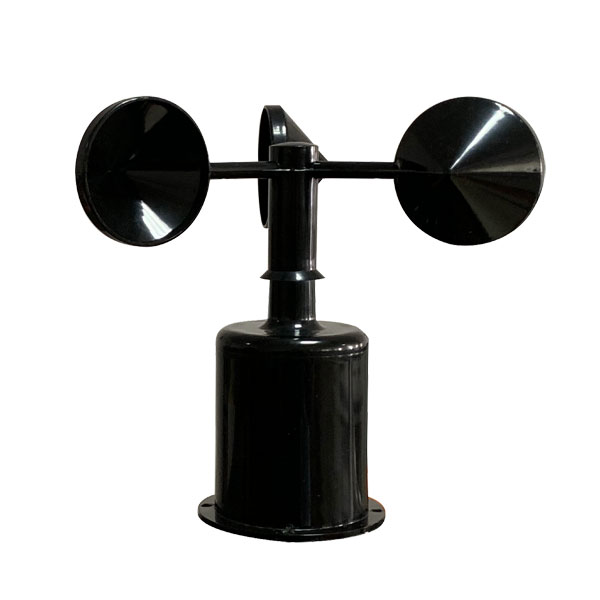 | 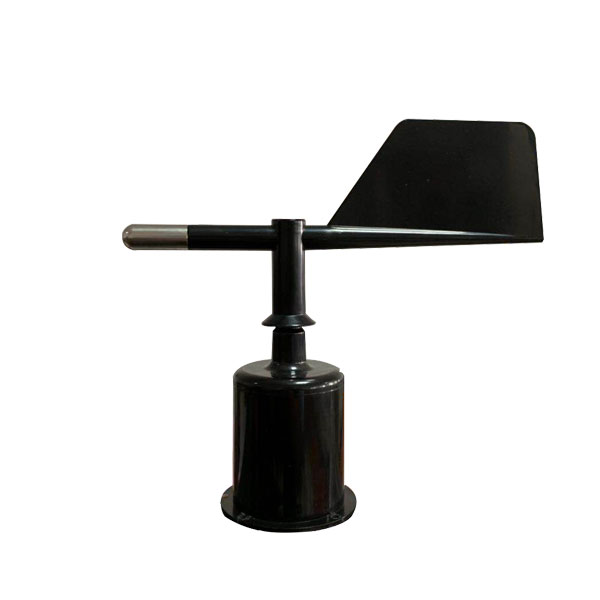 | 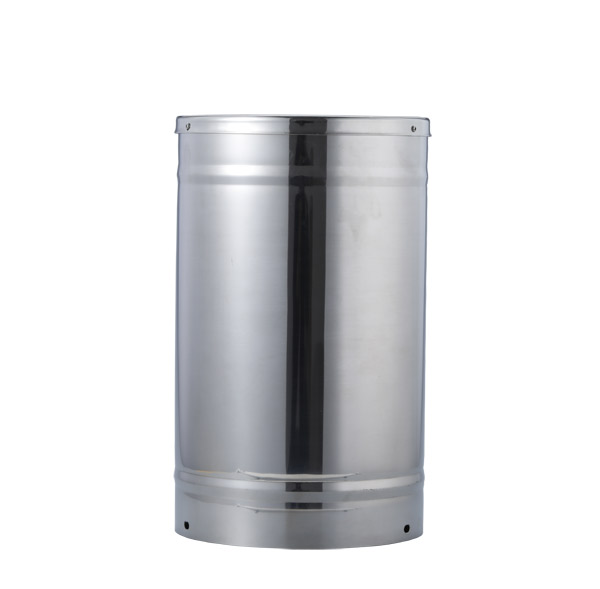 | 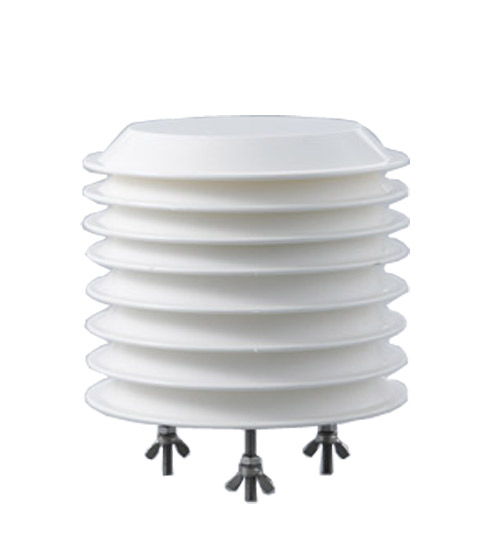 | 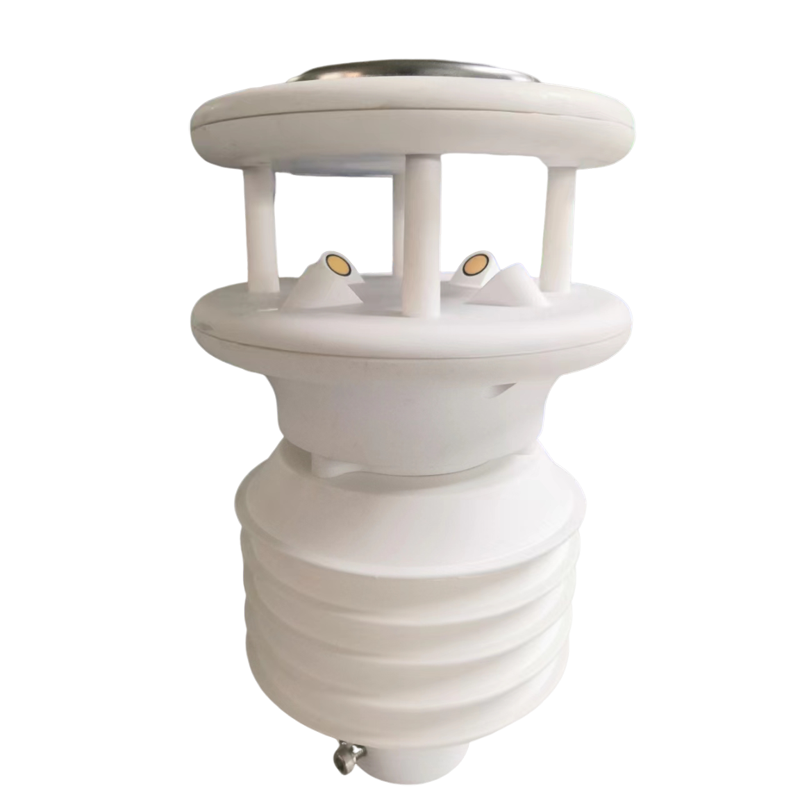 |
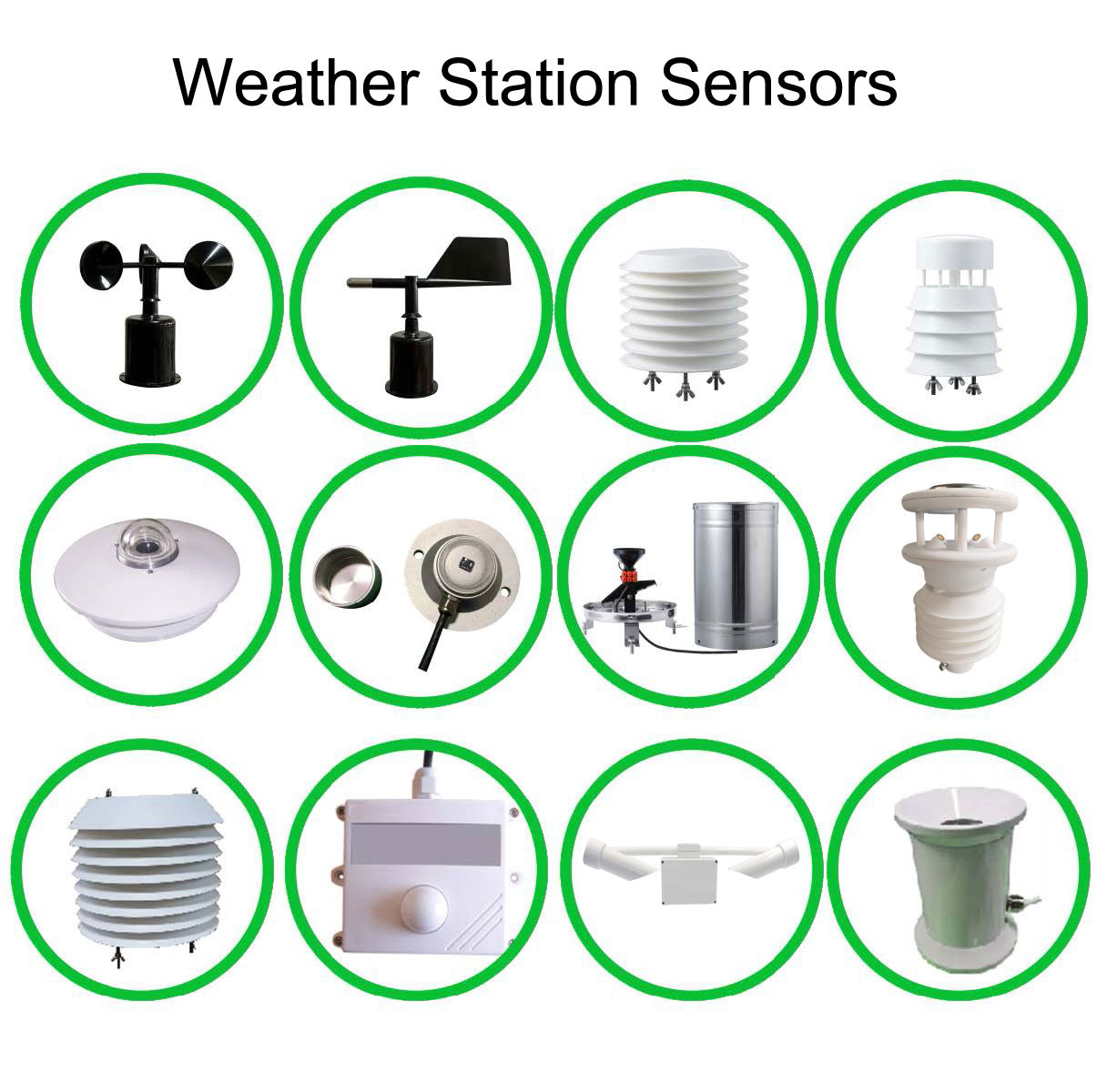
| Wind Speed sensor | Wind direction sensor | Tipping bucket rain gauge sensor | Atmospheric Temperature Humidity pressure Sensor | All-in-One Weather Station |
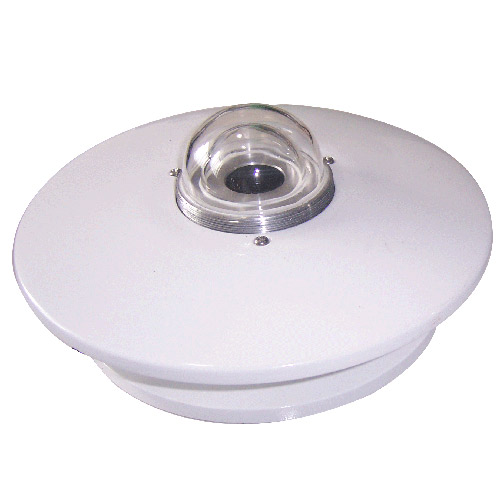 | 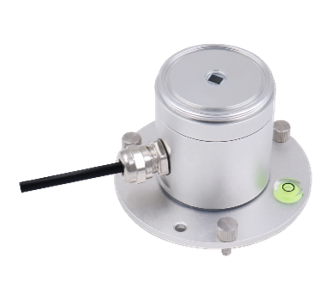 | 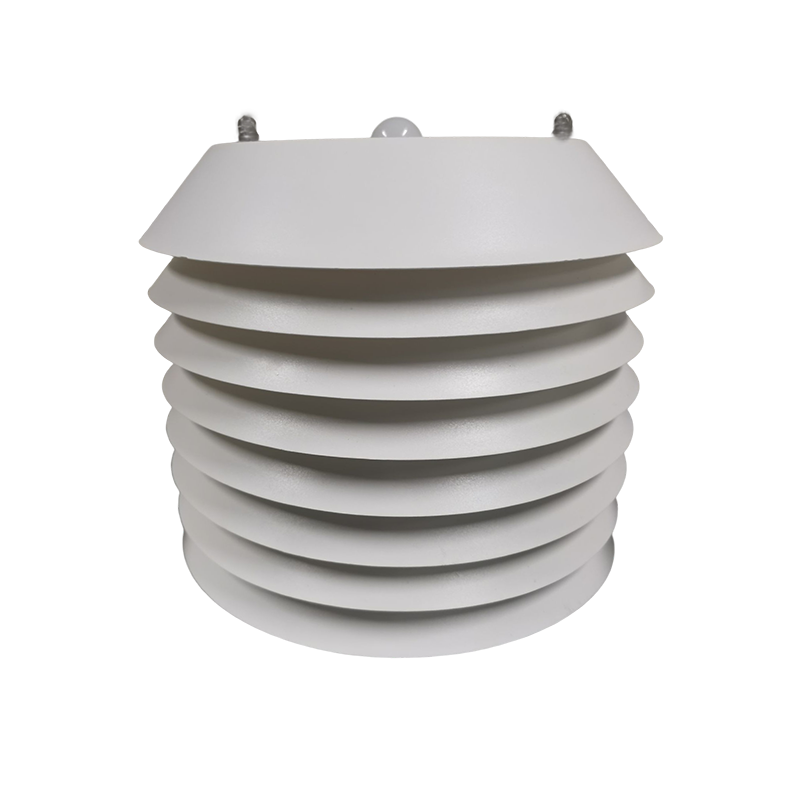 | 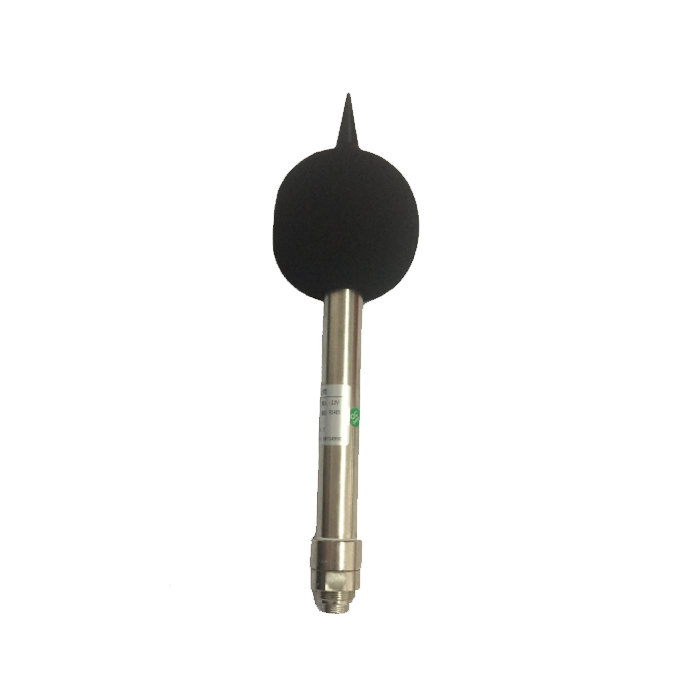 | 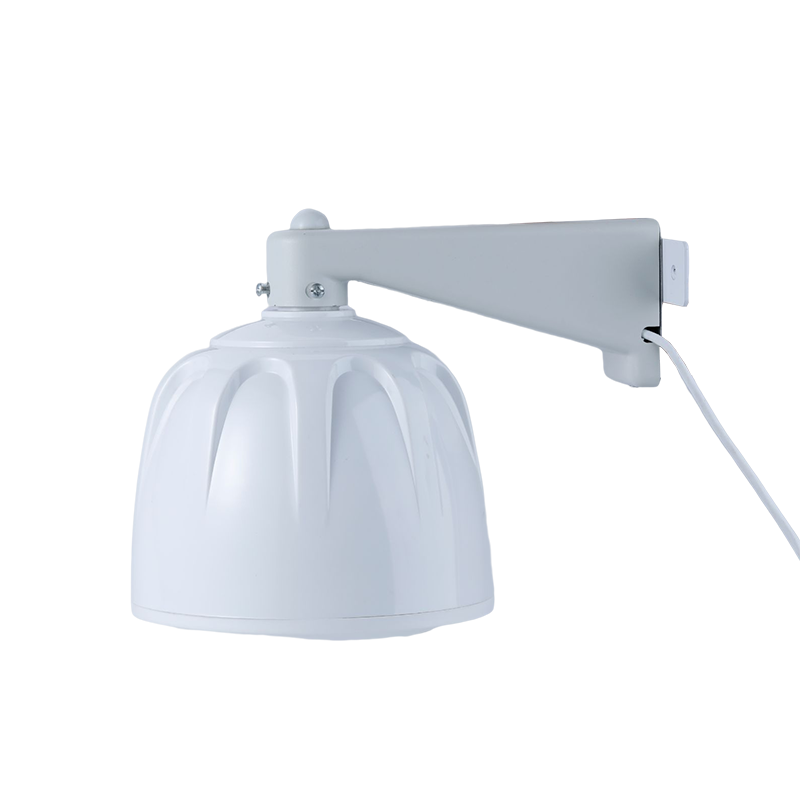 |
| Solar Radiation Sensor | Ultraviolet Radiation Sensor | PM2.5 and PM10 sensors | Noise sensor | Four gas and two dust sensor |
Smart lamp pole meteorological sensors can continuously monitor conventional pollution factors and meteorological auxiliary parameters in the air 24 hours a day, providing high spatiotemporal resolution basic data for environmental protection decision-making.
1. Pollutant Parameters (Six Parameters) Monitoring Function
PM2.5/PM10: Monitor fine particulate matter and inhalable particulate matter concentrations in the environment — key indicators for evaluating the effectiveness of urban haze control.
SO₂ (Sulfur Dioxide) / NO₂ (Nitrogen Dioxide): Mainly from industrial emissions and vehicle exhaust, precursors of acid rain formation and atmospheric photochemical pollution.
CO (Carbon Monoxide): Reflects incomplete combustion products at the street level and traffic congestion conditions.
O₃ (Ozone): Real-time early warning for frequently occurring photochemical smog pollution in summer cities.
2. Meteorological Auxiliary Parameter Monitoring Function
Air Temperature / Relative Humidity: Provide underlying data for urban heat island effect (UHI) and optimize ventilation corridor design in urban planning.
Wind Speed / Wind Direction: Measured based on ultrasonic principle, assisting in analyzing pollutant diffusion paths and dilution speeds.
Atmospheric Pressure: Assists meteorological prediction models and accurately calibrates sensor readings under different altitude/climate conditions.
Rainfall: Monitors precipitation intensity through optical or piezoelectric principles, providing reference for urban flood prevention and drainage scheduling.
| Parameter Item | Monitoring Range | Resolution | Measurement Accuracy |
|---|---|---|---|
| Air Temperature | -40 to 80°C | 0.1°C | ±0.3°C |
| Air Humidity | 0 to 100% RH | 0.1% RH | ±3% RH |
| Wind Speed | 0 to 60 m/s | 0.01 m/s | ±(0.3+0.03V)m/s |
| Wind Direction | 0 to 360° | 1° | ±3° |
| Atmospheric Pressure | 300 to 1100 hPa | 0.1 hPa | ±0.5 hPa |
| PM2.5/PM10 | 0 to 1000 ug/m³ | 1 ug/m³ | ±10% |
| Gas Parameters (4 gases) | See specific selection manual | 0.01 ppm | Industrial-grade accuracy |
| Rainfall (Optional) | 0 to 4mm/min | 0.2mm | ±4% |
| Communication Interface | RS485 | Modbus-RTU | — |
How meteorological sensors directly help schools or cities save energy costs.
Smart dimming strategy for street lights based on environmental perception:
NiuBoL meteorological sensors act as the “sensory trigger” of the smart street light control system:
Visibility and Rainfall Linkage: Combined with real-time rainfall intensity and illuminance data, when the system detects poor visibility due to heavy rain, it can automatically trigger street lights to turn on or increase brightness even before sunset to ensure traffic safety.
Haze Control Collaboration: When PM2.5/PM10 instantaneous concentrations exceed standards, the system can link with fog cannon spray devices on the lamp pole for precise local dust removal, achieving integrated “monitoring-control-treatment.”
As the end of IoT perception, smart lamp pole meteorological sensors connect to the lamp pole’s main control center (centralized controller) via RS485 (Modbus-RTU) protocol. Data is aggregated to the smart city operation center through 4G/5G or fiber optic networks.
1. Smart Environmental Protection and Air Quality Grid Management
Traditional large environmental monitoring stations have large coverage radii but cannot reflect the micro-environment of specific road sections or communities. Smart lamp pole meteorological sensors achieve “grid” management of air quality through city-wide deployment. When sudden pollution occurs on a certain road section, the system can immediately trigger warnings and guide environmental protection departments for precise tracing.
2. Smart Traffic Linkage
Wind speed, rainfall, and visibility data can be fed back to the traffic dispatch center in real time. In extreme weather, the system can automatically send information to information release screens integrated on lamp poles, reminding drivers to slow down and avoid risks, thereby improving traffic safety.
3. Improvement of Citizen Life Services
Real-time air quality and ultraviolet (optional parameter) data can be pushed to citizens through smart lamp pole broadcasts or apps. Guide citizens to engage in outdoor activities when air quality is good; provide necessary health protection guidelines during heavy pollution or extreme temperatures.
4. Industrial Parks and Chemical Zone Monitoring
In special scenarios, smart lamp pole sensors can optionally add specific gas sensors such as VOCs (volatile organic compounds) and H₂S (hydrogen sulfide) to achieve real-time monitoring of industrial exhaust emissions and early warning of illegal emissions.
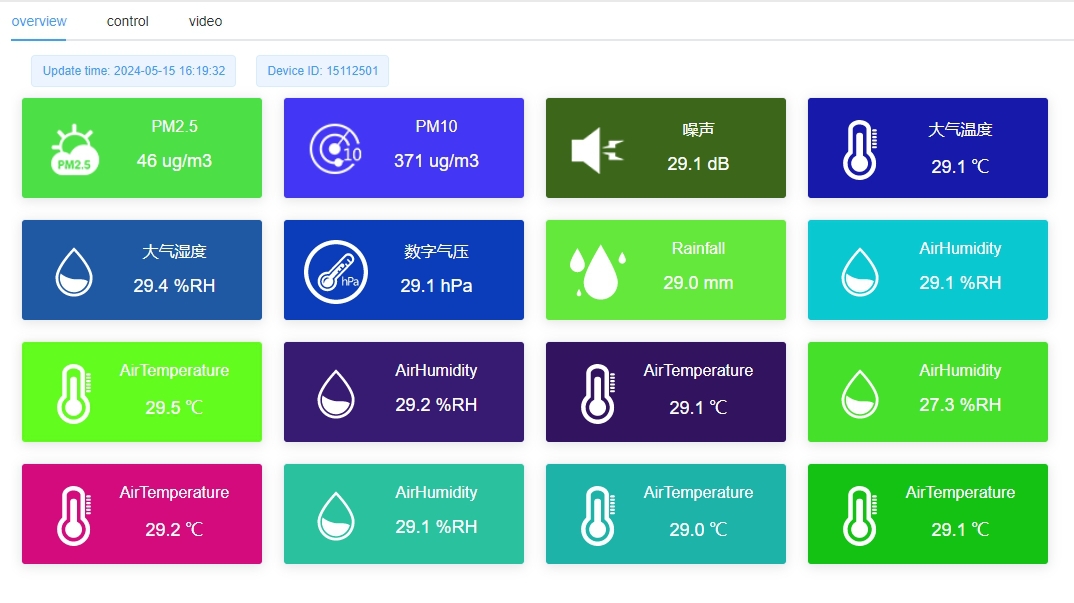
For system integrators, the core reason for choosing NiuBoL sensors lies in their excellent engineering adaptability:
Debug-free Design: Calibrated in a standard meteorological environment simulation chamber before leaving the factory. Data benchmarking can be achieved immediately after on-site installation, shortening project delivery cycles.
Low Power Consumption Operation: Optimized circuit design allows adaptation to the limited power redundancy of smart lamp poles, especially suitable for sharing energy management systems with LED lighting and surveillance cameras.
All-Weather Stability: Whether in coastal cities with high salt spray or high-humidity southern summers, ABS industrial plastic and stainless steel components provide reliable protection, ensuring a service life of more than 5-8 years.
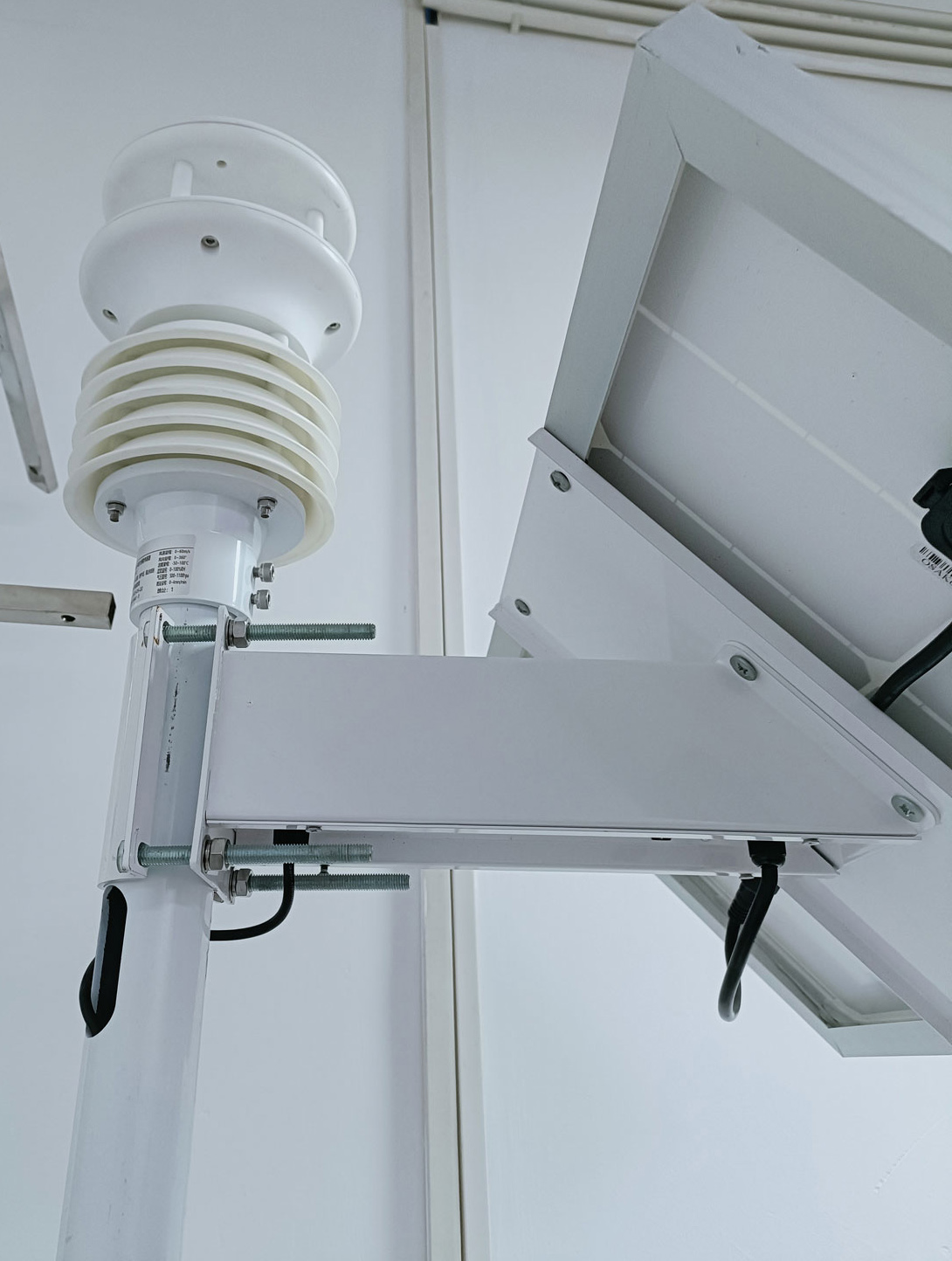
| Selection Consideration Factor | NiuBoL Smart Lamp Pole Series Advantages | Traditional Split Weather Station |
|---|---|---|
| Appearance Integration | Compact integrated design, does not damage the industrial aesthetics of the lamp pole | Messy brackets with multiple sensors hanging externally, affecting city appearance |
| Installation Man-hours | Single cable (power + signal) output, installation completed in 15 minutes | Requires individual wiring, leveling, and north alignment; high man-hour costs |
| Maintenance Frequency | No moving parts, self-lubricating materials, 3-5 years maintenance-free | Mechanical wind cups are easily damaged; bearings require regular replacement |
| Protocol Standard | Standard Modbus-RTU/MQTT | Many proprietary protocols; high difficulty in secondary development |
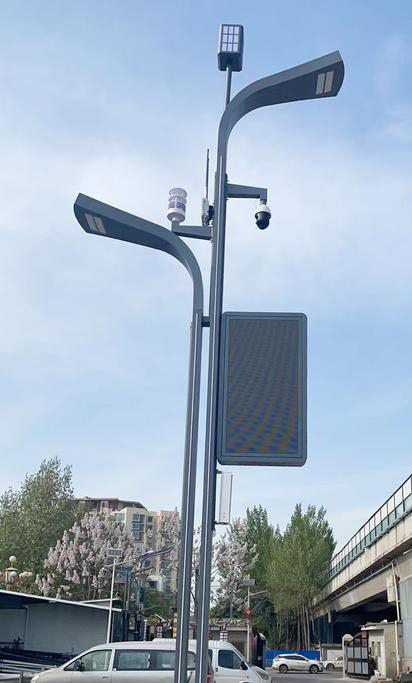
Q1. Smart lamp poles are usually installed at heights of 6-12 meters. Where is the best position to install the sensors?
It is recommended to install them above the lamp pole cantilever or at the top to avoid the influence of heat from the light source below on the temperature sensor, while ensuring that wind speed monitoring is not obstructed by buildings.
Q2. What are the advantages of ultrasonic principle for measuring wind speed compared to mechanical type?
Mechanical type requires a starting wind speed (usually greater than 0.5m/s) and is prone to stalling in light wind environments. The ultrasonic principle has no starting wind speed, can measure extremely subtle airflow fluctuations, and has no mechanical wear, making it suitable for long-term field operation.
Q3. Do sensors with gas modules need regular replacement?
Electrochemical gas sensors (such as SO₂, NO₂) usually have an effective lifespan of about 2 years. NiuBoL adopts a modular design — only the core sensing module needs to be replaced upon expiration, without disassembling the entire device.
Q4. How does the sensor prevent lightning strikes?
We recommend installing a lightning rod at the top of the lamp pole. The sensor’s internal circuit integrates transient voltage suppression (TVS) protection, effectively preventing induced lightning from impacting the RS485 communication interface.
Q5. Does it support access to third-party cloud platforms?
Yes. We provide standard Modbus-RTU register manuals. Integrators can easily connect data to AWS, Alibaba Cloud, or government private clouds.
Q6. Will hidden probes be affected by dust coverage?
Due to the top cover hidden design, the probe surface is not prone to dust accumulation. Usually, only a simple external blow-off is needed during the annual maintenance of the lamp pole.
Q7. Will data be lost if the smart lamp pole loses power?
The sensor itself does not store massive historical data, but its built-in watchdog circuit ensures monitoring resumes instantly upon power restoration. It is recommended that integrators configure UPS or backup batteries in the lamp pole system to ensure data continuity.
Q8. Can this sensor prevent salt spray corrosion?
Yes. For coastal city projects, NiuBoL provides optional 316L stainless steel or special Teflon-coated versions to effectively resist erosion from salt spray and high-humidity environments.
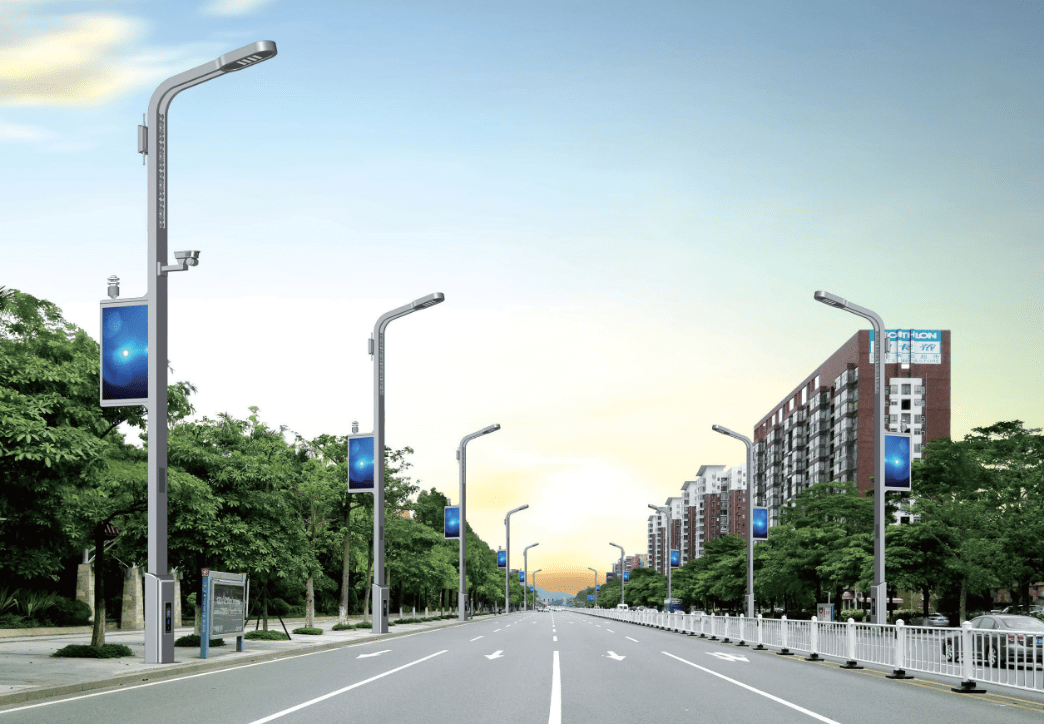
Smart lamp pole meteorological sensors are indispensable components of the smart city perception layer. By deeply integrating atmospheric quality monitoring with conventional meteorological parameter monitoring, they provide city managers with a real-time and refined environmental monitoring map. NiuBoL is committed to providing global system integrators with industrial-grade, maintenance-free sensing layer hardware support, helping every smart lighting project evolve into a smart environmental monitoring node.
As a manufacturer, we deeply understand the high requirements for stability and technical support in smart city projects. If you are planning a city smart street light system or grid-based environmental monitoring project, contact the NiuBoL technical team. We will provide comprehensive technical support from selection to integration.
Related recommendations
Sensors & Weather Stations Catalog
 Agriculture Sensors and Weather Stations Catalog-NiuBoL.pdf
Weather Stations Catalog-NiuBoL.pdf
Agriculture Sensors Catalog-NiuBoL.pdf
Water Quality Sensor Catalog-NiuBoL.pdf
Related products
 Combined air temperature and relative humidity sensor
 TDR Soil Moisture & Temperature Sensor for irrigation| RS485 |4-20mA| NBL-S-THR
 Soil pH sensor RS485 soil Testing instrument soil ph meter for agriculture |NBL-S-PH
 Wind Speed sensor Output Modbus/RS485/Analog/0-5V/4-20mA
 Tipping bucket rain gauge for weather monitoring auto rainfall sensor RS485/Outdoor/stainless steel
 Pyranometer Solar Radiation Sensor 4-20mA/RS485

Screenshot, WhatsApp to identify the QR code
WhatsApp number:+8615367865107
(Click on WhatsApp to copy and add friends)

