





— Blogs —
—Products—
 Consumer hotline +8618073152920
WhatsApp:+8615367865107
Address:Room 102, District D, Houhu Industrial Park, Yuelu District, Changsha City, Hunan Province, China
Product knowledge
Time:2026-08-23 09:06:00 Popularity:264
A benchtop TDS meter can help check an online conductivity-based TDS channel only when the sample, temperature basis and conversion settings are comparable. A disagreement between the two displays does not immediately identify a faulty probe. Establish what each instrument measured and what happened to the sample between the process and the bench.
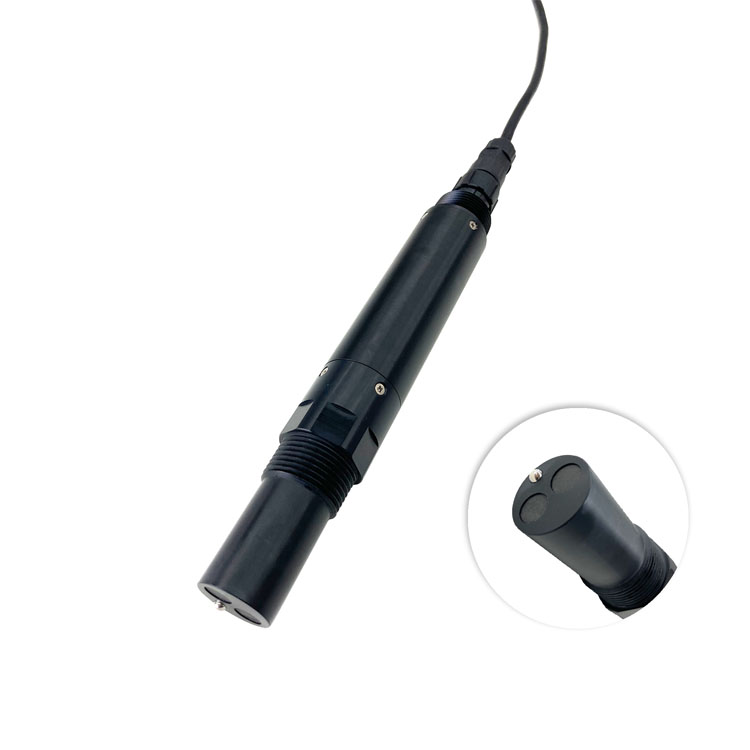
Many TDS meters estimate dissolved-solids concentration from conductivity. If two instruments use different conversion coefficients, their TDS values can differ even when their conductivity readings agree. Record EC, sample temperature, compensation basis and TDS coefficient for both instruments before adjusting either one.
For an arithmetic illustration, the same compensated EC of 1000 uS/cm gives 500 mg/L with a coefficient of 0.50 and 640 mg/L with 0.64. The difference is created by the calculation; it is not evidence of a 140 mg/L change in the sample. Neither coefficient should be accepted for all water compositions.
A bench comparison of two conductivity-derived values also does not establish equivalence to a laboratory gravimetric TDS result. Where a contract or reporting obligation requires a particular analytical method, use that method and its quality controls. Do not substitute a matching display for method compliance.
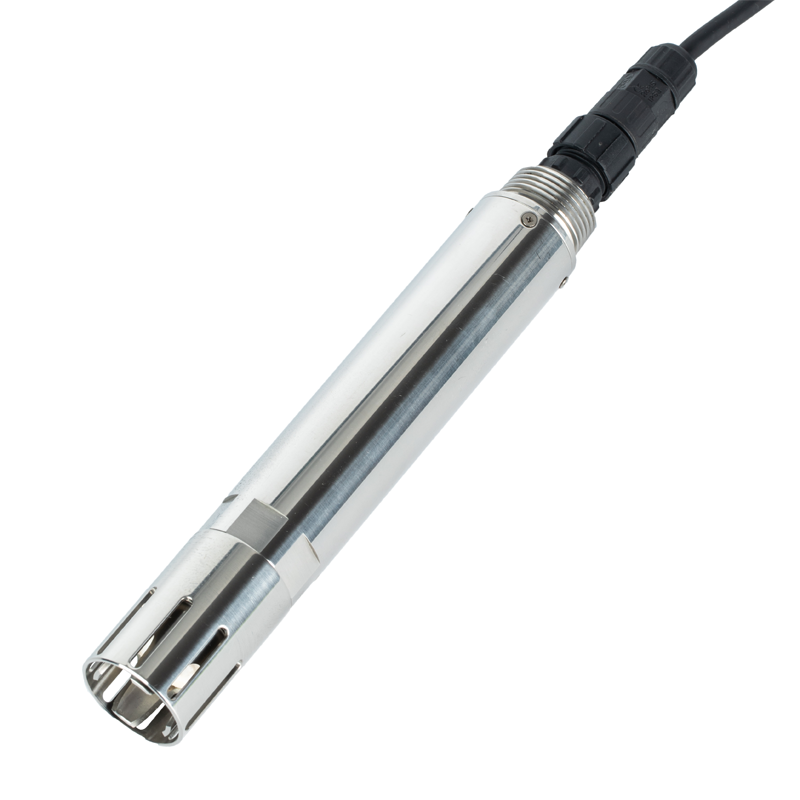
In a combined water-testing session, the PH-4S digital pH probe is a separate measurement channel. Plan aliquots and the test sequence so reference checks for another parameter do not contaminate the conductivity comparison sample.
| Record | Why it changes the comparison |
|---|---|
| Sample point and collection time | A convenient tap may differ from the online probe location. A later sample may miss a process change. |
| Container and preparation | Residual rinse water or a previous sample can change ionic concentration, particularly in low-conductivity water. |
| Collection-to-measurement interval | Temperature, evaporation and exposure can change the conditions being compared. |
| EC unit and temperature basis | Raw conductivity at sample temperature and a temperature-normalized result are different quantities. |
| Conversion coefficient and range | These affect the TDS calculation, displayed decimals and applicable tolerance. |
Take the comparison from a location that represents the installed channel, using the project's safe sampling procedure. Keep it away from dosing injection pockets or stagnant branches unless those are the intended measuring points. Do not loosen an installed probe to obtain a sample from a pressurized process.
Use an appropriate clean container and enough sample for the required immersion and clearance. Follow the selected method for rinsing, stabilization and handling. A bench test made immediately after a highly conductive standard needs particular attention to residual liquid; repeating the reading in the same contaminated aliquot does not remove the error.
The USGS specific-conductance guidance covers equipment selection, calibration, measurement and reporting for natural waters. Use the relevant method alongside instrument-specific procedures; it is not a certification of a particular industrial installation.
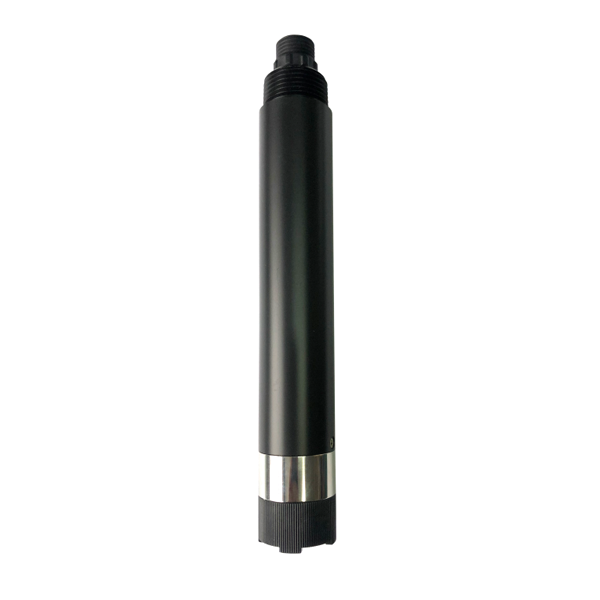
An optical oxygen probe measures a property that can change through air exchange during handling. A sample plan suitable for the EC comparison should not automatically be applied to oxygen.
Set an acceptance criterion before viewing the results. It should reflect the two instruments' performance, reference uncertainty and practical sampling differences. Resolution alone is not a tolerance. Nor should an unexplained offset be removed by changing the TDS coefficient merely to make two displays agree.
A salinity probe adds another conversion and unit definition. If salinity is included in the comparison, identify its method separately rather than treating a salinity number as an independent TDS reference.
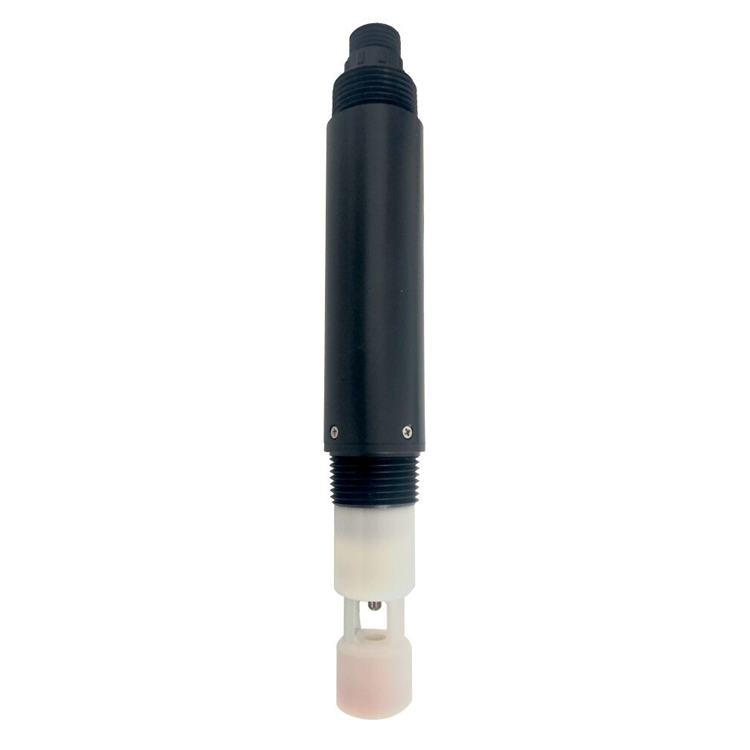
The NiuBoL NBL-WQ-EC is an online conductivity probe. It can provide the installed side of a bench-versus-online comparison, but it is not a self-contained benchtop TDS meter. A compatible receiver or data logger is required for its RS485 output.
| Specification | NBL-WQ-EC | Comparison requirement |
|---|---|---|
| EC span options | 0-20.00 uS/cm, 0-200.0 uS/cm, 0-5000 uS/cm or 0-200.0 mS/cm | Identify the ordered range; TDS support depends on the version. |
| Stated performance | EC +/-1% FS; temperature +/-0.3 C | Assess the tolerance using the actual full scale, not an assumed percentage of the reading. |
| Temperature and TDS | Pt1000 automatic compensation; configurable TDS coefficient, default 0.64 | Record the installed settings rather than assuming defaults remain in use. |
| Electrical requirements | 12-24 V DC +/-10%; 0.2 W at 12 V; RS485 Modbus RTU | Confirm the delivered wiring and host decoding. |
| Wet installation | 0-50 C; below 0.6 MPa; IP68; 3/4 NPT | Provide safe retrieval and a representative installed measurement. |
| Assembly | ABS, SUS316L or PVC by configuration; 5 m standard cable, customizable | Specify the actual wetted material and cable requirements. |
For the EC-1.0 and EC-SI versions, keep at least 2 cm clearance from the side walls and bottom during testing. A small beaker that violates this condition is not an acceptable comparison vessel simply because the probe fits inside it.
Other station parameters, including a BOD monitoring channel, need their own reference methods. Agreement in EC cannot validate the complete water-quality station.

Compare conductivity with matching units and temperature basis first. If EC agrees but TDS differs, inspect the conversion settings before changing calibration. Preserve both results in the comparison record.
Only if that timing and handling are appropriate for the intended method and comparison. Record the delay and relevant conditions. A delayed result should not be presented as a simultaneous check of a short online event.
No. Review its range, calibration, temperature measurement and specified performance. Bench location alone provides no accuracy guarantee; the sample and operator procedure also affect the result.
Include the appropriate reference instrument, compatible standards, suitable vessels, cleaning supplies and a recording procedure. Specify the online probe's range and immersion needs so the kit can perform the actual test.
Keep it separate when the contract requires that method, the dissolved composition is uncertain or a conductivity-derived estimate cannot answer the question. Explain the distinction in the acceptance criteria rather than forcing both methods to give identical numbers.
The NBL-WQ-TS turbidity probe measures scattered light from the sample. Suspended-particle behavior and its optical reference checks are separate from a conductivity-derived TDS comparison.
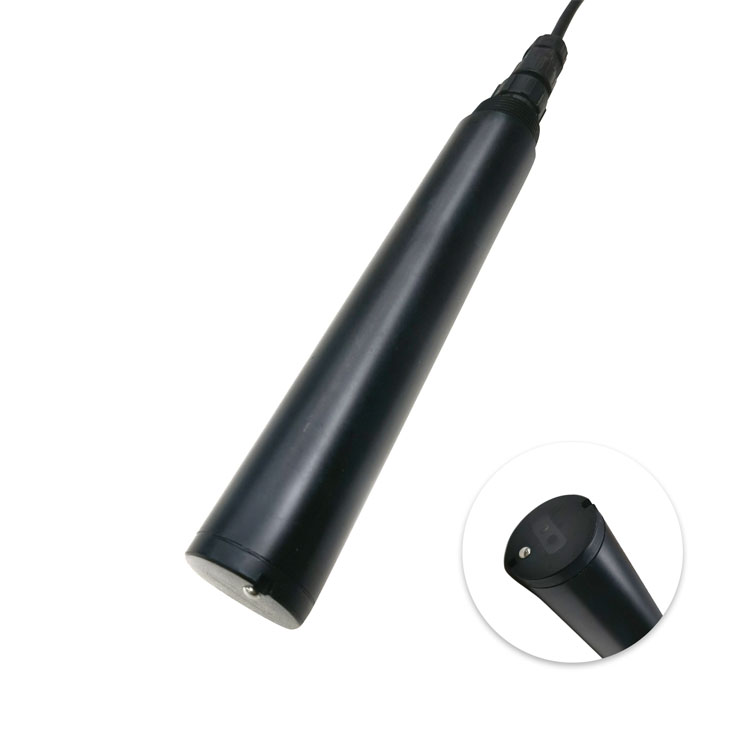
A benchtop TDS meter is useful for an online check when the comparison preserves sample identity, EC units, temperature basis and conversion settings. Establish those conditions before deciding which instrument needs service. For the online component, NiuBoL can review NBL-WQ-EC range and interface requirements without treating an immersion probe as a benchtop meter.
Prev:Total Suspended Solids Analyzer: Validate Against Laboratory Samples
Next:pH Conductivity TDS Meter Price: Compare the Actual Equipment Scope
Related recommendations
Sensors & Weather Stations Catalog
 Agriculture Sensors and Weather Stations Catalog-NiuBoL.pdf
Weather Stations Catalog-NiuBoL.pdf
Agriculture Sensors Catalog-NiuBoL.pdf
Water Quality Sensor Catalog-NiuBoL.pdf
Related products
 Combined air temperature and relative humidity sensor
 TDR Soil Moisture & Temperature Sensor for irrigation| RS485 |4-20mA| NBL-S-THR
 Soil pH sensor RS485 soil Testing instrument soil ph meter for agriculture |NBL-S-PH
 Wind Speed sensor Output Modbus/RS485/Analog/0-5V/4-20mA
 0.2mm Tipping Bucket Rain Gauge for Weather & Hydrology | NiuBoL
 Pyranometer Solar Radiation Sensor 4-20mA/RS485


Screenshot, WhatsApp to identify the QR code
WhatsApp number:+8615367865107
(Click on WhatsApp to copy and add friends)

