





— Blogs —
—Products—
 Consumer hotline +8618073152920
WhatsApp:+8615367865107
Address:Room 102, District D, Houhu Industrial Park, Yuelu District, Changsha City, Hunan Province, China
Product knowledge
Time:2026-08-11 09:08:00 Popularity:269
Quick Answer: A dissolved oxygen meter for water can show whether oxygen is falling before an alarm threshold is reached, provided the records are current, comparable and representative. Use the fall rate as a short-term warning aid, not a prediction of pond safety. Keep the farm's absolute low-oxygen warning active and verify the complete response path separately.
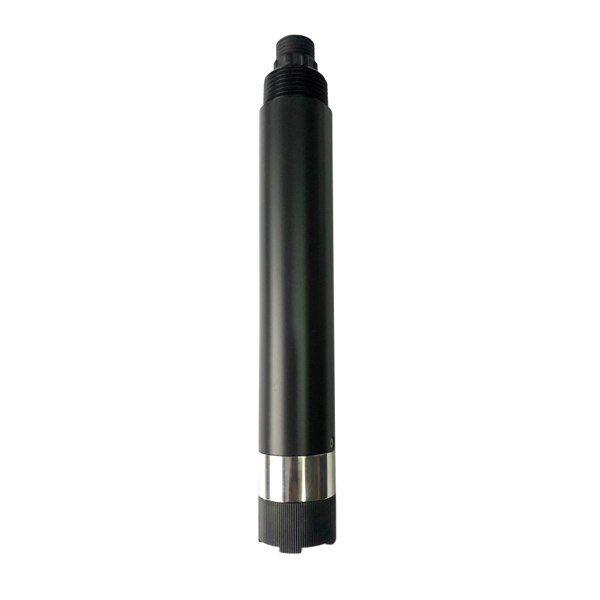
The important aquaculture record is not only the daily average. Operators need to see the occupied water layer during the periods when oxygen availability may become limiting, including night and early morning. One manual inspection cannot reconstruct an unobserved event, while a continuous record is useful only if its location and timestamps are credible.
Before choosing a dissolved oxygen meter for water, identify the decision: dispatch an operator, inspect an aerator, adjust an approved operating schedule or investigate a recurring decline. This article concerns interpreting the decline. The alarm-to-aerator response needs its own commissioning test; a downward line does not by itself command or prove effective aeration.
Use the change in DO divided by elapsed time. For example, an illustrative fall from 6.0 to 5.4 mg/L over thirty minutes is -1.2 mg/L per hour. These are example numbers, not a NiuBoL pond trial or a recommended alarm level. The calculation describes the observed interval and does not guarantee that the next interval will follow the same slope.
Use several valid readings across an appropriate observation window rather than subtracting two adjacent noisy samples. Keep the same probe, depth and compensation settings. Exclude cleaning, cap checks, removal from water and stale records. A change in aeration, inflow or pond circulation can alter the trend immediately.
In brackish water, check the salinity correction used by the DO probe. The separate salinity instrument below can provide a relevant water measurement, but sending its value to a platform does not automatically update a DO sensor's compensation setting. Define that update explicitly if the project needs it.
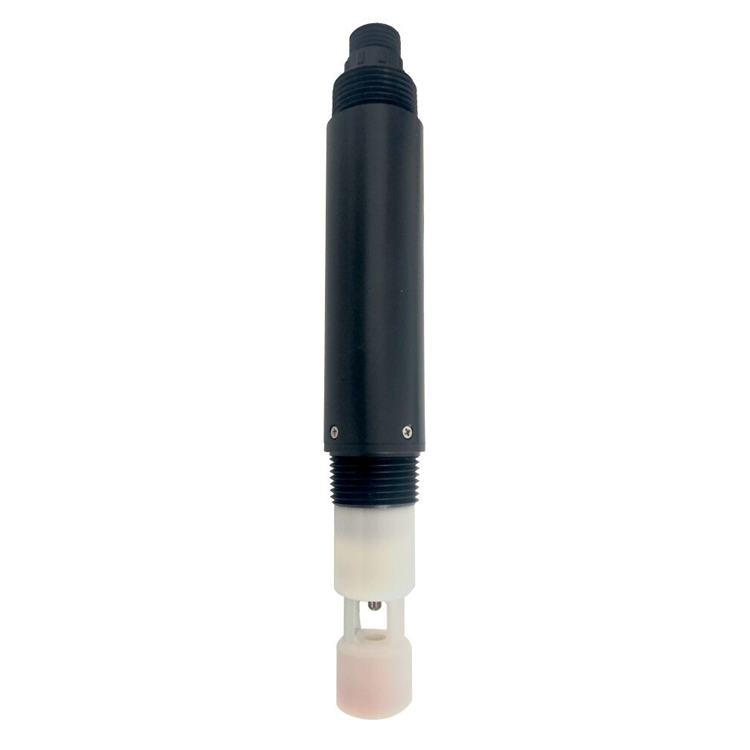
The NiuBoL DO-4A and base NBL-WQ-DO are separate optical probes. Both avoid electrolyte replenishment and do not consume oxygen during measurement, but their stated accuracy terms differ. Neither the display resolution nor a finely plotted trend establishes the accuracy of each small change.
| Item | NBL-WQ-DO-4A | NBL-WQ-DO |
|---|---|---|
| DO range | 0-20.00 mg/L | 0-20.00 mg/L |
| DO accuracy | +/-2% of reading | +/-2% FS; equivalent to +/-0.4 mg/L on this span |
| Resolution | 0.01 mg/L | 0.01 mg/L |
| Water temperature / pressure | 0-50 C; <=0.2 MPa | 0-45 C; <0.2 MPa |
| Supply / consumption | 12-24 VDC / 0.2 W at 12 V | 12-24 VDC / <0.3 W at 12 V |
| Interface | RS485 Modbus RTU; optional 4-20 mA | RS485 Modbus RTU |
| Temperature / salinity treatment | Pt1000 automatic temperature compensation; configured salinity compensation | Pt1000 automatic temperature compensation; configured salinity compensation |
| Protection / service item | IP68; replaceable optical cap | IP68; replaceable optical cap |
Static accuracy is not the same as short-term repeatability. Do not assume that every 0.01 mg/L change is a real pond event, or that all errors cancel when calculating a slope. Check repeatability and reference agreement under representative conditions. Specify cable length, mounting and wetted material for the exact configuration; do not merge the DO-4A plastic housing with a different stainless-steel model.

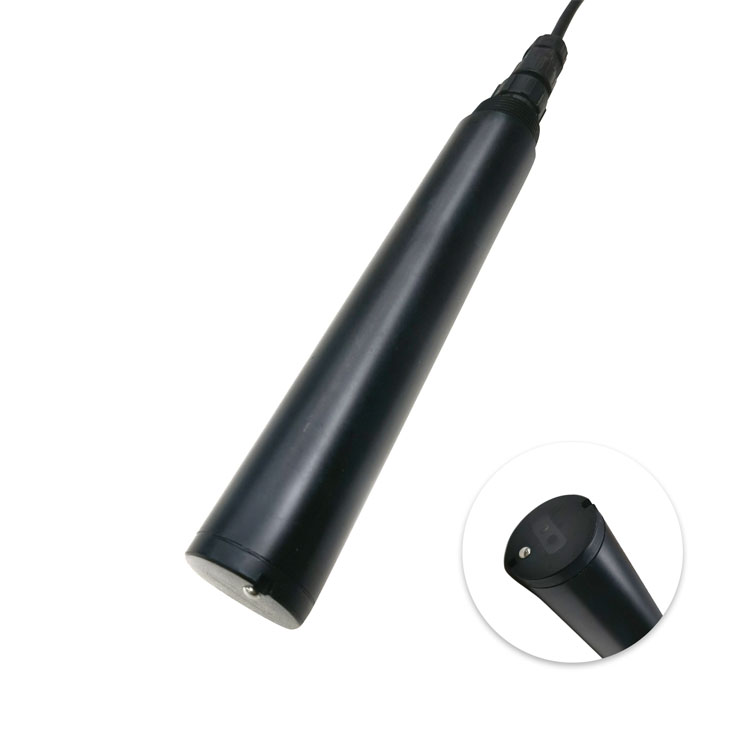
The optical BOD probe above measures a different water-quality indicator. It does not provide an instantaneous replacement for dissolved oxygen, and its output should not be subtracted from a DO value to estimate how much oxygen remains available to the stock.
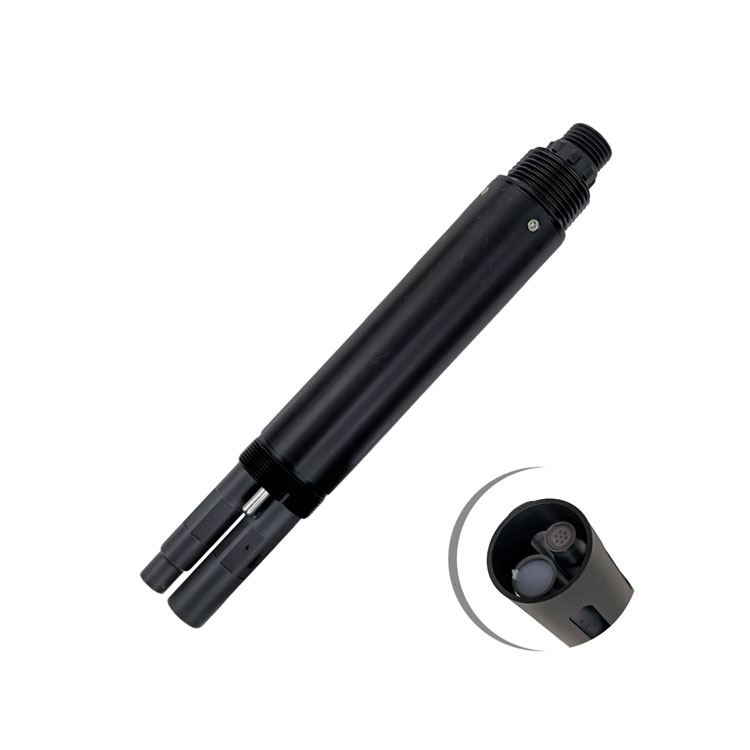
Turbidity, feeding, rainfall and aerator operation can provide useful context when reviewing a decline. They do not supply missing DO observations. The turbidity probe below may help describe suspended material, but it cannot prove that oxygen at fish depth remained adequate during a communication gap.
Keep each trace labeled with its actual unit, location and acquisition time. Review unusual declines against operating notes instead of assigning a cause from one correlated parameter. Additional channels are worth buying when they answer a separate management question, not merely to fill an aquaculture dashboard.
A declining rate can attract attention while the absolute reading is still above the farm's action level. It must not disable that absolute warning. The acceptable DO level depends on species, life stage, stocking, temperature and management practice; there is no universal alarm value supplied by the probe's 0-20 mg/L range.
A simple straight-line time-to-threshold calculation assumes that the decline continues unchanged. Pond biology, weather and aeration do not guarantee that assumption. If the receiving software displays such a projection, label it as conditional and stop calculating it when the data are stale or invalid. Do not turn it into a promise of remaining safe time.
For RS485 Modbus RTU, connect the probe to a compatible logger, PLC or gateway and verify the delivered register map. Acquisition time must remain distinct from upload time after a network interruption. Trend calculations and notifications are functions of the selected receiving system, not capabilities that should be assumed inside every DO probe.
The ammonium-selective sensor below is another separate channel. Nitrogen observations may support a broader water-management review, but they cannot validate a missing or fouled DO measurement. For equipment-response commissioning, see aquaculture DO alarm and aerator response checks.
They answer different questions. A fall-rate warning identifies a recent downward trend; an absolute alarm identifies a level requiring action under the farm's rules. Keep both appropriately configured rather than replacing one with the other.
Select it against the event duration, probe behavior and operator response requirement, then test the resulting record. Faster sampling does not improve probe accuracy and cannot recover oxygen events missed while the sensor was offline.
Only when reliable acquisition timestamps and valid observations are retained. Upload times alone can compress an old sequence into an apparent sudden event. Confirm the logger's storage and timekeeping functions before ordering.
First investigate its cause. Bubbles, cleaning and movement may create invalid observations, while a real process event should not be silently removed. Define how the receiving system marks excluded data and preserves the original record.
Provide pond or tank layout, occupied depth, salinity, temperature, proposed mounting, available power and controller details. State whether you need only records, remote notifications or integration with a separately engineered aeration system.
No. It describes measured conditions at the sensing point. Representative coverage, valid data, working aeration and timely action remain necessary. A single probe cannot establish oxygen conditions throughout every part of a pond.
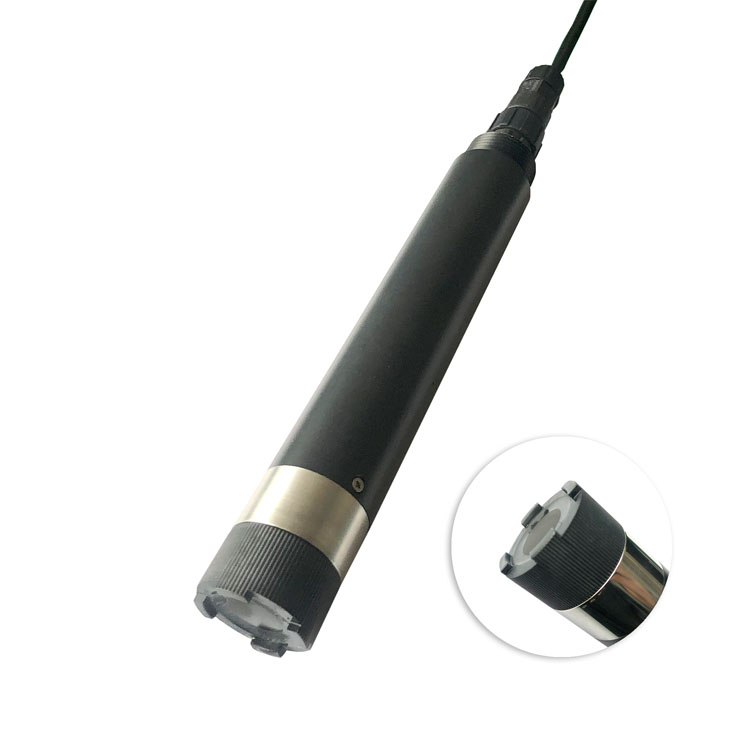
Specify a dissolved oxygen meter for water around the night-time decision and the quality of its record. A useful decline warning needs representative placement, current observations, clear accuracy terms and reliable timestamps. NiuBoL optical probes can supply the DO channel; the quotation should identify the logger and notification functions needed to turn it into an operational warning.
Related recommendations
Sensors & Weather Stations Catalog
 Agriculture Sensors and Weather Stations Catalog-NiuBoL.pdf
Weather Stations Catalog-NiuBoL.pdf
Agriculture Sensors Catalog-NiuBoL.pdf
Water Quality Sensor Catalog-NiuBoL.pdf
Related products
 Combined air temperature and relative humidity sensor
 TDR Soil Moisture & Temperature Sensor for irrigation| RS485 |4-20mA| NBL-S-THR
 Soil pH sensor RS485 soil Testing instrument soil ph meter for agriculture |NBL-S-PH
 Wind Speed sensor Output Modbus/RS485/Analog/0-5V/4-20mA
 Tipping bucket rain gauge for weather monitoring auto rainfall sensor RS485/Outdoor/stainless steel
 Pyranometer Solar Radiation Sensor 4-20mA/RS485


Screenshot, WhatsApp to identify the QR code
WhatsApp number:+8615367865107
(Click on WhatsApp to copy and add friends)

