





— Blogs —
—Products—
 Consumer hotline +8618073152920
WhatsApp:+8615367865107
Address:Room 102, District D, Houhu Industrial Park, Yuelu District, Changsha City, Hunan Province, China
Product knowledge
Time:2026-07-30 13:48:43 Popularity:270
Quick Answer: An IoT based water quality monitoring system is not fully handed over when a supplier demonstrates a live dashboard. The owner needs agreed access to configuration, data exports, station identities and service arrangements. Test those functions using the intended owner's account and document any dependencies on a gateway, network subscription or hosted platform.

A contractor may install reliable sensors yet leave the owner dependent on an installer account for every change. A remote station may continue collecting data while its communications subscription or export access is controlled elsewhere. These are operational dependencies that should be visible before the system is purchased.
List responsibilities for the wet-end probes, local PLC or data logger, gateway, communications service and receiving application. One company may supply several layers, but their functions remain different. Identify who changes a sensor configuration, who restores a failed gateway and who can retrieve records without the original installer present.
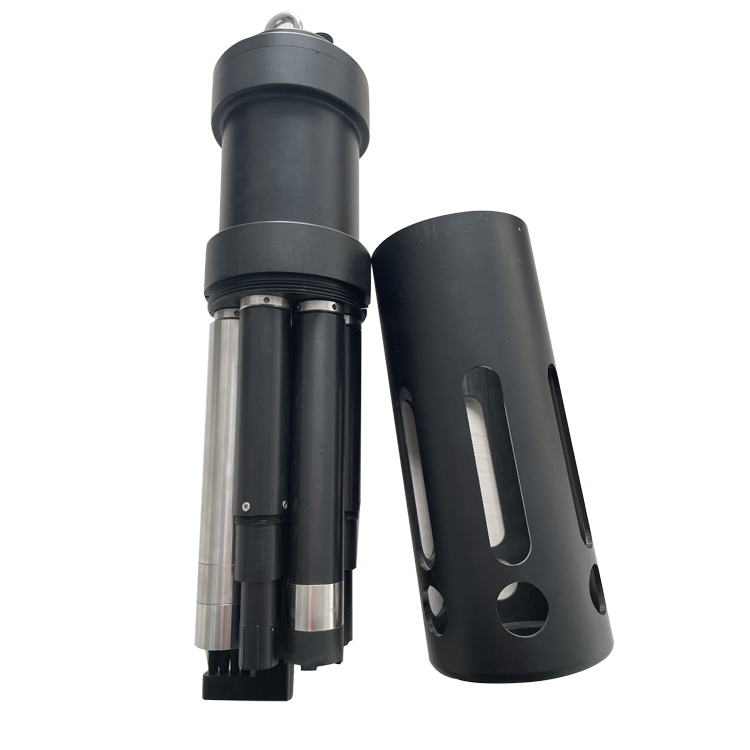
The NiuBoL MPS-5B provides selected measurements through RS485 Modbus RTU. That interface does not itself supply a cloud account, web API, remote-user permissions or an export service. Specify those at the layer that actually implements them.
| MPS-5B item | Product configuration | Separate handover requirement |
|---|---|---|
| Measurements | Optional pH, DO, conductivity/salinity, ORP and turbidity modules; up to six parameters including temperature | Installed channel list and permanent point identities |
| Interface | RS485 Modbus RTU | Actual register interpretation and receiver configuration |
| Supply; power | 12 VDC; listed 2 W at 12 V | Complete station power design and service documentation |
| Environment | 0-50 degrees C; pressure at most 0.2 MPa; IP68 | Site mounting, retrieval and exposure review |
| Construction; cleaning | POM/316L; mechanical brush | Service access and configuration records |
| Accuracy examples | pH +/-0.1; temperature +/-0.3 degrees C; other channels depend on the selected module | Channel-specific reference and acceptance records |
| Cable | Shielded field connection; specify ordered length and jacket | Wiring drawing and protected-junction locations |
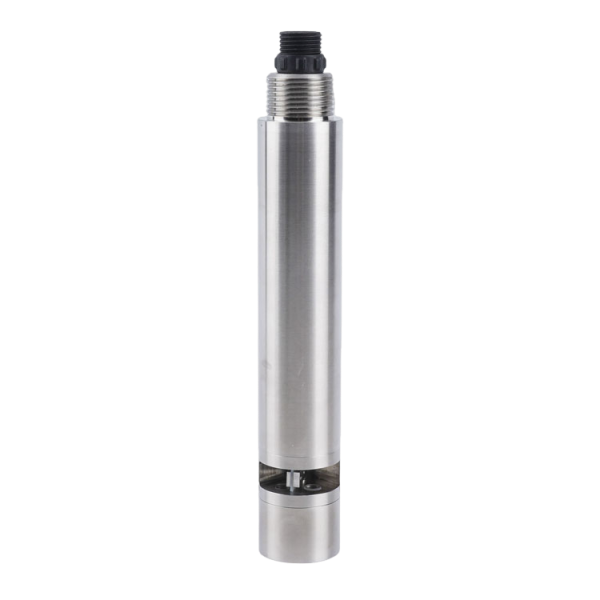
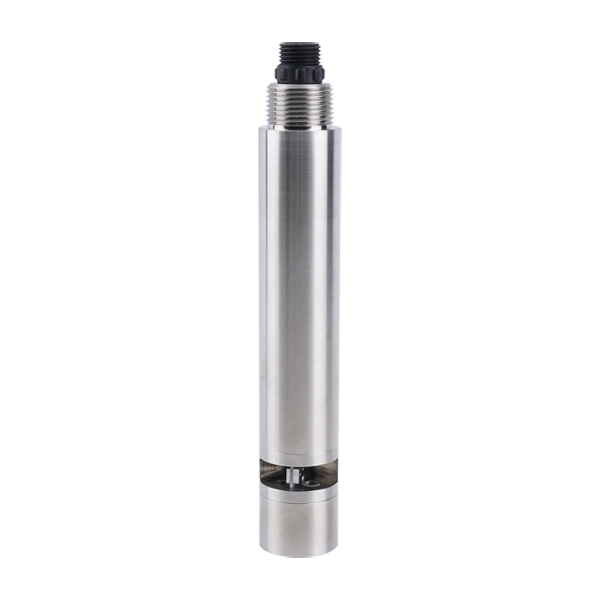
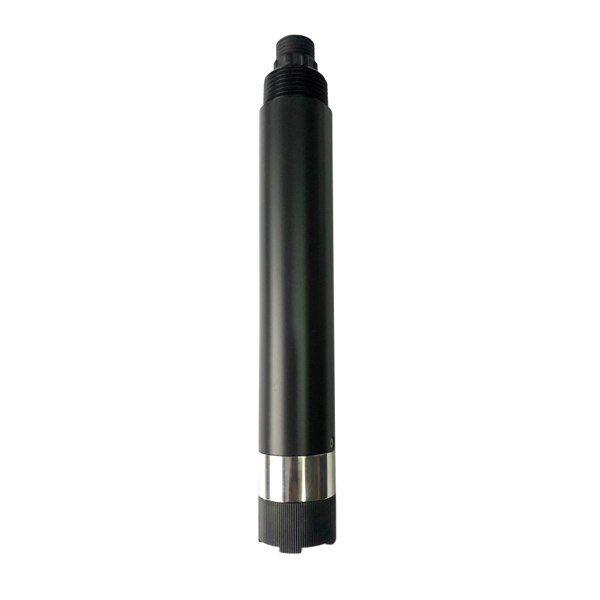
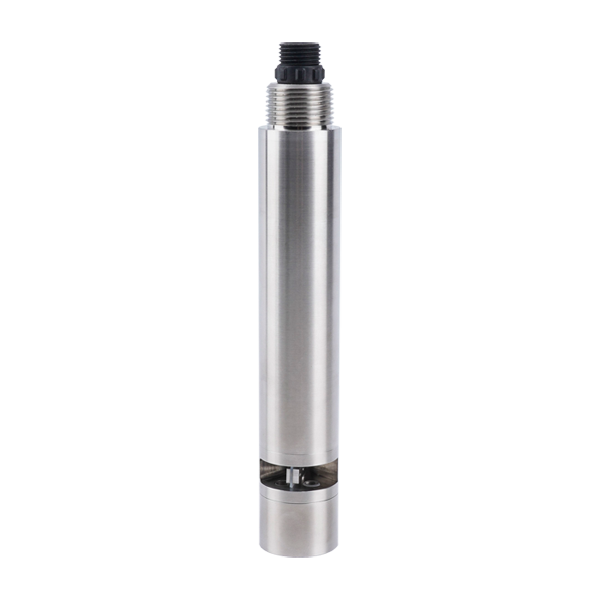
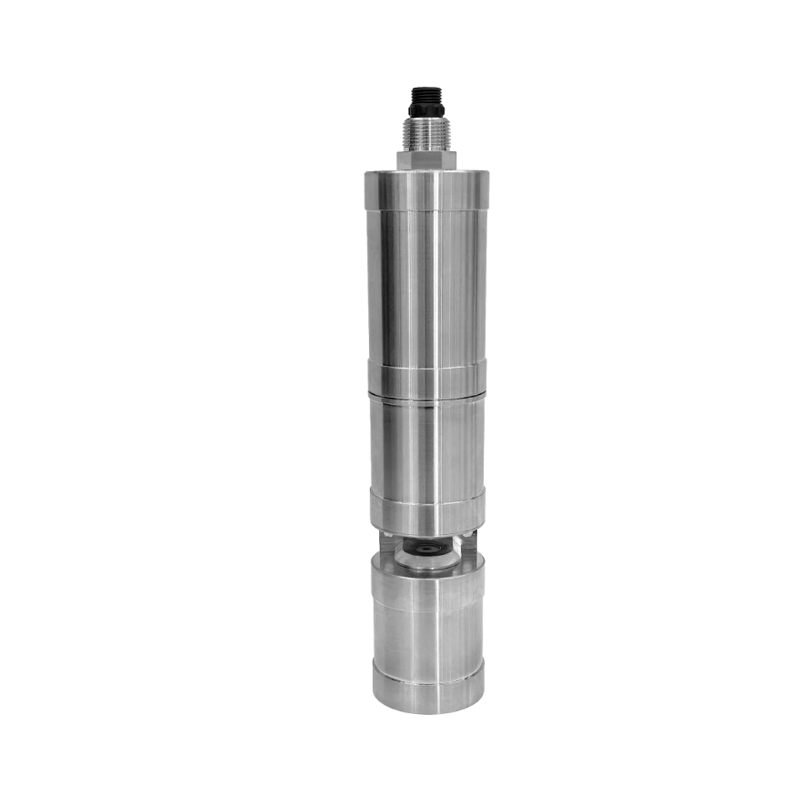
Do not infer a gateway feature from a probe specification. Likewise, the separate COD products pictured here provide different measurement channels, not proof of a remote data service. Confirm the instrument and platform scope independently.
During acceptance, use the intended owner account to retrieve a defined period that includes ordinary readings and a planned maintenance interval. Check that the export contains enough information to identify the station, channel, observation time, unit and status. A plotted line or a screenshot is not a substitute for usable records.
Compare the exported values with local observations. Confirm time zone, daylight-saving handling where relevant, decimal conventions and whether timestamps refer to observation or arrival. Missing data, a valid zero and a held previous value must remain distinguishable.
If the project needs an API, request its actual documentation and a working test using the agreed access method. Establish what historical data and configuration are available, any limits and the applicable service terms. Do not promise an API or unlimited retention merely because the station uses the word IoT.

An operator may need to view and acknowledge events without changing calibration or deleting records. A service engineer may need temporary configuration access. The owner needs a documented way to manage those roles and remove access when responsibilities change.
NIST's IoT interface-access guidance includes distinct user roles and limiting privileges to required actions. Use those concepts to define project access tests; they are not a certification claim for a NiuBoL probe or a promise that every proposed platform has those features.
Test the agreed permitted and prohibited actions. Transfer sensitive credentials through the approved secure process, not inside a public commissioning report. Identify how remote support is authorized and later withdrawn. Avoid relying on an untracked shared administrator login as the sole operating arrangement.
Keep the installed instrument list, receiver settings, supported configuration backup and restoration procedure with the owner. Confirm what can be restored after a gateway replacement and what requires supplier assistance. Demonstrate a safe restoration test on an approved arrangement rather than assuming a saved file is usable.
Specify responsibility for communications accounts and renewals, platform access, reference testing and replacement parts. Establish how historical records will be retrieved if a service ends or the owner changes the receiving application. These are delivery conditions to agree, not automatic legal rights created by buying a sensor.
For sensor-to-platform verification, see the separate IoT data-path guide. The handover record should identify the delivered wiring and interface definition, so a replacement can be checked against the actual installed arrangement.
| Demonstration | Useful result |
|---|---|
| Owner retrieves a selected data interval | Usable values, identities, units, timestamps and status |
| Operator attempts a restricted setting change | Access follows the agreed role |
| Authorized engineer changes a test configuration | The responsible account and change can be identified where logging is specified |
| Approved backup is restored | Correct channels and settings, with documented limitations |
| Service responsibility changes | Owner can follow the agreed access and support transition |
A separate DO probe, COD instrument or full-spectrum device may add useful measurements. None establishes account management or record recovery by itself. Ask NiuBoL to identify the proposed hardware, receiver and service boundaries rather than treating every software function as included with every probe.
No. Modbus defines a device communication interface. A web API belongs to a separate gateway or application capability that must be confirmed and tested.
No. Demonstrate the owner's access to usable records, settings and agreed operating functions. A screenshot does not show data portability or restoration.
No. Assign access to the actions required by each role and test the restrictions. Provide an owner-managed administration arrangement appropriate to the installation.
Not automatically. Identify the storage location, retention period, export access and service terms in the actual offer.
A documented restoration test on an approved arrangement, followed by verification of identities, channel interpretation and relevant settings.
The owner should be able to use the agreed operating access, records and support route. Transfer responsibilities and remove obsolete access using the planned procedure.
Provide station count, channels, existing receiver, intended owner roles, export needs and support model. Ask for hardware, integration and recurring services to be identified separately.
An IoT based water quality monitoring system should leave the owner able to operate, retrieve records and follow a defined recovery route. Verify those outcomes through the intended accounts and actual supplied interfaces. Keep probe specifications separate from gateway and hosted-service capabilities, and resolve dependencies before final handover.
Prev:Water Quality Sensor Procurement: Prevent Substitution in Repeat Orders
Next:Smart Water Quality Monitoring System: Reconstruct an Abnormal Event
Related recommendations
Sensors & Weather Stations Catalog
 Agriculture Sensors and Weather Stations Catalog-NiuBoL.pdf
Weather Stations Catalog-NiuBoL.pdf
Agriculture Sensors Catalog-NiuBoL.pdf
Water Quality Sensor Catalog-NiuBoL.pdf
Related products
 Combined air temperature and relative humidity sensor
 TDR Soil Moisture & Temperature Sensor for irrigation| RS485 |4-20mA| NBL-S-THR
 Soil pH sensor RS485 soil Testing instrument soil ph meter for agriculture |NBL-S-PH
 Wind Speed sensor Output Modbus/RS485/Analog/0-5V/4-20mA
 Tipping bucket rain gauge for weather monitoring auto rainfall sensor RS485/Outdoor/stainless steel
 Pyranometer Solar Radiation Sensor 4-20mA/RS485


Screenshot, WhatsApp to identify the QR code
WhatsApp number:+8615367865107
(Click on WhatsApp to copy and add friends)

