





— Blogs —
—Products—
 Consumer hotline +8618073152920
WhatsApp:+8615367865107
Address:Room 102, District D, Houhu Industrial Park, Yuelu District, Changsha City, Hunan Province, China
Product knowledge
Time:2026-08-24 09:07:00 Popularity:319
An ORP meter at a treatment inlet and another at the outlet can show a change in oxidation-reduction conditions. Their difference does not directly express contaminant removal, disinfectant concentration or treatment efficiency. Before using the difference for a decision, verify that the readings are comparable and that their timing represents the process being assessed.
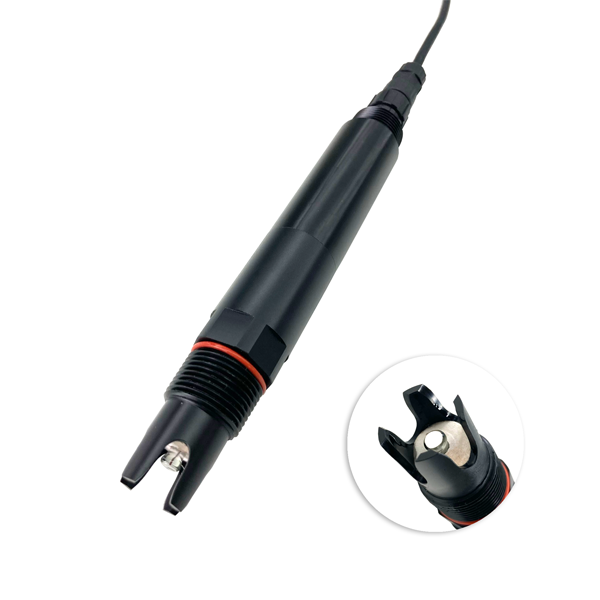
Oxidation-reduction potential is an electrode potential reported in mV relative to a reference system. The process response depends on the water chemistry and the redox couples influencing the electrode. It is not a linear concentration scale on which a larger percentage change automatically means a larger removal rate.
For example, an inlet value of 150 mV and an outlet value of 250 mV give a difference of +100 mV. They do not establish 67% treatment efficiency. Judge the result against a process-specific relationship supported by the required chemical analyses and operating records.
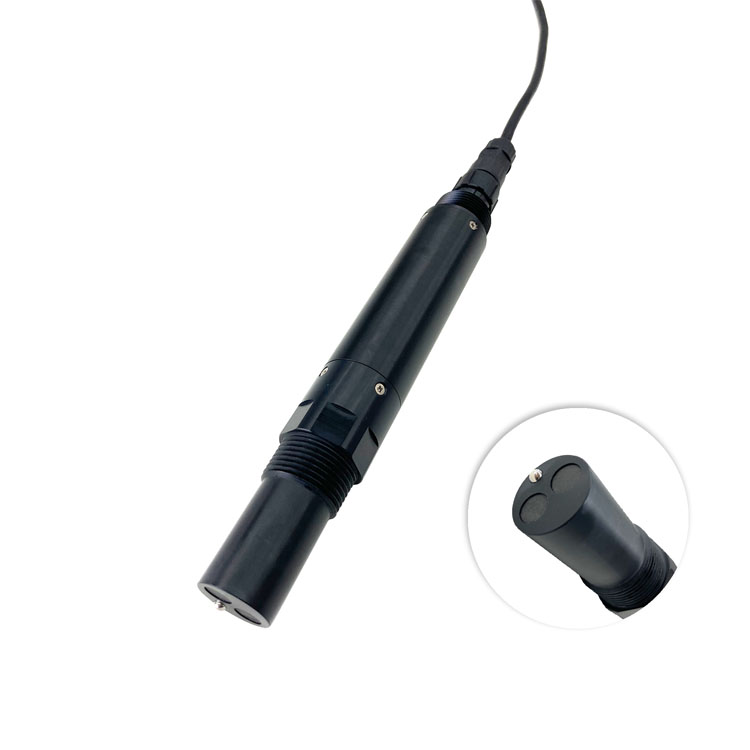
A conductivity channel can help identify a source-water or mixing change during the comparison. It does not independently establish the identity or concentration of the redox-active substance.
| Comparison item | What to establish |
|---|---|
| Reference basis | Identify each probe's reference system and reported potential basis. Resolve any conversion before comparison. |
| Probe condition | Assess fouling, reference-junction condition and an appropriate reference check for each instrument. |
| Water conditions | Retain temperature, pH and relevant composition rather than attributing every difference to treatment. |
| Timing | Relate inlet and outlet observations to flow, mixing and process residence behavior. |
| Measurement validity | Exclude service, dry exposure and communication-fault records from the calculated difference. |
Do not assume that two probes share the same bias merely because they share a model number. If each has its own reference condition and service history, subtracting their outputs can include two instrument offsets as well as the process difference.
Record pH where it affects the relevant chemistry. A pH change can alter the process ORP without representing the same change in target-substance concentration. There is no universal software correction that makes all process waters directly comparable.
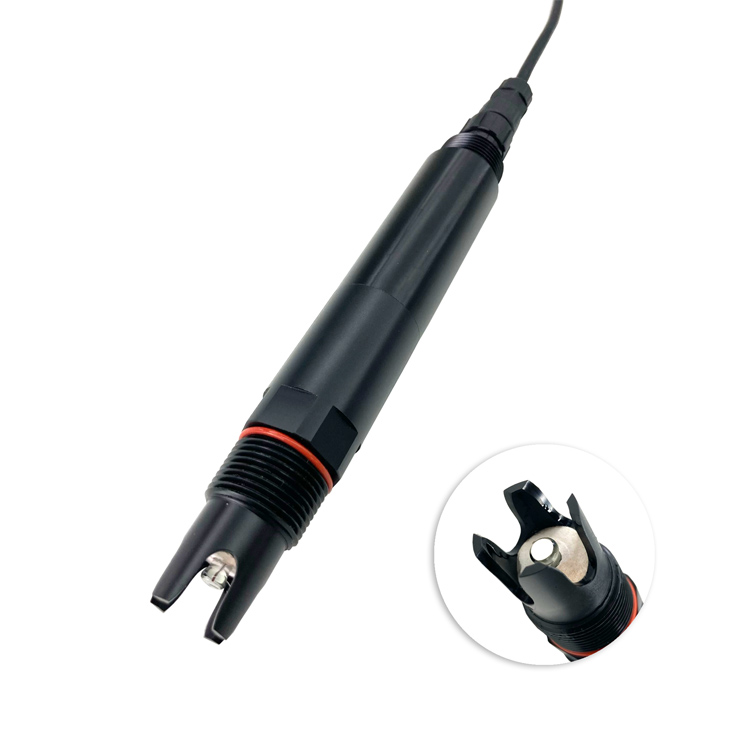
An inlet observation and an outlet observation at the same timestamp usually describe different portions of water in a treatment system. During stable conditions that may still support a useful trend comparison. During a rapid feed change, a same-time subtraction can instead combine the new inlet condition with an older outlet condition.
Use the plant's hydraulic and process understanding to choose the comparison interval. Nominal tank volume divided by flow gives a nominal residence time, not proof that every parcel takes that time. Mixing, recirculation and changing flow can spread the response. Retain those conditions alongside the trend rather than shifting timestamps until two curves look convincing.
A turbidity probe answers a different question about optical scattering. A simultaneous turbidity change may help interpret the process event, but it cannot turn an ORP difference into a removal percentage.
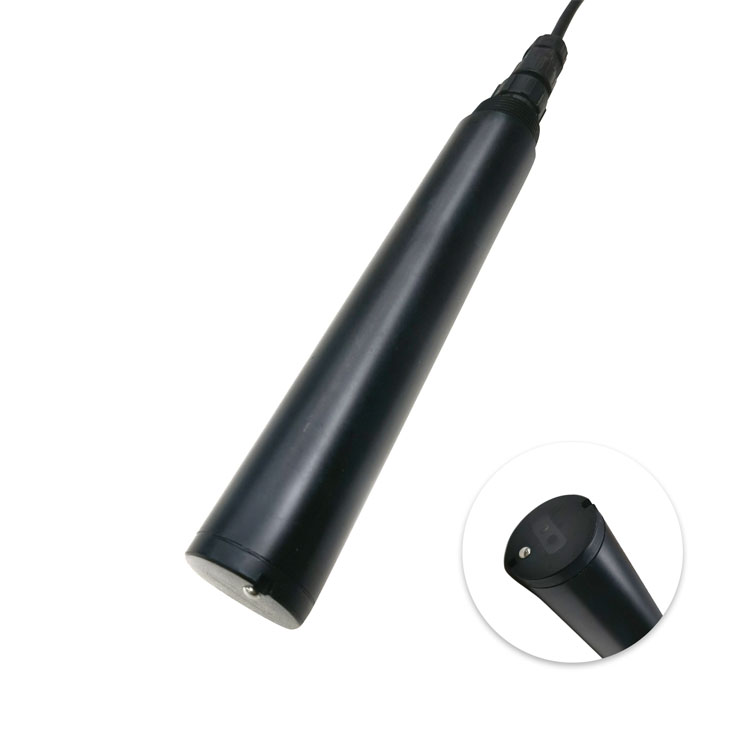
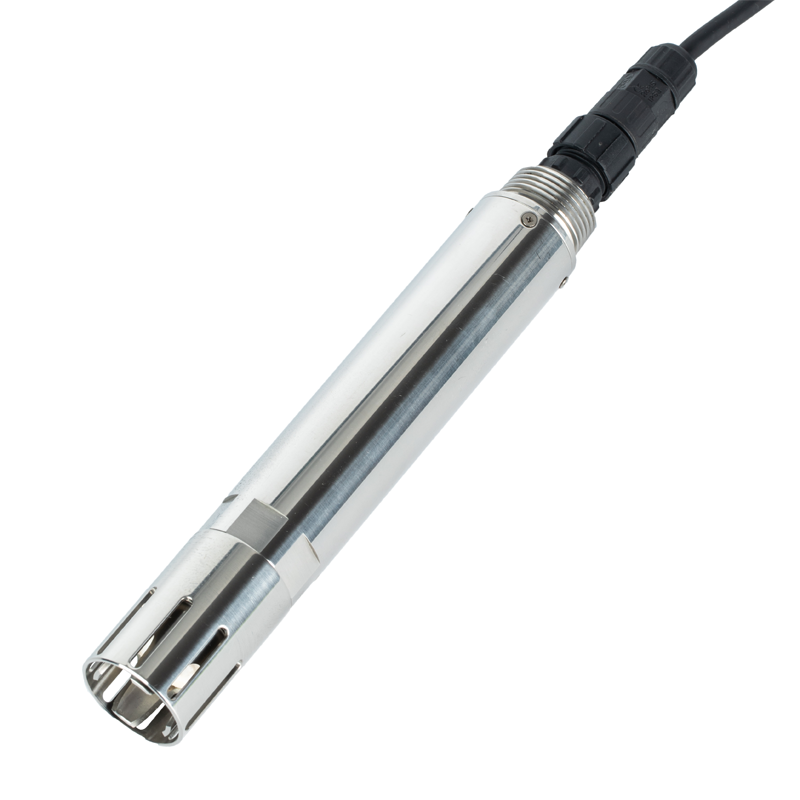
The NiuBoL NBL-WQ-ORP is an online platinum-electrode probe. Select it as an individual potential measurement channel; a paired installation still needs its own comparison and acceptance procedure.
| Item | NBL-WQ-ORP value |
|---|---|
| Measurement | -1500 to +1500 mV; 1 mV resolution; stated accuracy +/-20 mV |
| Interface | RS485 Modbus RTU |
| Supply and consumption | 12-24 V DC; 0.2 W at 12 V |
| Operating conditions | 0-50 C; pressure at or below 0.2 MPa |
| Construction | ABS/PC housing; IP68; 3/4 NPT mounting |
| Cable | 5 m standard, customizable; specify the required jacket for the site |
As a conservative arithmetic illustration, two separate +/-20 mV instrument limits can contribute up to +/-40 mV to a subtraction if their errors oppose each other. That is not a complete uncertainty assessment and does not describe repeatability. A small observed difference alone therefore cannot establish a meaningful process change without the appropriate checks.
This model does not provide a universal automatic temperature correction for process ORP. Preserve temperature context and avoid borrowing the compensation rule of a pH or conductivity probe. The installation also needs representative immersion, protected connections and service access.
If a PH-4S channel is added for process interpretation, keep its calibration and units separate. The PLC or data logger should calculate an ORP difference only from two valid, correctly identified mV channels.
No. It shows a difference in the measured potential under those conditions. Verify the intended treatment result with parameter-specific analysis and process criteria. The desired direction can differ between oxidation and reduction duties.
Potentially, after confirming reference basis, sensing arrangement, operating limits and reference-check results. A common mV unit alone does not establish equivalence.
No. Check them under an appropriate common reference condition if comparability is in doubt, but do not force the operating inlet and outlet readings to agree. A real process difference may be exactly what the installation is intended to observe.
No general replacement is established. Use the required analytical method for the substance and reporting duty. A site-specific operating correlation needs validation and continued checks.
Provide the treatment objective, water chemistry, expected potentials, pH and temperature, point drawings, cable distances and controller details. State how the difference will be used and which reference and process checks are required.
A salinity channel is another separate measurement where composition changes matter. Its value should remain identifiable rather than being used as an unexplained correction to the ORP pair.
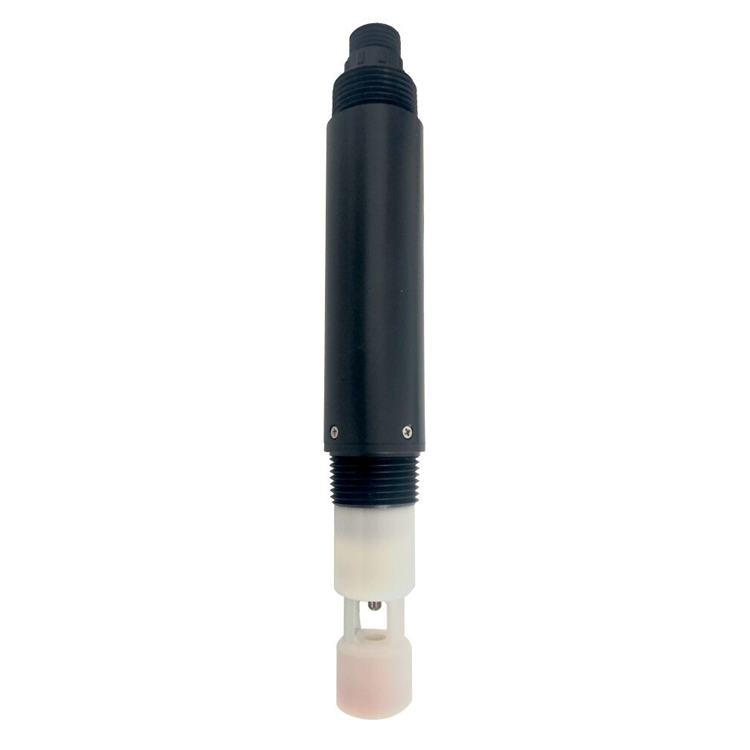
Use a paired ORP meter installation to interpret redox trends, not to calculate an unsupported treatment percentage. Establish reference comparability, probe condition, water chemistry and process timing before relying on the difference. NiuBoL can review the two measuring points and their interfaces once the required operating decision is defined.
Prev:TDS Meter Module V1: Specify the Sampling Point First
Next:Inline Dissolved Oxygen Sensor: Optical, Membrane and Pipe Limits
Related recommendations
Sensors & Weather Stations Catalog
 Agriculture Sensors and Weather Stations Catalog-NiuBoL.pdf
Weather Stations Catalog-NiuBoL.pdf
Agriculture Sensors Catalog-NiuBoL.pdf
Water Quality Sensor Catalog-NiuBoL.pdf
Related products
 Combined air temperature and relative humidity sensor
 TDR Soil Moisture & Temperature Sensor for irrigation| RS485 |4-20mA| NBL-S-THR
 Soil pH sensor RS485 soil Testing instrument soil ph meter for agriculture |NBL-S-PH
 Wind Speed sensor Output Modbus/RS485/Analog/0-5V/4-20mA
 Tipping bucket rain gauge for weather monitoring auto rainfall sensor RS485/Outdoor/stainless steel
 Pyranometer Solar Radiation Sensor 4-20mA/RS485


Screenshot, WhatsApp to identify the QR code
WhatsApp number:+8615367865107
(Click on WhatsApp to copy and add friends)

