





— Blogs —
—Products—
 Consumer hotline +8618073152920
WhatsApp:+8615367865107
Address:Room 102, District D, Houhu Industrial Park, Yuelu District, Changsha City, Hunan Province, China
Product knowledge
Time:2026-08-19 09:03:00 Popularity:321
A smart irrigation system using Arduino Uno can receive an industrial soil-moisture voltage signal, but the measured percentage depends on the sensor version, ADC reference and complete wiring. Test that input before using it to start a valve. A stable-looking number from a phone tester or an unverified analog pin is not evidence of a working continuous irrigation measurement.
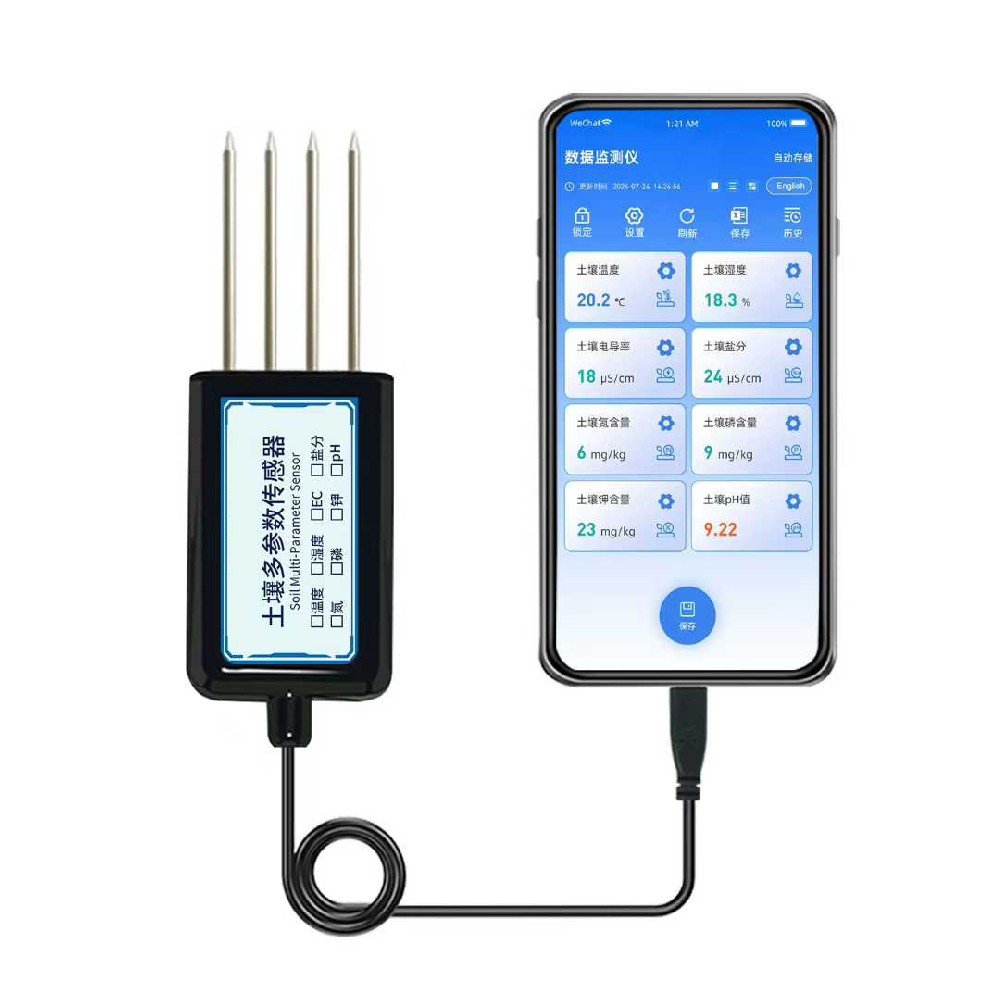
The portable eight-parameter USB-C tester above is intended for compatible phone measurements. Its connector is not a 0-5 V soil-moisture output. Use it for a separate field survey when appropriate; choose a documented continuous-output probe for the controller.
NiuBoL soil probes have different sensing methods and output options. The NBL-S-THR TDR soil moisture and temperature sensor is offered in RS485, 4-20 mA and 0-5 V versions. Specify the required version on the order. A diagram for one version must not be applied to another merely because the bodies look similar.
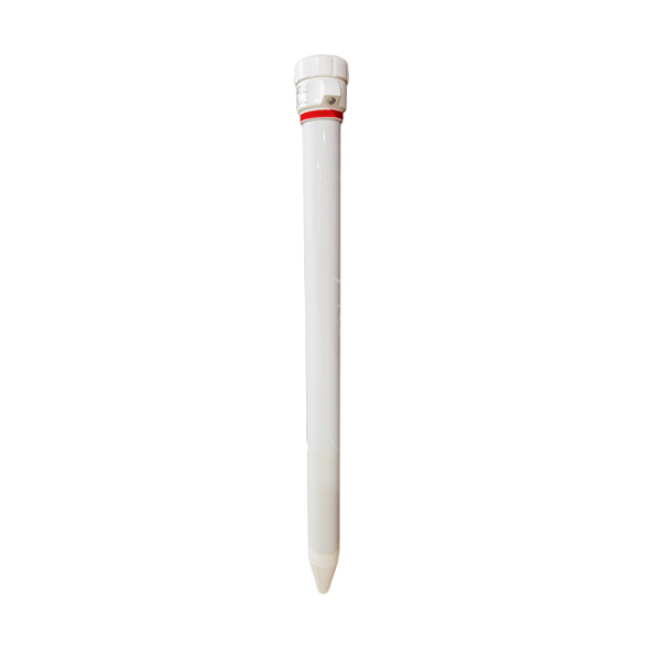
The separate FDR probe below is another soil measurement product. Its supply, accuracy and output need its own specification. Do not transfer the THR values in the following table across the entire soil-sensor range.
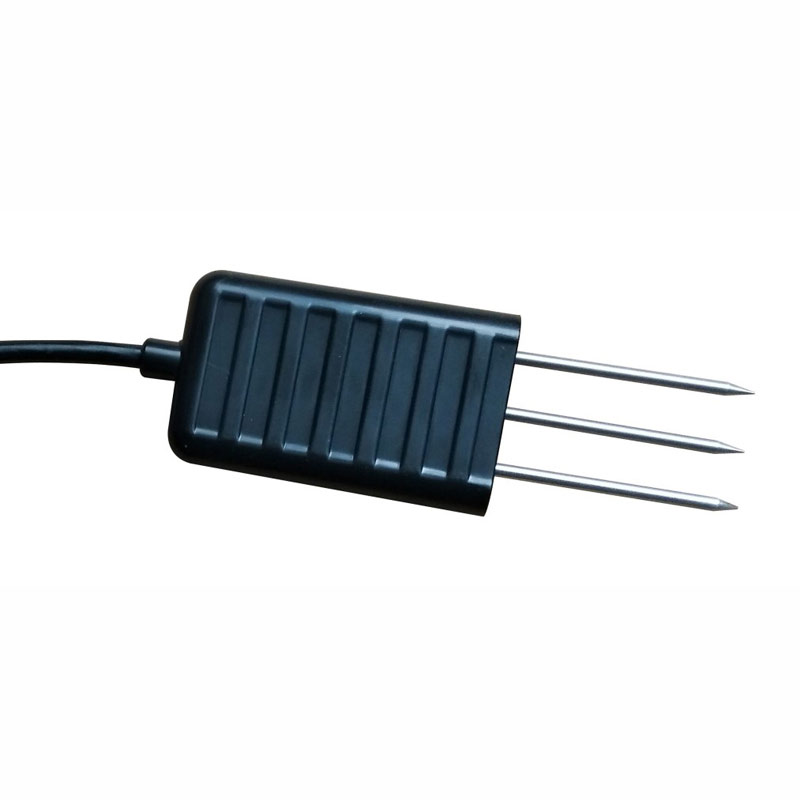
| Part of the input chain | Relevant specification | Required check |
|---|---|---|
| NBL-S-THR moisture channel | 0-100% moisture; stated accuracy +/-3%; 0.1% resolution | Obtain the accuracy basis and delivered analog transfer function. Soil moisture is not air RH. |
| THR electrical version | 12-24 V DC; approximately 0.3 W; 0-5 V, 4-20 mA or RS485 option | The 12-24 V sensor supply is not an ADC input signal. Order the interface that the receiving circuit supports. |
| THR operating environment | -40 to 80 degrees C; IP68 probe | Protect field joints and controller separately. A sealed probe does not seal the board. |
| UNO R3 ADC | 10-bit conversion; 1024 codes; default nominal input span ground to 5 V | Confirm the actual board and reference. These are not universal settings for all UNO generations. |
| RS485 alternative | Modbus RTU on the THR RS485 version | Use a compatible transceiver or field interface; A/B are not analog-input connections. |
The official UNO R3/R4 comparison distinguishes the R3's 10-bit ADC hardware from R4 hardware. Record the selected board, firmware conversion settings and reference arrangement instead of carrying an unexplained constant into a different controller.
For a confirmed linear 0-5 V output representing 0-100% moisture, moisture percentage = measured voltage / 5 x 100. Thus, 1.5 V represents 30% and 2.5 V represents 50% for that specific configuration. Verify the transfer function for each required channel; do not assume one voltage wire carries both temperature and moisture.
The ADC first measures voltage relative to its reference. Its code is not inherently a moisture percentage. Check the input voltage with a suitable meter and compare it with the controller's decoded voltage before applying the moisture scale. If the reference or input circuit differs from the assumed setup, averaging more samples does not repair the scale.
With a nominal 5 V span and 1024 codes, one ADC step is approximately 4.9 mV. That is roughly 0.10 percentage point for the example 0-100% scale. This quantization calculation is not the system's accuracy: sensor error, reference error, wiring and field installation still matter.

Do not feed a 4-20 mA output directly into a voltage ADC. Use an appropriately designed current-input interface when that version is selected. An outdoor field run may also justify an isolated interface or a different acquisition method, but choose that hardware from the actual route and electrical conditions rather than prescribing one circuit for every site.
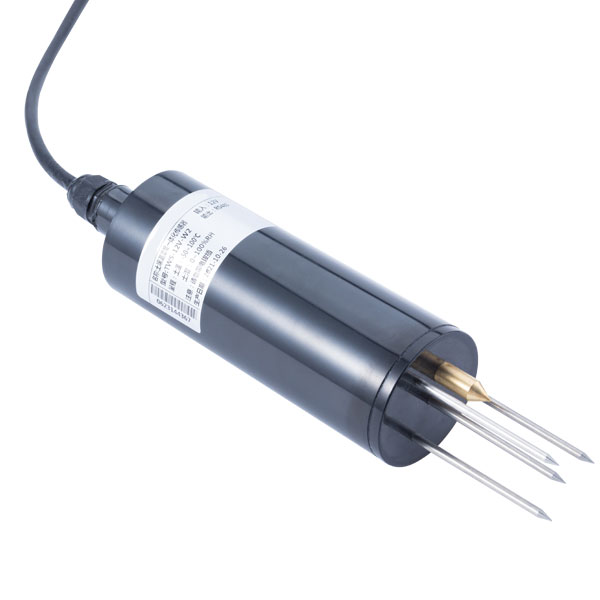
A low voltage may represent dry soil in a zero-based scale, but some wiring and power faults can also produce low or unstable readings. An open ADC input can float. A voltage within the expected range therefore does not by itself establish a healthy sensor. Test disconnection and supply loss safely and define the resulting control state.
Give the irrigation program an explicit measurement-valid condition and maximum permitted watering duration. Do not turn an unvalidated low reading into an unlimited dry-soil request. Pump and solenoid loads need suitable drivers and protection, not direct GPIO power.
After validating the electrical input, establish soil thresholds from the crop, installation depth and observed wetting/drying behavior. A multi-depth tube is useful when the project needs a profile, but it is a different data arrangement. See how depth records affect the next irrigation decision rather than treating several layers as one analog channel.
The specified THR supply is 12-24 V DC, so 5 V is not the stated supply for that model. Provide the ordered sensor supply and design the signal reference or isolation correctly. Never connect the sensor supply voltage to an analog input.
No. Output signal range and power requirement are separate specifications. A sensor powered from 12-24 V can provide a 0-5 V signal through the correct output wiring.
Not if the cause is supply disturbance, reference shift or induced interference. Compare voltage and raw counts during a controlled switching test. Correct the identified electrical problem before deciding whether additional filtering is appropriate.
Yes, NBL-S-THR has an RS485 Modbus RTU version. Select that version and a compatible interface, then verify its register mapping. It is not converted into RS485 by changing the analog wiring.
Specify NBL-S-THR, the required channel and output span, supply, controller revision and cable route. Ask for the corresponding transfer function and wiring. Provide any pump-switching or isolation requirements so the acquisition circuit can be reviewed before installation.
Validate a smart irrigation system using Arduino Uno from sensor output through ADC conversion before trusting a moisture threshold. Confirm the THR version, reference and field behavior, then test faults and actuator limits. NiuBoL can review the continuous soil-probe configuration without treating a portable USB tester as the same interface.
Prev:Anemometer for Greenhouse Ventilation: Exposure and Fault Response
Next:Digital Indoor Temperature and Humidity Monitor: Check Storage-Room Coverage
Related recommendations
Sensors & Weather Stations Catalog
 Agriculture Sensors and Weather Stations Catalog-NiuBoL.pdf
Weather Stations Catalog-NiuBoL.pdf
Agriculture Sensors Catalog-NiuBoL.pdf
Water Quality Sensor Catalog-NiuBoL.pdf
Related products
 Combined air temperature and relative humidity sensor TDR Soil Moisture & Temperature Sensor for irrigation| RS485 |4-20mA| NBL-S-THR
 Soil pH sensor RS485 soil Testing instrument soil ph meter for agriculture |NBL-S-PH
 Wind Speed sensor Output Modbus/RS485/Analog/0-5V/4-20mA
 Tipping bucket rain gauge for weather monitoring auto rainfall sensor RS485/Outdoor/stainless steel
 Pyranometer Solar Radiation Sensor 4-20mA/RS485


Screenshot, WhatsApp to identify the QR code
WhatsApp number:+8615367865107
(Click on WhatsApp to copy and add friends)

