





— Blogs —
—Products—
 Consumer hotline +8618073152920
WhatsApp:+8615367865107
Address:Room 102, District D, Houhu Industrial Park, Yuelu District, Changsha City, Hunan Province, China
Product knowledge
Time:2026-08-22 09:07:00 Popularity:283
Quick Answer: When a TDS and pH digital water tester disagrees with an online station, first compare the same water under matched conditions. For TDS, check conductivity units, temperature compensation and the conversion coefficient. For pH, check buffers, electrode condition and sample changes. Do not recalibrate the online probes merely to make two displays agree.
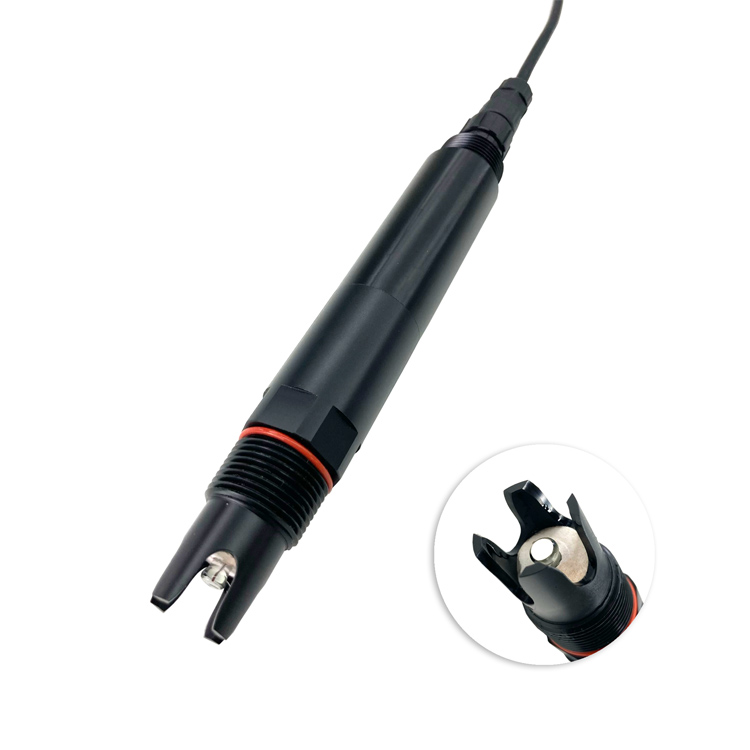
A combined handheld display makes TDS and pH look like one measurement, but they follow different measurement principles. TDS is often estimated from electrical conductivity. pH reflects hydrogen-ion activity through an electrode measurement. A single correction cannot resolve errors in both channels, and a normal TDS trend does not verify the pH value.
Keep the original operating readings and note whether the comparison concerns a stable process, a recent dosing change or a sample carried away from the installation. A sensor in a tank and a handheld meter in a cup are not automatically measuring equivalent conditions. Sampling location and elapsed time can explain disagreement before any instrument fault is involved.
The dissolved oxygen probe shown below measures a separate property. It can be useful in a wider water-quality station, but its agreement with a reference meter cannot validate the TDS or pH channels. Plan each comparison around the parameter being checked rather than treating all probes in the enclosure as one calibrated instrument.
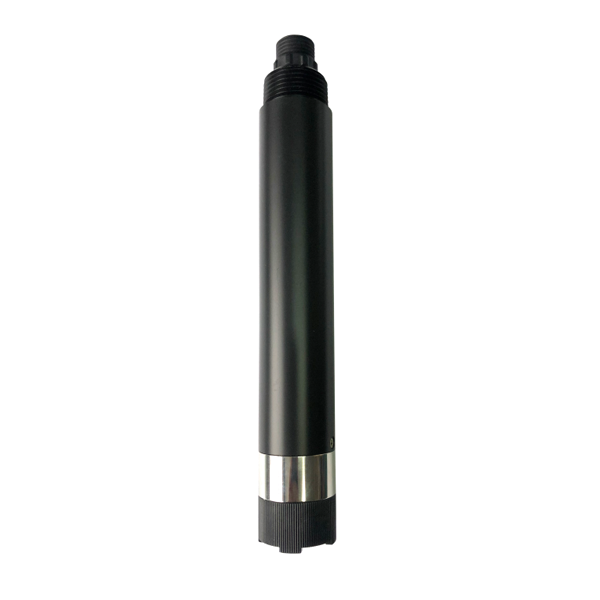
Start with the conductivity reading in its actual unit. One mS/cm equals 1000 microS/cm. A unit error can therefore dominate a comparison even when both instruments are functioning. Compare the conductivity values before comparing their calculated TDS values, and retain the reference temperature and compensation setting used by each device.
For the NBL-WQ-EC conductivity sensor, the configurable TDS coefficient defaults to 0.64. That is a conversion setting, not a universal property of all water. Different dissolved constituents can produce a different relationship between conductivity and gravimetrically determined dissolved solids.
For an illustrative calculation, two instruments both reporting 700 microS/cm would display 448 mg/L at a coefficient of 0.64 and 350 mg/L at 0.50. The 98 mg/L difference is explained entirely by the selected coefficients. These are arithmetic examples, not measured site data or recommended factors for a particular application.
If the receiving PLC already calculates TDS from EC, determine whether it is also receiving a calculated TDS value from the probe. Applying a coefficient twice produces another disagreement. Choose one defined calculation path and identify it in the tag description. Retain the raw EC and temperature when trend interpretation or later conversion review matters.
A salinity sensor is a separate option when salinity is the required reporting parameter. Its output should not be relabelled as TDS without checking the conversion basis, range and units.
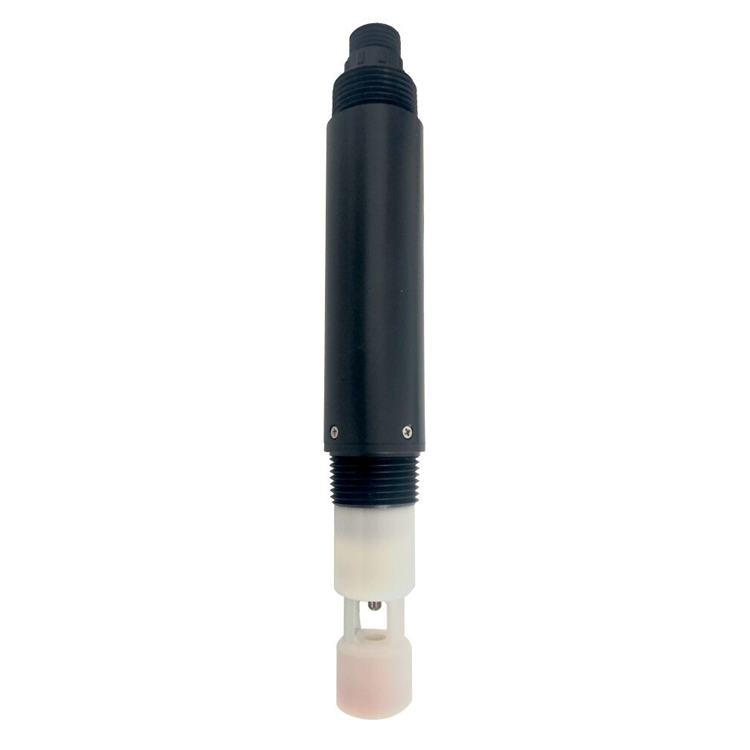
Use a clean, suitable vessel or an approved co-location arrangement that exposes both instruments to equivalent water without interference. Rinse according to each instrument's procedure, avoid carrying standard solution into the sample and allow readings to settle under stable conditions. Keep records of the sample point, collection time, measurement time and temperature.
For flowing systems, account for the path between the online sensor and the sampling valve. A downstream grab sample may contain water that reached the process at a different time. During rapid changes, compare an appropriate time interval rather than a single instantaneous screenshot from each display.
For pH, air exposure and temperature changes can alter a collected sample. Low-conductivity water can be particularly difficult to compare consistently because handling, contamination and electrode behaviour become important. Where the process requires a specialised low-ionic-strength method, confirm a suitable electrode and sampling assembly rather than assuming a general industrial probe covers that duty.
| Comparison step | Keep the same or record | Investigate if readings differ |
|---|---|---|
| Sample | Point, water path and collection time | Residence time, mixing or contamination |
| Conductivity | Unit, temperature and compensation basis | Unit conversion or different compensated values |
| Calculated TDS | EC input and conversion coefficient | Different factors or duplicate conversion |
| pH | Exposure, temperature, settling and electrode condition | Sample changes, fouling or reference-junction problems |
| Reference instrument | Recent verification and applicable uncertainty | A reference that is itself outside its check limit |
Check the handheld instrument before using it to judge an installed probe. Use suitable pH buffers for the expected operating region and a known conductivity standard appropriate to the EC range. Record standard identity, condition, temperature and observed reading. A portable tester is a comparison instrument, not an unquestionable reference merely because it is new.
Keep the standards and handling tools separate. A pH buffer is not a conductivity standard, and a conductivity solution does not establish pH electrode slope. Use fresh portions where contamination is a risk; do not return used liquid to the stock container. Follow the instrument-specific sequence rather than applying a shared calibration routine to every probe.
Clean and inspect before deciding whether adjustment is needed. A coated electrode, a trapped bubble or a contaminated comparison vessel may cause disagreement that calibration would conceal only temporarily. Retain the as-found result, cleaning action and verification result. If both instruments pass suitable standard checks but disagree only in the process sample, investigate the sample conditions and method suitability.
An optical BOD-related instrument, such as the separate probe pictured here, requires a different method and validation procedure. It does not provide a shortcut for confirming either dissolved-solids conversion or pH accuracy.

The following details distinguish two NiuBoL online probes commonly considered alongside a handheld tester. They are individual sensor specifications, not a claim that every TDS and pH digital water tester contains both probes or has the same accuracy.
| Item | NBL-WQ-PH | NBL-WQ-EC |
|---|---|---|
| Measurement range | 0-14 pH | Selected 0-20.00, 0-200.0 or 0-5000 microS/cm; 0-200.0 mS/cm option |
| Measurement accuracy | +/-0.1 pH | +/-1% full scale for the selected EC range |
| Temperature compensation | NTC-based automatic compensation | Pt1000-based automatic compensation |
| Operating temperature | 0-65 degrees C | 0-50 degrees C |
| Operating pressure | Below 0.2 MPa | Below 0.6 MPa |
| Supply and power | 12-24 V DC; 0.2 W at 12 V | 12-24 V DC +/-10%; 0.2 W at 12 V |
| Output | RS485 Modbus RTU | RS485 Modbus RTU; TDS where supported by the selected configuration |
| Housing and mounting | POM; IP68; 3/4 NPT; standard 5 m cable | ABS / SUS316L / PVC according to configuration; IP68; 3/4 NPT; standard 5 m cable |
The shared bus protocol does not make the register definitions identical. Confirm the selected model's units, decimal handling and TDS availability. Check a direct sensor read against the controller before blaming the comparison meter. Remote upload needs a compatible gateway or logger; RS485 alone does not supply a cloud connection.
Use the project requirement and both instruments' applicable uncertainties to define the comparison limit. Do not choose an arbitrary number of matching decimal places. Display resolution is not accuracy, and full-scale EC accuracy depends on the selected range rather than only the displayed reading.
If the allowed difference is smaller than the combined measurement capability, the comparison cannot reliably decide acceptance. Review the range, reference method and operating conditions before specifying a tighter limit. For high-consequence process decisions, a suitably qualified measurement specialist should define how uncertainty and sample effects enter the acceptance rule.
Turbidity is also independent of TDS. A visibly cloudy sample can contain suspended material without a proportional rise in dissolved-ion conductivity. Use a turbidity channel for that question instead of adjusting a TDS coefficient to track visible cloudiness.
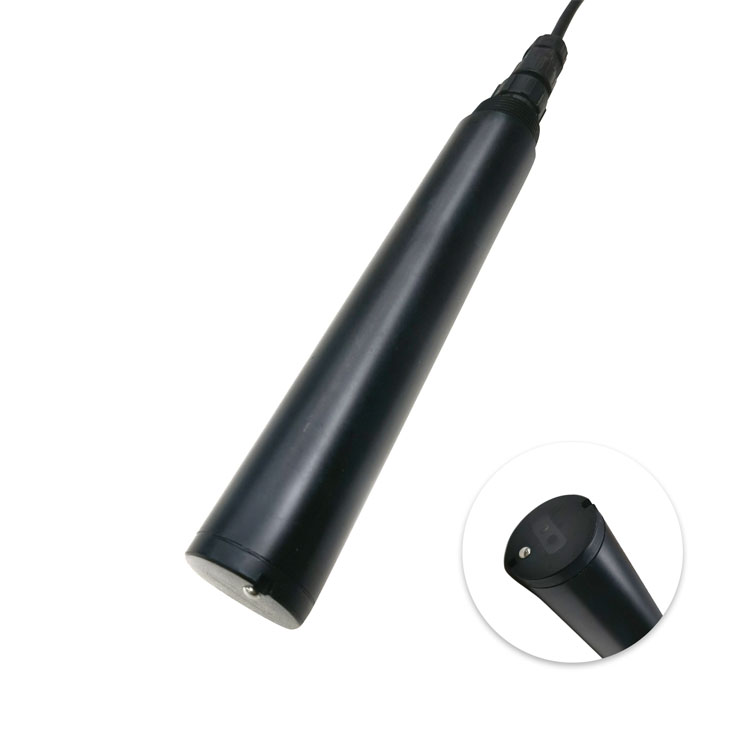
Neither should be selected by appearance alone. Verify both against appropriate standards, then compare equivalent water under matched conditions. If the standards pass but process readings differ, examine sample handling, temperature basis and method suitability.
It compensates the electrode response as implemented by the instrument. It does not generally restore the original chemical condition of water altered by warming, gas exchange or contamination. Match sampling conditions instead of relying on compensation to reverse those changes.
Only after confirming that EC units and temperature bases match and the selected factor is justified for the water. Matching another meter's arbitrary setting is not an independent validation of dissolved-solids concentration.
It can support verification and investigation. It does not supply continuous records between visits or automatically provide the control interface needed by a PLC. Choose it as a service tool unless intermittent measurement genuinely meets the operating requirement.
Provide both instrument models, EC and pH readings, units, water temperature, TDS coefficients, compensation settings, sampling details and standard-check results. For an online station, include the direct sensor values and corresponding controller tags.
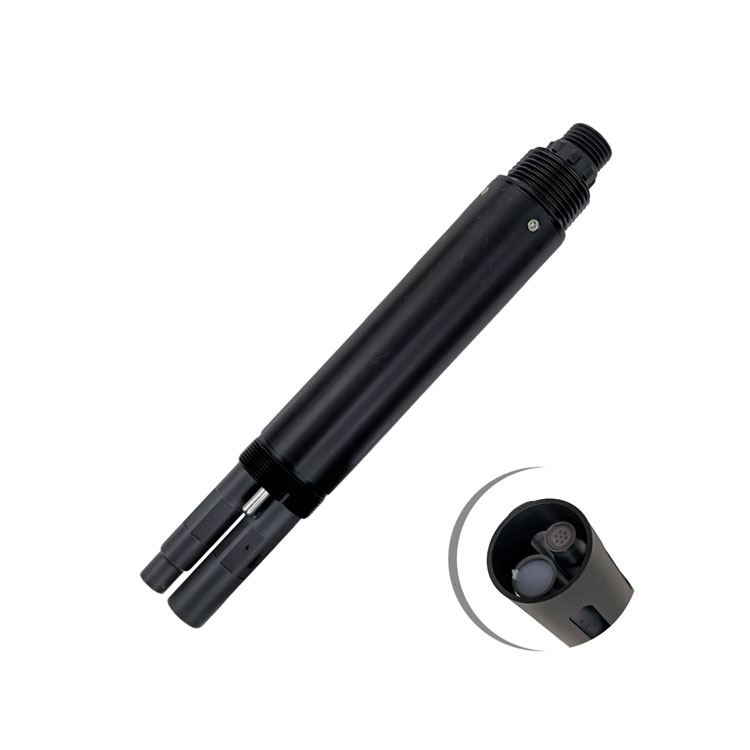
A TDS and pH digital water tester is useful for field checks when the comparison method is defined. Resolve units and conversion first, verify each channel separately, and preserve the sampling conditions. NiuBoL can match online pH and conductivity probes to the water and receiving system; a clear comparison record makes that discussion more useful than two conflicting display photographs.
Prev:Instrument to Measure TDS in Water: Prepare a Tested Spare for Remote Sites
Next:Instrument Used to Measure Dissolved Oxygen in Water: Aquaculture Alarm Design
Related recommendations
Sensors & Weather Stations Catalog
 Agriculture Sensors and Weather Stations Catalog-NiuBoL.pdf
Weather Stations Catalog-NiuBoL.pdf
Agriculture Sensors Catalog-NiuBoL.pdf
Water Quality Sensor Catalog-NiuBoL.pdf
Related products
 Combined air temperature and relative humidity sensor
 TDR Soil Moisture & Temperature Sensor for irrigation| RS485 |4-20mA| NBL-S-THR
 Soil pH sensor RS485 soil Testing instrument soil ph meter for agriculture |NBL-S-PH
 Wind Speed sensor Output Modbus/RS485/Analog/0-5V/4-20mA
 Tipping bucket rain gauge for weather monitoring auto rainfall sensor RS485/Outdoor/stainless steel
 Pyranometer Solar Radiation Sensor 4-20mA/RS485


Screenshot, WhatsApp to identify the QR code
WhatsApp number:+8615367865107
(Click on WhatsApp to copy and add friends)

