





— Blogs —
—Products—
 Consumer hotline +8618073152920
WhatsApp:+8615367865107
Address:Room 102, District D, Houhu Industrial Park, Yuelu District, Changsha City, Hunan Province, China
Product knowledge
Time:2022-10-16 11:50:12 Popularity:2224
An online water quality monitoring system continuously measures selected physical and chemical parameters of water. It combines water quality sensors, data acquisition equipment, communication devices and monitoring software to provide measurement records for water treatment, aquaculture, environmental monitoring and industrial applications.
Common parameters include pH, dissolved oxygen (DO), electrical conductivity (EC), turbidity, water temperature, residual chlorine, oxidation-reduction potential (ORP) and ammonia nitrogen. Each parameter requires a suitable sensing technology and measurement range.
NiuBoL supplies online water quality sensors with RS485 Modbus RTU communication for integration with compatible PLCs, RTUs, data loggers and IoT gateways. Remote data transmission, historical storage, alarms and automatic process control depend on the selected monitoring equipment and software.
A complete water quality monitoring system normally includes measurement instruments, data acquisition equipment, communication infrastructure and the necessary power and installation accessories.
| Component | Main Function |
| Water Quality Sensors | Measure pH, DO, EC, turbidity, chlorine and other selected parameters |
| Data Logger / RTU | Collects sensor readings, applies data scaling and records measurement timestamps |
| Communication Gateway | Transmits collected data using 4G, Ethernet or another supported network |
| Monitoring Platform | Displays measurements, manages historical records and supports configured analysis or alarms |
| Power Supply | Provides electrical power through mains, DC supply or an appropriately sized solar-battery system |
| Installation Accessories | Include sensor holders, mounting structures, flow cells, waterproof connectors and protective enclosures as required |
The required monitoring parameters depend on the type of water and the project objectives. An aquaculture pond, drinking-water treatment system and industrial wastewater facility may require different combinations of instruments.
| Parameter | Unit | Monitoring Purpose |
| pH | pH | Acidity, alkalinity and chemical treatment conditions |
| Dissolved Oxygen | mg/L | Oxygen availability in water and biological processes |
| Conductivity | µS/cm / mS/cm | Conductivity and dissolved-ion trends |
| Turbidity | NTU | Water clarity and optical particle response |
| ORP | mV | Oxidation-reduction conditions |
| Residual Chlorine | mg/L | Specific chlorine-related measurement in disinfection systems |
| Ammonia Nitrogen | mg/L | Nitrogen-related monitoring in wastewater and aquaculture |
| Water Temperature | °C | Thermal conditions and compensation for selected water measurements |
An online pH sensor measures water acidity or alkalinity through an electrochemical measurement principle. The electrode produces an electrical potential related to hydrogen-ion activity, which is processed into a pH value.
pH monitoring is commonly required in wastewater treatment, industrial chemical processes, aquaculture and drinking-water treatment.

The NBL-WQ-PH Online pH Sensor provides RS485 Modbus RTU communication for integration with compatible controllers and monitoring systems.
The sensor requires suitable calibration, installation orientation and electrode maintenance. Temperature compensation does not eliminate errors caused by a contaminated or deteriorated electrode.
Residual chlorine sensors are used in water disinfection processes, including drinking-water treatment, swimming pools and industrial circulating-water systems.
Amperometric chlorine sensors measure an electrical current related to the electrochemical response of the target chlorine species.

The NBL-WQ-CL Online Residual Chlorine Sensor is specified for HClO measurement in a defined operating range and uses RS485 Modbus RTU communication.
The selected chlorine sensor must match the required chlorine parameter. Hypochlorous acid, free chlorine, combined chlorine and total chlorine should not be treated as interchangeable measurements.
NiuBoL offers individual online sensors and integrated multi-parameter probes. The following products can be selected according to the measurements and data acquisition requirements.
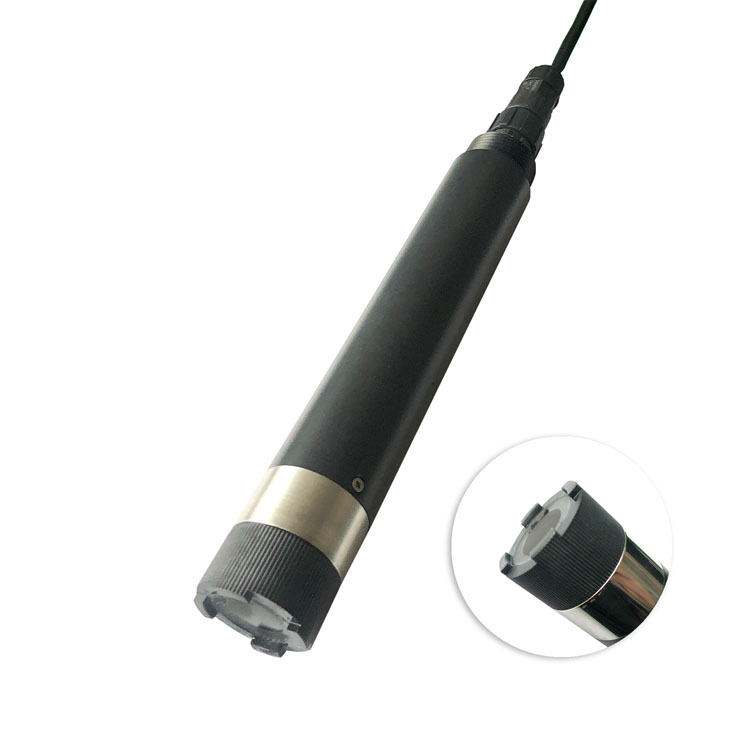 Online DO Sensor | 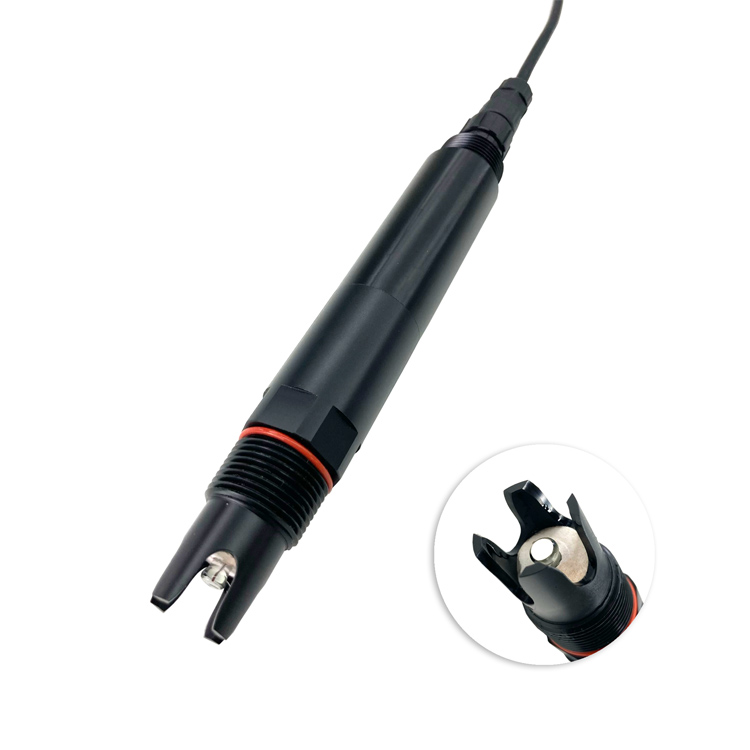 Online pH Sensor |
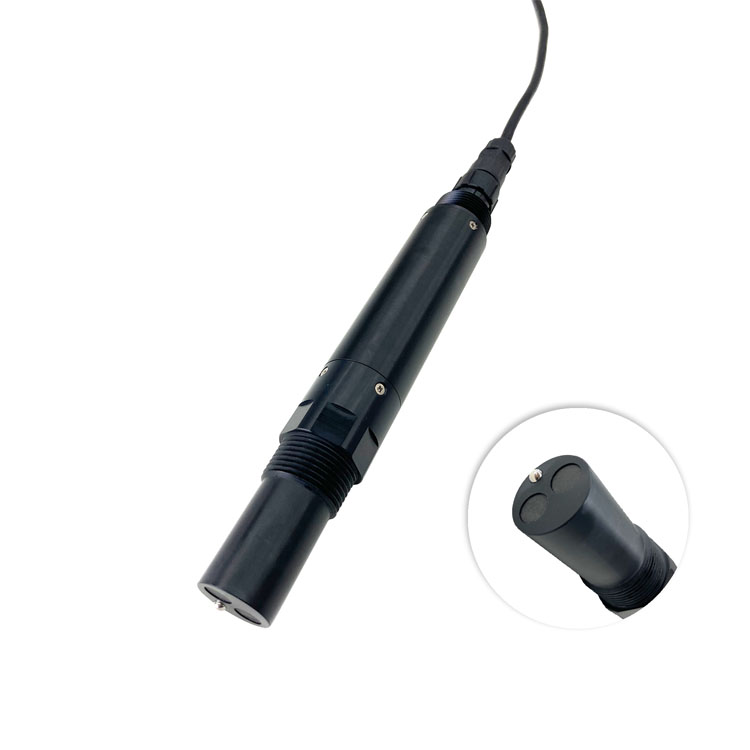 Conductivity Sensor | 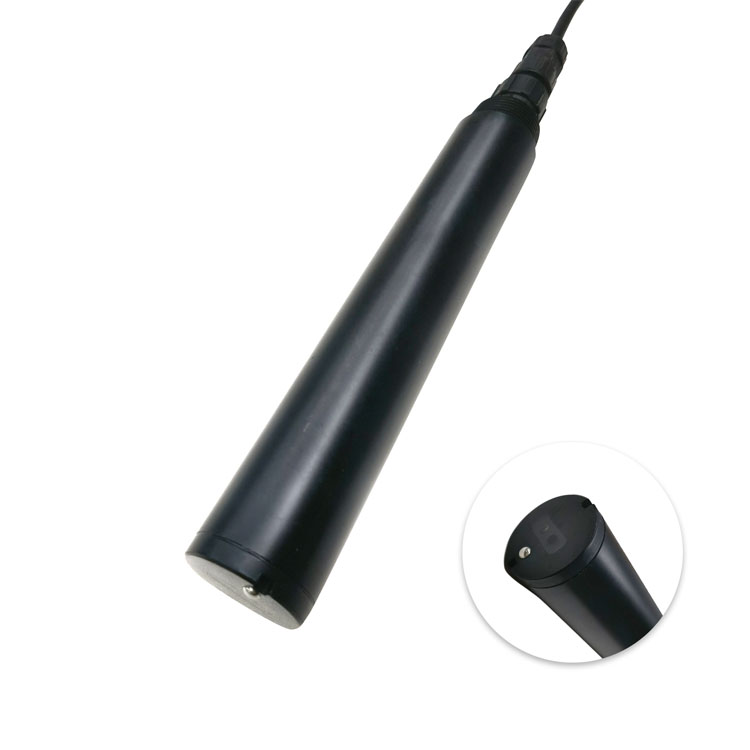 Turbidity Sensor |
For projects requiring several measurements in one instrument assembly, the NBL-WQ-MPS-5A Multi-Parameter Water Quality Sensor provides a configurable integrated monitoring option with automatic cleaning.
Available parameters and cleaning functions depend on the selected sensor configuration.
The monitoring process begins with water quality sensors collecting measurements from the selected water source or treatment process.
Sensor signals are transmitted to a compatible RTU, PLC or data logger. The acquisition equipment reads the measurements, applies the required scaling and records data with timestamps.
Water Quality Sensors → RS485 Modbus / Analog → RTU / Data Logger / PLC → 4G / Ethernet / Supported Network → Cloud / SCADA / Private Server
The data logger or gateway handles network communication. A monitoring platform can then organize records, display trends and support configured alarms.
The local RS485 sensors do not automatically include 4G connectivity, cloud storage, remote alarms or process-control logic. Those functions require compatible system components.
A water quality monitoring station can use separate sensors for individual parameters or a multi-parameter probe containing several compatible sensing elements.
| Comparison | Individual Sensors | Multi-Parameter Probe |
| Measurement Scope | One parameter or a limited parameter combination per sensor | Several supported parameters within one assembly |
| Installation | Separate probes and mounting positions | Integrated sensing structure |
| Maintenance | Each sensor can be serviced separately | Different sensing modules may have different cleaning and calibration requirements |
| Typical Selection | Dedicated pH, DO, EC or chlorine measurement | Compact stations requiring multiple measurements |
Many NiuBoL online water quality sensors support RS485 Modbus RTU for communication with industrial and environmental data acquisition systems.
When several compatible devices share an RS485 bus, each sensor must use a unique Modbus address. The data logger or PLC must support the required baud rate, register map, scaling factor and polling interval.
The installation should also consider DC power distribution, total cable length, shielding, grounding and suitable bus termination where required.
For remote communication, a gateway can transmit the collected data using a supported protocol such as MQTT or HTTP, depending on its firmware and configuration.
A data logger can acquire measurements at configured intervals and record them with station identification and timestamps.
A typical monitoring record may include the following information:
| Data Field | Example Content |
| Station ID | Monitoring station or device identifier |
| Timestamp | Date and time of measurement |
| Measurements | pH, DO, EC, turbidity and other selected parameters |
| Measurement Unit | pH, mg/L, µS/cm or NTU |
| Device Status | Available sensor or communication status information |
Some data loggers support local storage during temporary communication outages and transmission after network recovery. Buffer capacity, power-loss retention and retransmission behavior must be confirmed for the selected model.
Where alarm functions are required, the monitoring platform or controller must support the appropriate threshold rules, validation procedures and notification methods.
An alarm indicates that a configured condition has been detected. It does not by itself establish water safety, regulatory compliance or the cause of a water quality problem.
Online water quality monitoring systems can be configured for different water environments. The required sensing parameters, installation arrangement and maintenance strategy depend on the application.
| Application | Typical Monitoring Requirements |
| Aquaculture | DO, temperature, pH and optional ammonia or salinity monitoring |
| Wastewater Treatment | pH, DO, turbidity, conductivity and selected treatment-process parameters |
| Drinking Water Treatment | pH, turbidity, conductivity and specified chlorine measurements |
| Rivers and Lakes | DO, pH, EC, temperature and turbidity as required |
| Industrial Process Water | Conductivity, pH, ORP and other process-specific parameters |
| Irrigation Water | Conductivity, pH and other parameters relevant to the water source and crop requirements |
The monitoring configuration should be selected according to the project requirements and applicable reference methods. Not every parameter is required at every site.
Water quality sensors can be installed through direct immersion, suitable pipeline fittings or controlled sampling arrangements depending on the sensor design and water conditions.
| Installation Method | Selection Consideration |
| Immersion | Water depth, probe clearance, mounting stability and service access |
| Pipeline Installation | Sensor process connection, pressure, flow and chemical compatibility |
| Flow Cell / Bypass | Stable sample flow, representative sampling and maintenance access |
| Multi-Parameter Assembly | Available sensing modules, cleaning arrangement and mounting requirements |
Sensor placement should provide representative measurements while minimizing mechanical impact, sediment accumulation and excessive fouling.
For chlorine and other flow-dependent sensors, the sampling flow requirements must be followed. The NBL-WQ-CL, for example, is designed for a compatible circulation flow-cell arrangement.
Continuous monitoring requires periodic sensor cleaning, calibration or verification and inspection of electrical connections.
Different sensor technologies require different maintenance procedures. Electrochemical probes may need electrode cleaning and calibration, while optical sensors may need inspection of sensing windows or caps.
| Maintenance Item | Recommended Check |
| Sensor Cleaning | Remove deposits using a procedure appropriate for the sensing surface |
| Calibration | Use suitable reference solutions or verification methods |
| Electrical Connections | Check power supply, cable sealing, corrosion and communication stability |
| Data Quality | Review measurement trends, unexpected values and device status |
| Replaceable Parts | Inspect electrode components, optical caps and other model-specific consumables |
Automatic cleaning is available on selected sensor assemblies, but it does not eliminate the need for calibration and maintenance. Cleaning intervals depend on the actual water conditions and instrument design.
The system should be selected according to the measurement objectives, water characteristics, installation conditions and data integration requirements.
| Selection Item | Information to Confirm |
| Water Type | Drinking water, wastewater, river, aquaculture or industrial process water |
| Parameters | pH, DO, EC, turbidity, chlorine, ORP, ammonia or other measurements |
| Measurement Requirements | Expected range, required accuracy, units and calibration method |
| Installation | Immersion, pipeline, tank or flow-cell sampling |
| Data Acquisition | PLC, RTU, data logger, required inputs and recording interval |
| Communication | RS485 Modbus, 4G, Ethernet, MQTT, HTTP or supported private-server interface |
| Power Supply | Available mains/DC supply or solar-battery requirements |
| Monitoring Functions | Local storage, alarms, historical data, remote access and control requirements |
| Project Quantity | Number of monitoring stations, required accessories and delivery destination |
A1. It is a system that combines water quality sensors, data acquisition equipment, communication devices and software to collect and monitor selected water parameters continuously.
A2. Common sensors include pH, dissolved oxygen, electrical conductivity, turbidity, ORP, residual chlorine, temperature and ammonia nitrogen sensors.
A3. Yes. A compatible data logger can collect several independent sensors, or a multi-parameter probe can provide multiple measurements through one assembly.
A4. Selected NiuBoL online water quality sensors support RS485 Modbus RTU. The receiving equipment must use compatible wiring, communication parameters and register definitions.
A5. Yes. A compatible data logger or gateway with cellular communication can transmit measurement data through 4G. Standard RS485 sensors do not automatically include cellular modules.
A6. Yes. A compatible gateway can transmit data to a customer-owned server, SCADA system or monitoring platform using supported communication interfaces and protocols.
A7. Alarm functions are possible when the selected controller or monitoring platform supports configurable thresholds, data validation and the required notification method.
A8. Online sensors support continuous monitoring and operational decisions. Laboratory or reference testing may still be necessary for regulatory compliance, calibration verification and particular chemical measurements.
NiuBoL provides online water quality sensors for aquaculture, water treatment, industrial processes and environmental monitoring systems.
For specific sensor models, measurement ranges and output interfaces, explore the NiuBoL Water Quality Sensors product category.
For system selection and quotation, provide the water type, required parameters, measurement ranges, accuracy requirements, installation method, monitoring point quantity, available power supply, communication method and receiving data platform.
For remote projects, also specify whether 4G communication, local data storage, automatic cleaning, solar power, alarms, PLC integration or a private-server connection is required.
Related recommendations
Sensors & Weather Stations Catalog
 Agriculture Sensors and Weather Stations Catalog-NiuBoL.pdf
Weather Stations Catalog-NiuBoL.pdf
Agriculture Sensors Catalog-NiuBoL.pdf
Water Quality Sensor Catalog-NiuBoL.pdf
Related products
 Combined air temperature and relative humidity sensor
 TDR Soil Moisture & Temperature Sensor for irrigation| RS485 |4-20mA| NBL-S-THR
 Soil pH sensor RS485 soil Testing instrument soil ph meter for agriculture |NBL-S-PH
 Wind Speed sensor Output Modbus/RS485/Analog/0-5V/4-20mA
 Tipping bucket rain gauge for weather monitoring auto rainfall sensor RS485/Outdoor/stainless steel
 Pyranometer Solar Radiation Sensor 4-20mA/RS485


Screenshot, WhatsApp to identify the QR code
WhatsApp number:+8615367865107
(Click on WhatsApp to copy and add friends)

