





— Blogs —
—Products—
 Consumer hotline +8618073152920
 WhatsApp:+8615367865107
Address:Room 102, District D, Houhu Industrial Park, Yuelu District, Changsha City, Hunan Province, China
Product knowledge
Time:2025-12-09 14:39:47 Popularity:906
Water is a critical resource for ecosystems and human society. However, with accelerating industrialization, factory wastewater and domestic sewage have polluted rivers, lakes, seas, and other water bodies to varying degrees. To ensure drinking water safety and control water pollution, water quality monitoring has become a crucial task.
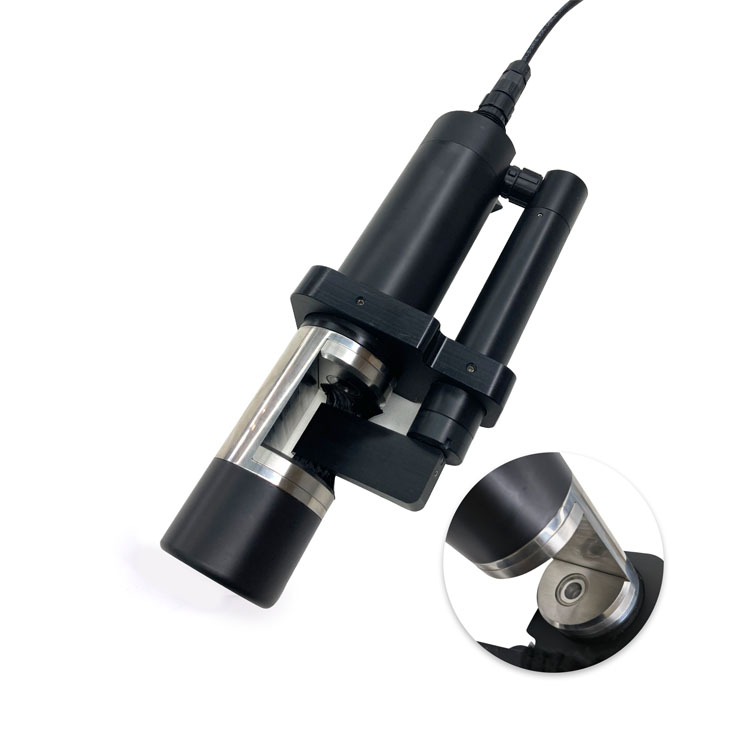
A water quality sensor is the core “perception organ” of a water quality monitoring system. It is a device that converts the content of specific chemical components, physical properties, or biological indicators in water into measurable electrical signals (usually digital signals such as RS-485). Through these signals, we can grasp the real-time status of various parameters in the water body online.
As you may know, excessively high pH in drinking water affects human digestion and disinfection capabilities, while excessive minerals (such as heavy metals) can damage organs. Therefore, water quality testing is directly related to public health. Sensors play an irreplaceable role in this process:
Real-time and continuous monitoring: Traditional laboratory testing is time-consuming and costly. Online sensors provide uninterrupted real-time data, enabling timely detection and response to sudden pollution.
Data digitization and visualization: Sensors convert complex chemical and physical changes into standardized digital signals, easily integrated into IoT cloud platforms for remote monitoring and precise management.
Early warning and decision-making: Real-time data forms the foundation of water quality early warning systems, providing scientific evidence for precise decision-making by water environment governance and management authorities.
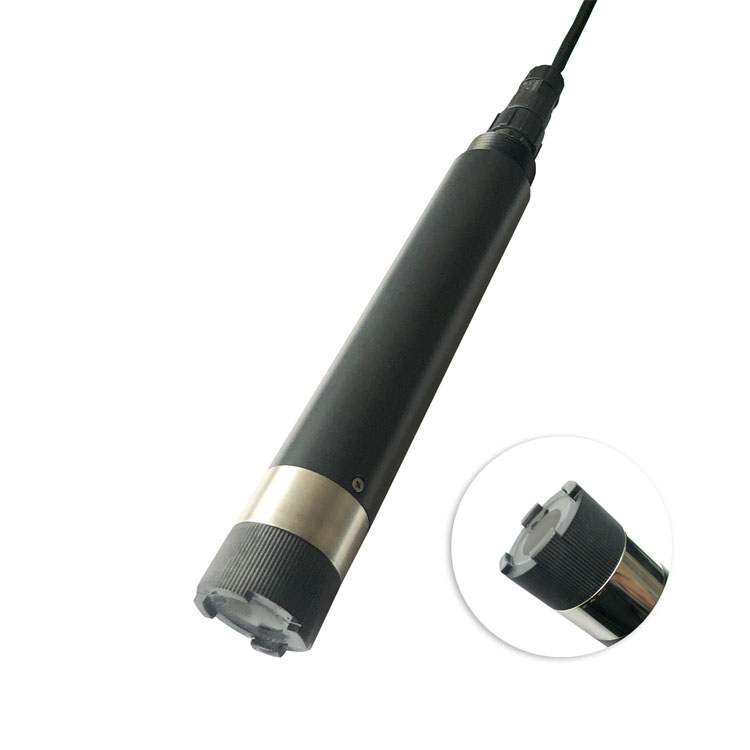
Water quality monitoring requires selecting different key parameters and corresponding sensor technologies based on the target water body (e.g., drinking water, wastewater, aquaculture water).
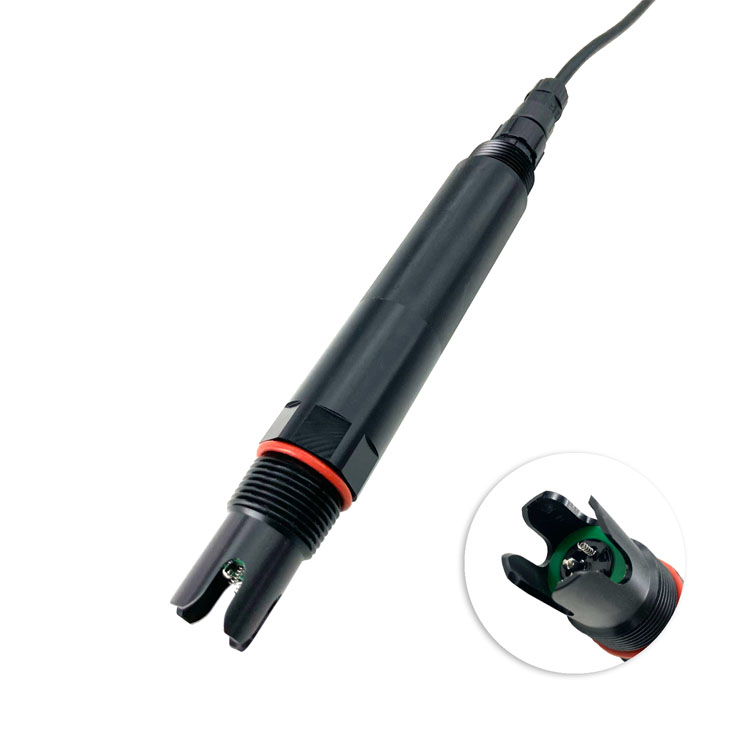
1. pH Value (Hydrogen Ion Concentration)
Monitoring Significance: pH measures the acidity or alkalinity of water, affecting aquatic organism survival and chemical reaction processes. Drinking water standards strictly limit its range.
Sensor Recommendation: NBL-PHG-106 Water Quality pH Sensor
Measurement Principle: Electrochemical method
Calculates the pH value by measuring the potential difference between a glass electrode and a reference electrode.
Technical Features: Equipped with automatic temperature compensation (Pt1000) to ensure accuracy under varying water temperatures. Uses corrosion-resistant materials like POM, suitable for continuous wastewater measurement.
2. Dissolved Oxygen (DO)
Monitoring Significance: DO is critical for aquatic life survival and an important indicator of water self-purification capacity. Low DO is one of the signs of water pollution (e.g., eutrophication).
Sensor Recommendation: NBL-RDO-206 Dissolved Oxygen Sensor
Measurement Principle: Fluorescence Quenching Method
The sensor emits blue light to excite fluorescent substances on the sensing membrane, which then emit red light. Oxygen molecules in water “quench” (weaken or shorten the lifetime of) the red light signal. DO concentration is precisely calculated by measuring changes in the red light signal.
Technical Features: Compared with traditional polarographic methods, fluorescence technology requires no electrolyte, minimal maintenance, fast response, and stable performance.
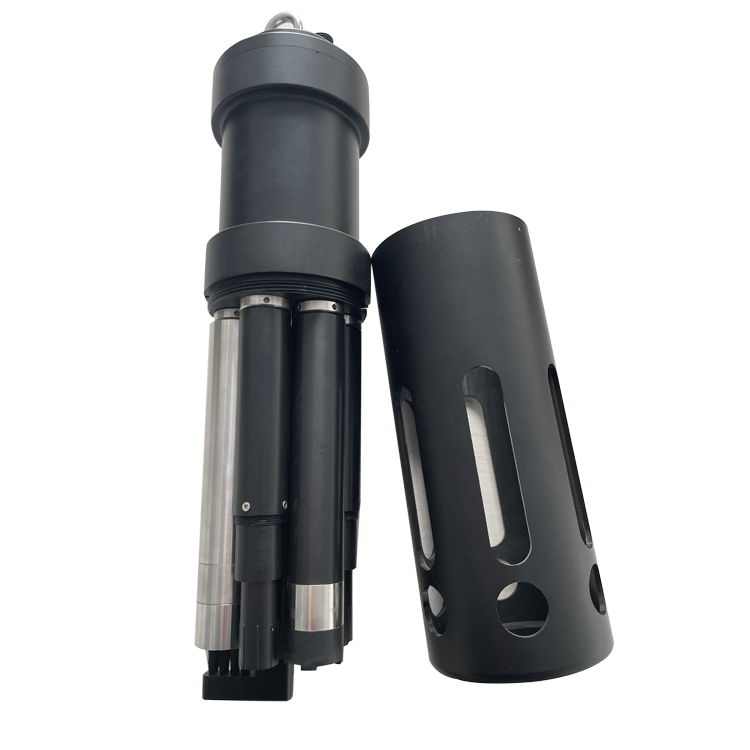
3. Ammonia Nitrogen (NH₄-N)
Monitoring Significance: Ammonia nitrogen is a major nitrogen nutrient in water bodies. Excessive levels indicate pollution and are toxic to fish and other aquatic organisms.
Sensor Recommendation: NBL-NHN-106 Water Quality Ammonia Nitrogen Sensor
Measurement Principle: Ammonium Ion-Selective Electrode (ISE) Method
Uses a PVC membrane-based ammonium ion electrode inside the sensor to selectively measure the activity of ammonium ions in water, thereby determining ammonia nitrogen content.
Technical Features: Specially designed with slow reference solution leakage, electrode lifespan exceeds 20 months, longer maintenance intervals, and excellent stability.
4. Conductivity / Salinity / TDS
Monitoring Significance: Conductivity reflects total dissolved solids (TDS) and salinity content, quickly indicating the total amount of minerals and inorganic ions in water.
Sensor Recommendation: NBL-DDM-106 Water Salinity & Conductivity Sensor
Measurement Principle: Electrode method (anti-polarization technology)
Calculates water conductivity by measuring current changes between electrodes.
Technical Features: Uses anti-polarization technology and internal signal isolation for stable measurement in complex environments. Ultra-low power consumption of 0.2 W, ideal for solar or battery-powered field monitoring stations.
NiuBoL sensors offer highly integrated system advantages:
Standardized data output: All sensors use RS-485 (Modbus/RTU) standard signal output, easily connected to various IoT cloud platforms.
High protection level: IP68 rating enables long-term submersion and strong environmental adaptability.
Low-maintenance design: Strategic use of fluorescence DO and long-life ISE electrodes significantly reduces on-site maintenance frequency and cost.
Using these high-precision sensors, NiuBoL water quality monitoring systems cover multiple core environmental and production fields:
1. Urban and Industrial Wastewater Treatment
At sewage treatment plant inlets/outlets and industrial enterprise discharge points, sensors monitor pH, COD, BOD, ammonia nitrogen, etc. in real time. This ensures compliant discharge and optimizes treatment processes based on influent variations, improving operational efficiency.
2. Water Source and Drinking Water Safety
At key nodes such as rivers, lakes, drinking water sources, and municipal water supply networks, the system monitors pH, conductivity, turbidity, residual chlorine, etc. in real time. Any abnormality triggers immediate alerts, safeguarding urban water supply safety.
3. Smart Agriculture and Aquaculture
Aquaculture has extremely high water quality requirements. Dissolved oxygen, ammonia nitrogen, salinity, and pH are key to success. The sensor system monitors water conditions in real time, guiding precise oxygenation and water adjustment, significantly improving quality and yield.
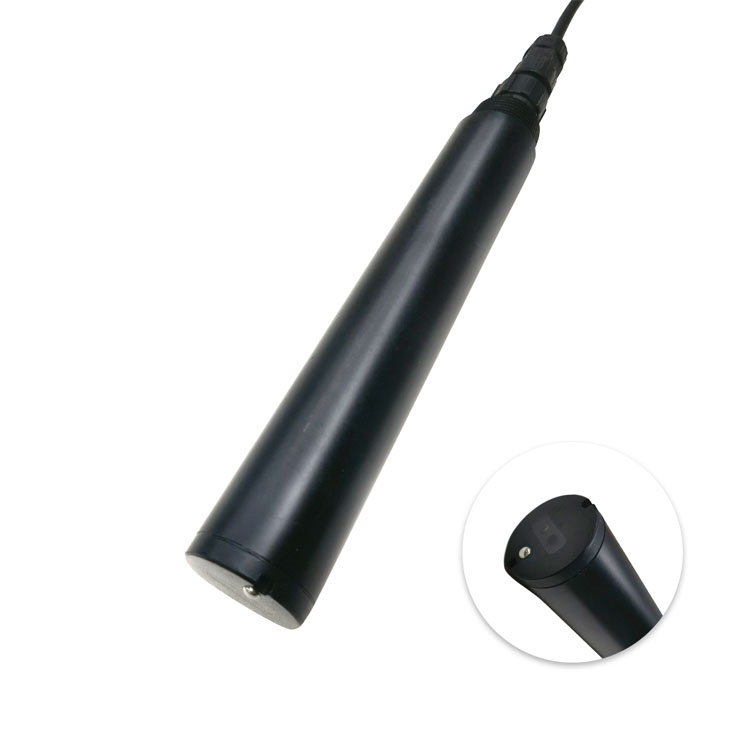
The following are answers to frequently asked questions about water quality sensor selection and use, helping you better understand and apply NiuBoL solutions.
| Q:Common Questions | A:NiuBoL Answers and Recommendations |
|---|---|
| 1.How to determine the maintenance cycle for a pH sensor? | The maintenance cycle depends on water cleanliness. Dirtier water requires more frequent maintenance. NiuBoL recommends: Clean the electrode monthly and calibrate every three months to ensure data accuracy. |
| 2.What are the advantages of fluorescence DO sensors over traditional electrochemical methods? | Fluorescence method (e.g., NBL-RDO-206) requires no electrolyte or oxygen-permeable membrane replacement, no oxygen consumption, fast response, and essentially maintenance-free or low-maintenance. Recommended priority for aquaculture, surface water monitoring, and other long-term online applications. |
| 3.What are the advantages of the ISE ammonia nitrogen sensor (NBL-NHN-106)? | Its main advantage is the long-life design with slow reference solution leakage — electrode lifespan exceeds 20 months, greatly reducing replacement frequency. Suitable for long-term continuous monitoring in sewage and environmental water stations. |
| 4.What is the difference between conductivity and TDS? | Conductivity is a physical measure of water’s ability to conduct electricity. TDS (Total Dissolved Solids) is the mass concentration of dissolved solids. The two are converted via a coefficient, and conductivity sensors typically output both parameters. NBL-DDM-106 provides multiple ranges for conductivity and TDS data. |
| 5.How do water quality sensors achieve remote control? | Sensors transmit data via RS-485 Modbus/RTU protocol to a data acquisition terminal (DTU), which then uploads data to an IoT cloud platform via 4G/5G/LoRa, enabling remote monitoring and control. NiuBoL provides complete solutions ensuring seamless data integration. |
| 6.What is the role of “automatic temperature compensation” on sensors? | Many water quality parameters (e.g., pH, DO, conductivity) vary with temperature. Automatic temperature compensation uses a built-in temperature sensor (e.g., Pt1000) to automatically correct readings, ensuring accuracy across different water temperatures. All core NiuBoL sensors feature this function. |
| 7.How to install sensors in water with high suspended solids? | Use submersible installation with self-cleaning accessories (e.g., brushes or high-pressure cleaning) to regularly remove dirt and biofilms from the sensor surface to prevent drift. Installation should avoid turbulent flow or areas prone to sludge accumulation. |
| 8.How to achieve online monitoring of complex indicators like COD/BOD? | COD and BOD cannot be measured directly with simple submersible electrodes. Online analyzers (usually based on digestion-colorimetric methods) are required. NiuBoL systems can integrate online COD/BOD analyzers and manage all data on a unified platform. |
| 9.What does IP68 protection rating mean? | IP68 is one of the highest protection ratings, meaning the device is completely dust-proof and can be continuously submerged under specified pressure without damage. NiuBoL’s high protection rating ensures long-term stable operation in various complex water environments. |
| 10.Why is the NBL-DDM-106 conductivity sensor so low-power? | It uses optimized electronic circuits and anti-polarization technology to significantly reduce power demand during operation. The 0.2 W ultra-low power design is especially suitable for remote field stations powered by solar or batteries. |

The core competitiveness of a water quality monitoring system lies in the performance, accuracy, and reliability of its sensors.
NiuBoL leverages its deep expertise in environmental monitoring to offer a series of high-standard professional sensors: from electrochemical pH electrodes to fluorescence-based dissolved oxygen sensors and long-life ISE ammonia nitrogen sensors. With high precision, low maintenance, and easy integration, these sensors provide reliable real-time data support for river and lake water, drinking water, domestic sewage, industrial wastewater, and aquaculture.
As global environmental governance continues to advance, demand for online water quality monitoring will remain strong. Choosing a manufacturer like NiuBoL — with core sensor technology and complete IoT solutions — is key to building an efficient and intelligent water quality monitoring system.
Prev:NiuBoL Water Quality Analyzer – The Cutting-Edge Choice for Smart Water Monitoring
Next:Smart Water Conservancy: Building a Digital Water Management System
Related recommendations
Sensors & Weather Stations Catalog
 Agriculture Sensors and Weather Stations Catalog-NiuBoL.pdf
Weather Stations Catalog-NiuBoL.pdf
Agriculture Sensors Catalog-NiuBoL.pdf
Water Quality Sensor Catalog-NiuBoL.pdf
Related products
 Combined air temperature and relative humidity sensor
 TDR Soil Moisture & Temperature Sensor for irrigation| RS485 |4-20mA| NBL-S-THR
 Soil pH sensor RS485 soil Testing instrument soil ph meter for agriculture |NBL-S-PH
 Wind Speed sensor Output Modbus/RS485/Analog/0-5V/4-20mA
 Tipping bucket rain gauge for weather monitoring auto rainfall sensor RS485/Outdoor/stainless steel
 Pyranometer Solar Radiation Sensor 4-20mA/RS485

Screenshot, WhatsApp to identify the QR code
WhatsApp number:+8615367865107
(Click on WhatsApp to copy and add friends)

