





— Blogs —
—Products—
 Consumer hotline +8618073152920
WhatsApp:+8615367865107
Address:Room 102, District D, Houhu Industrial Park, Yuelu District, Changsha City, Hunan Province, China
Product knowledge
Time:2026-01-22 09:49:11 Popularity:932
An online water quality monitoring system needs a defined channel specification before the sensors, logger and platform can be accepted as one working installation. A list containing pH, dissolved oxygen, conductivity and ammonia is not enough: each value needs a measurement basis, range, sample location and comparison method. For a NiuBoL project, these decisions determine which probes belong in the water, which need a sample flow cell and which platform functions must be specified separately.
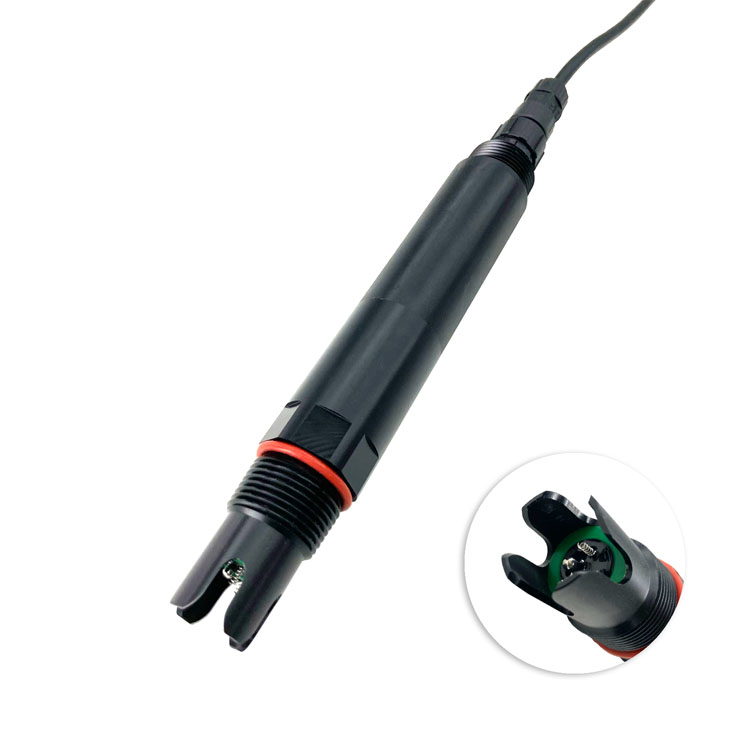
Start with the decision the measurement supports. Dissolved oxygen in a fish pond, residual chlorine in a distribution sample and conductivity in an industrial process answer different questions. They should not be combined into a universal standard sensor package simply because all can connect to a monitoring host.
For each proposed channel, identify the location and the action taken from a valid result. A source-water station may track changing conditions and trigger investigation; it does not establish drinking-water safety from a few continuously measured parameters. A wastewater trend can assist process operation without replacing every required laboratory determination.
| Channel specification item | What to record |
|---|---|
| Quantity and basis | pH, oxygen concentration, conductivity, ammonium-related result or another explicitly defined measurement. |
| Location | Water depth or sample take-off, flow path and the process point represented. |
| Operating range | Expected normal values, excursions and the required resolution and uncertainty. |
| Comparison | Reference method, sampling timing and acceptance conditions. |
| Validity | How cleaning, calibration, missing sample or communication loss is identified. |
Keep direct measurements separate from calculated or method-dependent results. Conductivity does not identify an individual contaminant. An ammonium electrode does not directly determine free NH3 toxicity. An optical COD estimate does not automatically equal a laboratory COD result for every water composition.
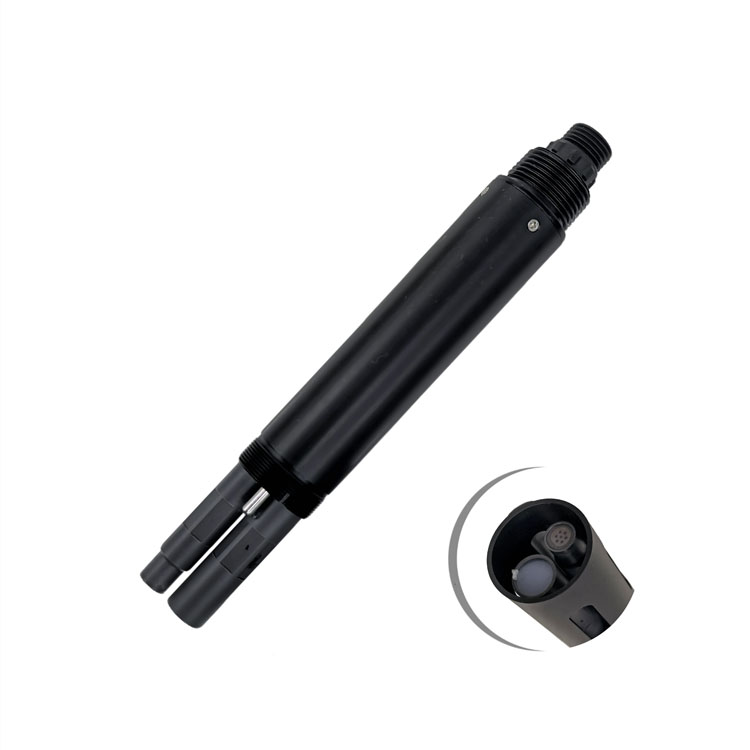
A multi-parameter assembly can simplify mounting and acquisition, but its installed channels must be named in the order. An enclosure that can accommodate several measurements is not proof that every optional sensor has been supplied. Cleaning access and replaceable parts also remain part of the installation.
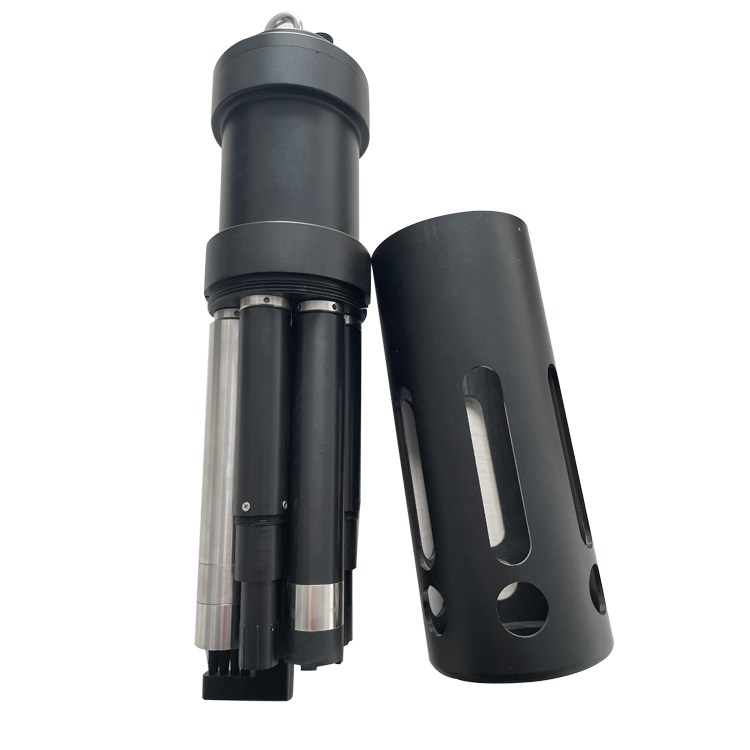
The NiuBoL NBL-WQ-MPS-5A integrated self-cleaning configuration provides RS485 Modbus RTU. Its available measurements include pH, dissolved oxygen, conductivity/salinity, turbidity, COD, ORP and ammonia-related channels, depending on configuration. The following examples describe selected channel specifications, not a promise that every project receives the same set.
| MPS-5A item | Configuration example |
|---|---|
| pH | 0–14 pH; accuracy ±0.1 pH; resolution 0.01 pH. |
| Dissolved oxygen | 0–20 mg/L; accuracy ±0.4 mg/L; resolution 0.01 mg/L. |
| Conductivity | 0–5000 µS/cm or 0–200 mS/cm configuration; accuracy ±1.5%FS. |
| Temperature | 0–50°C measuring range; accuracy ±0.5°C. |
| Output and cleaning | RS485 Modbus RTU; automatic cleaning assembly. |
| Supply and consumption | 12 V DC ±5%; specified power 5 W at 12 V. |
| Cable | 5 m standard; other lengths require confirmation. |
Do not substitute the power or accuracy of an individual probe for the complete assembly. Likewise, a self-cleaning integrated unit does not establish that every separate sensor in the station has a brush. Confirm the wetted materials, operating limits and cleaning coverage for each delivered component.
Assign each value to a specific process point, not merely a parameter name. Two pH probes at different depths or process stages are different channels. Record whether temperature compensation or another correction is performed inside the probe or in the receiver.
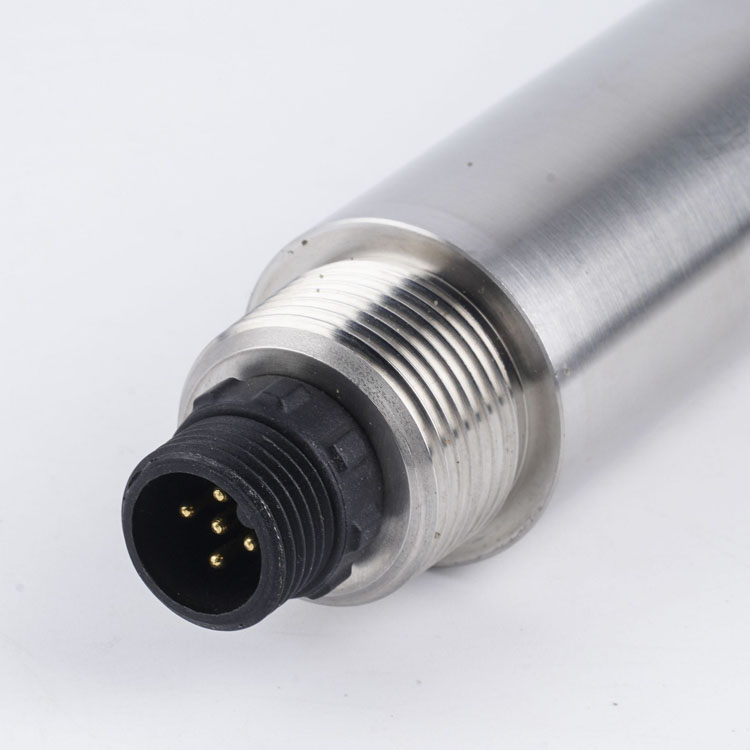
Verify units through the logger and exported record. For example, 5 mS/cm equals 5000 µS/cm; a missed conversion can create a thousand-fold difference without a communication error. A range change can also change how accuracy should be interpreted in the intended operating band.
RS485 Modbus RTU provides a local acquisition interface, not a complete cloud service. The host and gateway must implement the required storage, export and remote connection. Define those functions in the project scope rather than assuming 4G, Ethernet, every alarm channel and automatic backfill are included with the probe.
A turbidity sensor responds to optical scattering. Bubbles, fouling and particle characteristics can affect its result. Select the range for the actual task and compare with a suitable method; a high-range wastewater probe should not be assumed adequate for a small change at a low-turbidity treatment point.
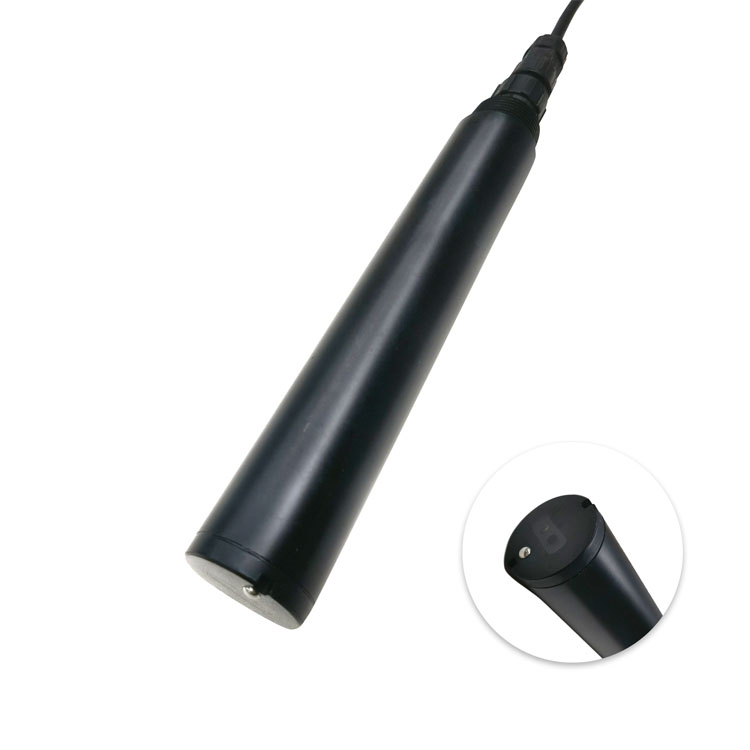
An optical dissolved oxygen probe requires a clean, representative sensing surface and appropriate compensation settings. Check bubbles on the cap, immersion conditions and differences between the online point and reference observation. A matching number after calibration does not prove that the original field position was representative.
The standalone NBL-WQ-DO configuration has a 0–20 mg/L range and ±2%FS accuracy, which corresponds to 0.4 mg/L of its full scale. That allowance should be considered against the oxygen change the process needs to resolve. It is not ±2% of each displayed reading.
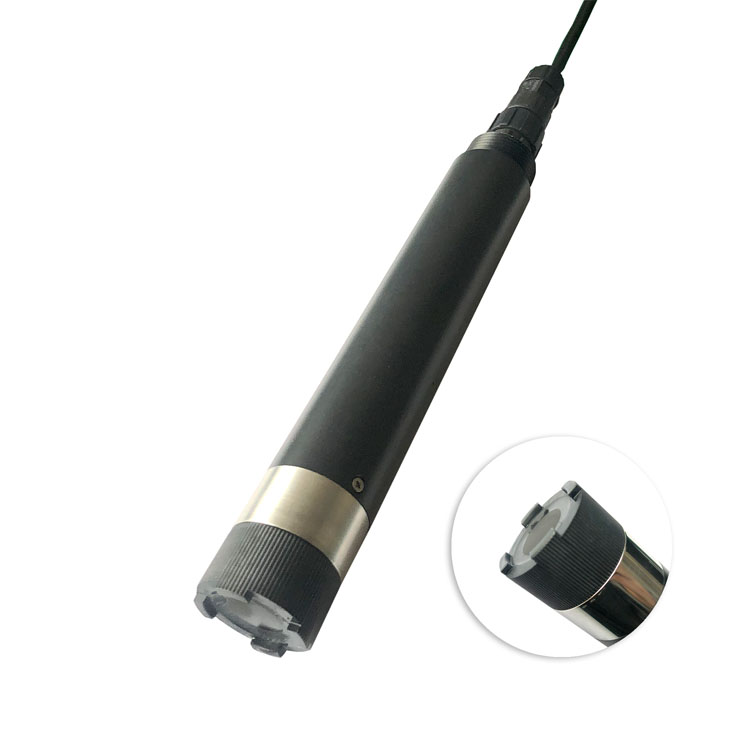
The NBL-WQ-NHN uses an ammonium ion-selective electrode. Specify the reporting basis, selected range and relevant sample conditions before comparing it with a laboratory ammonia result. Temperature, pH and interfering ions can matter; an apparently specific channel name does not remove those conditions.
The NBL-WQ-CL uses a constant-voltage method and its matching flow cell. Its specified sample flow is 30–60 L/h, pressure below 0.1 MPa and operating temperature 5–50°C. Do not install that channel as though every water-quality sensor were a direct-immersion probe. Its HClO measurement basis also needs to match the intended reference comparison.
The NBL-WQ-COD uses dual-wavelength UV absorption with a reference channel for turbidity compensation. Validate its COD-equivalent result against paired samples from the intended water. Changes in composition can alter the relationship even when the optical window is clean.
Begin with inspection and reference checks appropriate to the site. Compare the reading before and after cleaning and record any calibration adjustment separately. This helps distinguish fouling, changed sample conditions and instrument drift instead of combining all three into one unexplained correction.
A brush does not remove the need to inspect the optical face, electrode condition, connector or protective cage. Nor does a reagent-free probe imply that a station needs no consumables. Keep cleaning-cycle events and maintenance periods identifiable in the data.
For solar supply, include the integrated assembly, separate probes, cleaning loads, logger and communication equipment. Size the system for the required operating schedule and local solar conditions; a low-power standalone sensor does not establish whole-station endurance.
No universal set fits every duty. Define the process questions and selected channels, including their ranges and sample arrangements. Confirm the delivered configuration instead of assuming all options are installed.
No. It applies to the defined cleaning assembly and the surfaces it reaches. Separate probes may need different cleaning and service methods. Check the actual coverage and replaceable parts.
No. Installation depends on the model. The residual chlorine configuration described here needs its matching flow cell and controlled sample flow; other probes use immersion arrangements within their own limits.
No. Verify channel identity, units, range, numeric interpretation and validity states. Compare the measurement with an appropriate reference under representative conditions as well as checking communication.
No. Online channels provide defined measurements or estimates. Their analytical coverage and comparison basis must match the project. Some constituents and compliance determinations still require the specified reference method.
Provide the measurement points, required quantities and ranges, water composition, sample access, power and receiver requirements. Add reference methods and required storage, export and alarm functions so those items can be quoted and tested explicitly.

An online water quality monitoring system should be specified channel by channel and accepted as an installed measurement chain. The NiuBoL configuration must match the water, sample arrangement and decisions it supports. Clear quantities, model limits and service records are more useful than a long list of assumed sensor or platform functions.
 NBL-RDO-206 Online Fluorescence Dissolved Oxygen Sensor.pdf
NBL-COD-208 Online COD Water Quality Sensor.pdf
NBL-CL-206 Water Quality Sensor Online Residual Chlorine Sensor.pdf
Prev:Online COD Sensor Working Principle and Applications
Next:Rainfall and Water Level Monitor: River Site Design and Data Checks
Related recommendations
Sensors & Weather Stations Catalog
Agriculture Sensors and Weather Stations Catalog-NiuBoL.pdf
Weather Stations Catalog-NiuBoL.pdf
Agriculture Sensors Catalog-NiuBoL.pdf
Water Quality Sensor Catalog-NiuBoL.pdf
Related products
 Combined air temperature and relative humidity sensor
 TDR Soil Moisture & Temperature Sensor for irrigation| RS485 |4-20mA| NBL-S-THR
 Soil pH sensor RS485 soil Testing instrument soil ph meter for agriculture |NBL-S-PH
 Wind Speed sensor Output Modbus/RS485/Analog/0-5V/4-20mA
 Tipping bucket rain gauge for weather monitoring auto rainfall sensor RS485/Outdoor/stainless steel
 Pyranometer Solar Radiation Sensor 4-20mA/RS485


Screenshot, WhatsApp to identify the QR code
WhatsApp number:+8615367865107
(Click on WhatsApp to copy and add friends)

