





— Blogs —
—Products—
 Consumer hotline +8618073152920
 WhatsApp:+8615367865107
Address:Room 102, District D, Houhu Industrial Park, Yuelu District, Changsha City, Hunan Province, China
Product knowledge
Time:2025-12-22 14:43:57 Popularity:758
In modern environmental science, water pollution prevention has become a top priority in social development. Chemical Oxygen Demand (COD), as a core indicator measuring the degree of organic pollution in water bodies, directly relates to the balance of aquatic ecosystems and drinking water safety. Traditional monitoring methods often rely on laboratory chemical titration, which is not only cumbersome and time-consuming but also difficult to achieve real-time warnings.
With the deep integration of sensing technology and the Internet of Things (IoT), the digital COD sensor launched by NiuBoL Technology is leading a technological revolution. Through advanced optical measurement methods, it achieves reagent-free, pollution-free, real-time online water quality monitoring, providing strong technical support for smart water affairs, industrial wastewater treatment, and natural ecological monitoring.
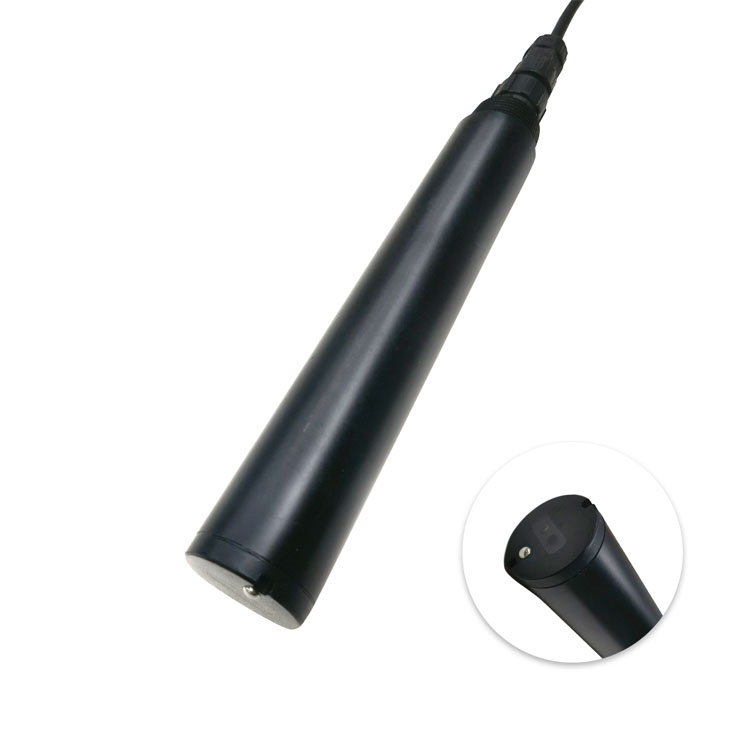
Chemical Oxygen Demand (COD) refers to the amount of oxygen equivalent to the oxidant consumed in oxidizing and decomposing reducing substances (mainly organic matter) in a water sample under strong oxidant action, usually expressed in mg/L.
Scientific Significance of COD Indicator
Higher COD values in water bodies mean higher content of organic pollutants (such as oils, proteins, carbohydrates, industrial organic solvents, etc.). These organic substances consume large amounts of dissolved oxygen during degradation, leading to water quality deterioration, oxygen deprivation death of fish and shrimp, and even eutrophication and black-odor phenomena. Therefore, COD is not only a “physical examination table” for evaluating water pollution degree but also an important basis for environmental protection departments to enforce discharge standards and calculate total pollution.
To obtain accurate COD data, scientists and engineers have developed various detection methods, each with specific application scenarios:
Open Potassium Dichromate Method: Classic laboratory method. Under strong acid and high-temperature digestion conditions, uses potassium dichromate to oxidize organic matter, measured by titration or spectrophotometry. This method has high accuracy but involves strong acids and heavy metal mercury, easily causing secondary pollution if mishandled.
Permanganate Index (CODMn): Commonly used for surface water and drinking water sources, using potassium permanganate as oxidant.
Electrochemical Method: Measures current intensity generated during organic matter oxidation.
High-Temperature Combustion Method: Instantly dries and combusts water sample at high temperature, measures generated carbon dioxide volume, suitable for high-concentration industrial wastewater.
UV Absorption Spectroscopy (UV254): This is the core technical foundation of NiuBoL sensors. Uses physical measurement of organic matter absorption characteristics at specific UV wavelengths. This method requires no reagents, responds extremely fast, and is the preferred solution for current online monitoring.
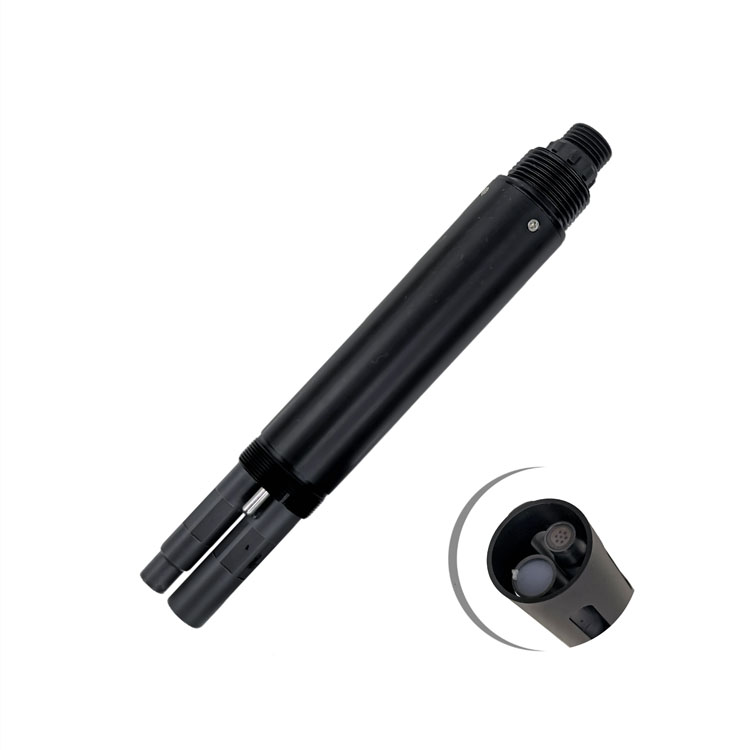
The NiuBoL digital sensor (model: COD-408-S) adopts dual-wavelength UV absorption method (UVAS), fundamentally solving maintenance difficulties of traditional online instruments:
UV Absorption and Organic Matter Monitoring
Many dissolved organic substances in water (especially those with conjugated double bonds or aromatic rings) strongly absorb UV light at 254nm wavelength. Absorption degree follows Lambert-Beer Law with organic matter concentration.
Dual-Wavelength Compensation Mechanism
To address interference factors in complex water bodies, NiuBoL sensor designs two light paths:
Measurement Light Path: Uses 254nm UV light source to measure organic matter absorption.
Reference Light Path: Uses another specific wavelength light to monitor water turbidity.
Intelligent Algorithm: The sensor uses specific algorithms to real-time compensate errors caused by particulate suspended matter, impurity interference, and light path attenuation using reference light path data. This design ensures stable and reliable measurement results even in high-turbidity industrial sewage.
| Parameter Name | Technical Specification / Indicator |
|---|---|
| Product Model | COD-408-S |
| Measurement Principle | Dual-Wavelength UV Absorption Method (Reagent-Free) |
| Measurement Range | Optional 0-200.0 mg/L / 0-500.0 mg/L / 0-1500.0 mg/L |
| Measurement Accuracy | ±5% of Reading (Depending on Range) |
| Temperature Accuracy | ±0.3℃ (Built-in Pt1000 Automatic Temperature Compensation) |
| Response Time | < 30s (Extremely Fast Response) |
| Communication Output | RS-485 (Modbus RTU Protocol), 4-20mA (Optional) |
| Housing Material | 316L Stainless Steel Housing, Excellent Corrosion Resistance |
| Protection Level | IP68 (Supports Long-Term Immersion Installation) |
| Self-Cleaning System | Built-in Cleaning Brush to Prevent Microbial Attachment and Scaling |
| Power Consumption Indicator | 0.4W During Operation, 2W During Cleaning |
Maintenance-Free and Low Cost
Traditional COD online monitors require regular replenishment of expensive chemical reagents and are prone to pipeline blockage. NiuBoL sensor requires no reagents, eliminating reagent costs and secondary waste pollution. The equipped self-cleaning brush significantly extends manual maintenance cycles.
Precise Turbidity Compensation
The sensor has built-in turbidity suppression function, automatically deducting contributions from suspended matter to absorbance, performing excellently even in complex optical environments like sewage treatment plants and river monitoring stations.
Digital Communication and System Integration
Supports standard Modbus RTU protocol, convenient for connection to PLC, DCS, or remote IoT cloud platforms. Its low power consumption design makes it very suitable for operation in remote areas via solar power systems.
Industrial-Grade Reliability
Housing uses 316L stainless steel, maintaining integrity even in mildly corrosive industrial wastewater. IP68 waterproof depth design supports deep water immersion installation.
Sewage Treatment Plants: Monitors inlet and outlet COD concentrations, real-time evaluates treatment efficiency, optimizes process aeration volume.
Water Conservancy and Surface Water Monitoring: Installed in river and lake monitoring stations for real-time monitoring of water environment capacity.
Industrial Wastewater Monitoring: Compliance monitoring at discharge outlets of chemical plants, paper mills, and other enterprises.
Aquaculture: Monitors accumulation of organic matter in aquaculture water bodies to prevent diseases caused by water quality deterioration.
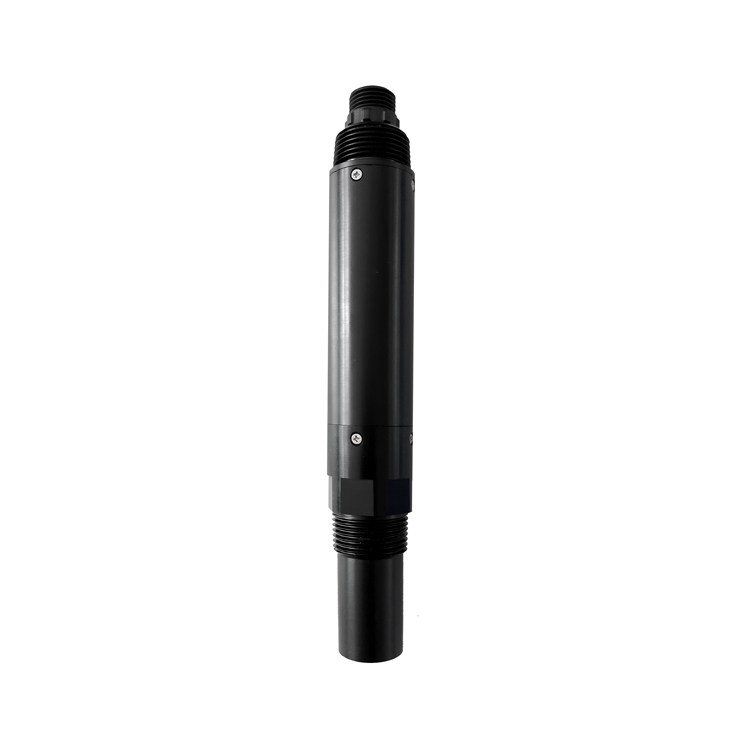
To ensure long-term accuracy of the sensor, follow these maintenance recommendations:
Regular Cleaning
Although equipped with self-cleaning brush, in extremely viscous or fast microbial growth environments, still require regular manual inspection. Use tap water and soft cloth to wipe sensor surface optical windows. Strictly prohibit using strong acids, strong bases, or sharp metals to contact optical components.
Cable Inspection
In immersion installation, ensure cable has margin and is not overly taut to prevent long-term water flow impact causing internal cable breakage.
Factory Maintenance
Recommend contacting NiuBoL manufacturer every 18 months for dynamic seal replacement and deep inspection to ensure long-term effectiveness of IP68 protection level.
Installation Angle Recommendation
In high-flow rivers, sensor sensing surface should face against water flow and maintain certain tilt angle to help reduce debris netting on light path window.
When the sensor real-time monitors COD exceeding standards, usually adopt the following treatment measures:
Physical Method: Uses grids interception, sedimentation, air flotation, and other processes to remove suspended organic matter.
Biological Method (Mainstream): Uses aerobic or anaerobic microorganisms to decompose organic matter. Increases dissolved oxygen through aeration to enhance microbial activity.
Chemical Oxidation: Adds ozone, Fenton reagents, or sodium hypochlorite to forcibly oxidize and decompose refractory organic matter.
Ecological Restoration: Constructs artificial wetlands, using adsorption and degradation by aquatic plants and benthic microorganisms to purify water quality.
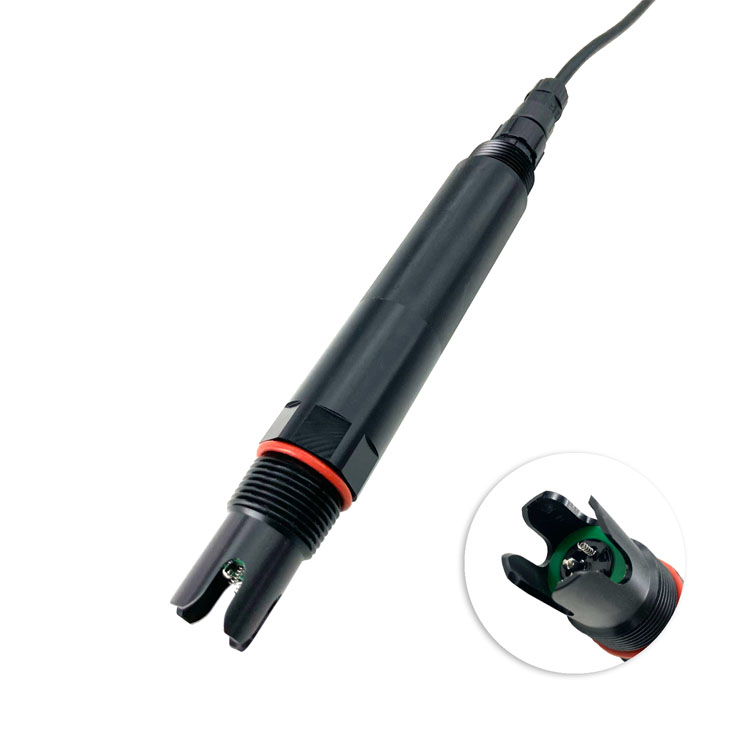
Q1: Are results from UV absorption COD sensor consistent with potassium dichromate method?
A: UV method measures absorbance of dissolved organic matter, converted to COD value through correlation coefficient. In most water bodies with relatively stable components, the two have good correlation. But in industrial wastewater with dramatically changing complex components, on-site sampling comparison and algorithm coefficient adjustment may be needed.
Q2: How often does the self-cleaning brush operate?
A: Users can set cleaning frequency through control commands. In conventional rivers, recommend once per hour; in polluted environments, increase frequency.
Q3: Does the sensor have water temperature requirements?
A: NiuBoL sensor has automatic temperature compensation (Pt1000), operating normally in 0-45℃ environments. If water temperature exceeds this range, consult manufacturer for customization.
Q4: Why does the sensor measure 254nm UV light?
A: Because 254nm is the peak energy absorption period for many organic pollutants with aromatic compounds and double bonds, representing the overall situation of most organic pollutants in water bodies.
Q5: Is there a limit to installation depth?
A: Sensor protection level is IP68, operable at 10-20 meters water depth, but note long-term impact of water pressure on sealing; recommend working pressure ≤ 0.2MPa.
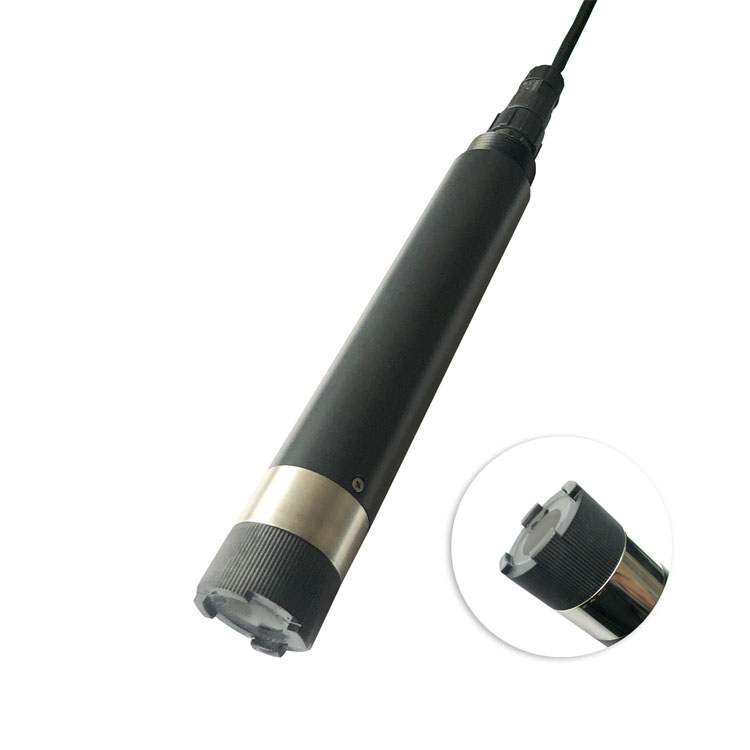
The digital COD sensor developed by NiuBoL Technology, through its excellent optical design and digital processing capabilities, transforms originally complex chemical analysis into simple, fast, and green physical perception. It not only lowers monitoring thresholds but also becomes an irreplaceable link in smart environmental protection systems due to zero reagent consumption and remote linkage characteristics.
In the future, with increasingly refined water environment management, NiuBoL will continue to deepen sensor technology, assisting global water resource precise protection and scientific governance.
Monitoring Indicators: Chemical Oxygen Demand (COD) / Turbidity / Temperature
Measurement Principle: UVAS (Dual-Wavelength Ultraviolet Absorption)
Communication Protocol: Modbus RTU / RS-485
Measurement Units: mg/L (COD) / NTU (Turbidity) / ℃ (Temperature)
Accuracy Specification: ±5% F.S.
Protection Level: IP68
Power Consumption: 0.4W - 2W
 NBL-RDO-206 Online Fluorescence Dissolved Oxygen Sensor.pdf
NBL-COD-208 Online COD Water Quality Sensor.pdf
NBL-CL-206 Water Quality Sensor Online Residual Chlorine Sensor.pdf
Related recommendations
Sensors & Weather Stations Catalog
Agriculture Sensors and Weather Stations Catalog-NiuBoL.pdf
Weather Stations Catalog-NiuBoL.pdf
Agriculture Sensors Catalog-NiuBoL.pdf
Water Quality Sensor Catalog-NiuBoL.pdf
Related products
 Combined air temperature and relative humidity sensor
 TDR Soil Moisture & Temperature Sensor for irrigation| RS485 |4-20mA| NBL-S-THR
 Soil pH sensor RS485 soil Testing instrument soil ph meter for agriculture |NBL-S-PH
 Wind Speed sensor Output Modbus/RS485/Analog/0-5V/4-20mA
 Tipping bucket rain gauge for weather monitoring auto rainfall sensor RS485/Outdoor/stainless steel
 Pyranometer Solar Radiation Sensor 4-20mA/RS485

Screenshot, WhatsApp to identify the QR code
WhatsApp number:+8615367865107
(Click on WhatsApp to copy and add friends)

