





— Blogs —
—Products—
 Consumer hotline +8618073152920
WhatsApp:+8615367865107
Address:Room 102, District D, Houhu Industrial Park, Yuelu District, Changsha City, Hunan Province, China
Product knowledge
Time:2026-08-17 09:00:00 Popularity:255
Quick Answer: Choose a water quality sonde when several compatible measurements belong at the same location and the site can service a common assembly. Choose separate probes when locations, maintenance intervals or continuity requirements differ. Compare what becomes unavailable during retrieval or repair, not just the number of parameters connected to the logger.
An integrated sonde groups sensing modules in one body with a shared connection and, on selected models, a cleaning mechanism. Separate probes have their own bodies and mounting points. Both arrangements can feed a PLC, RTU or data logger; the mechanical and service differences remain even when the digital interface is similar.
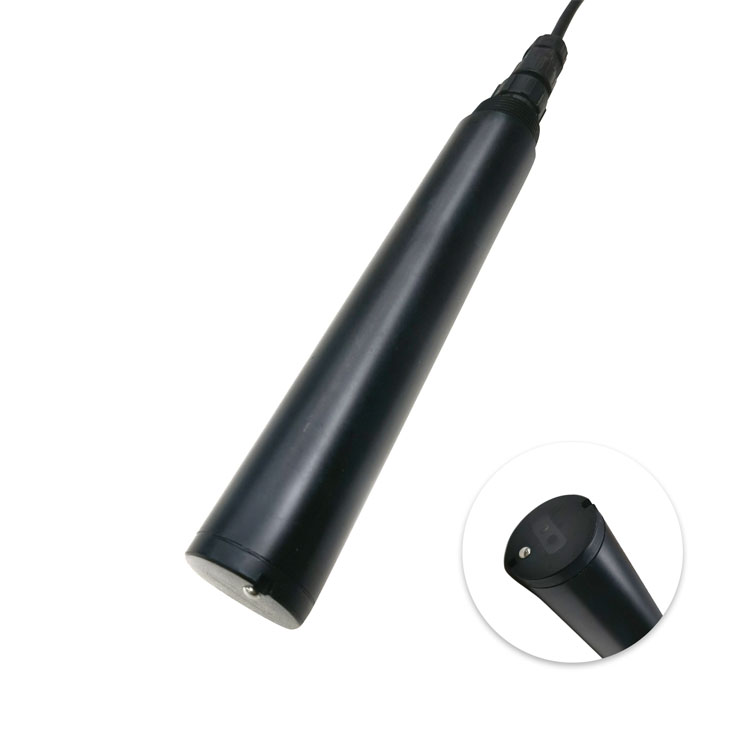
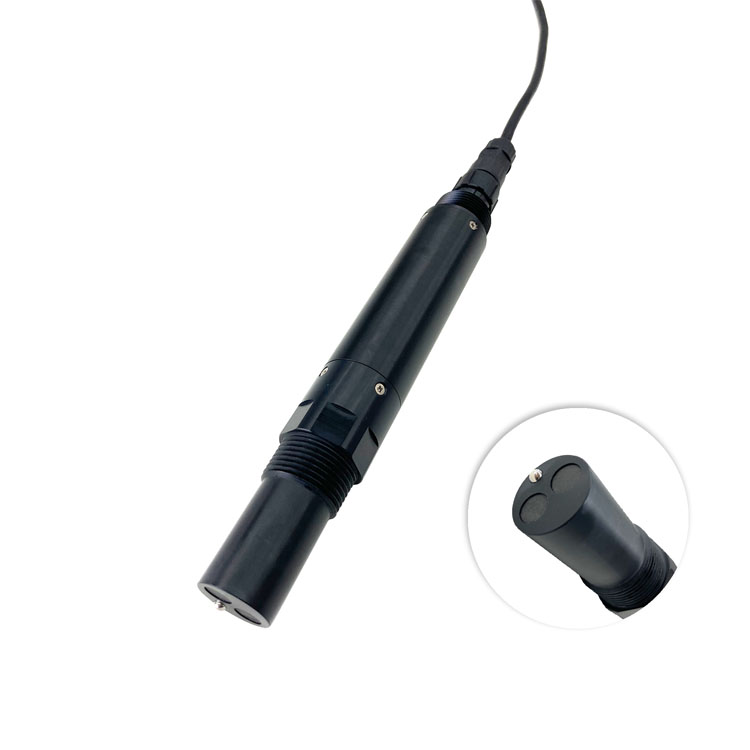
The NiuBoL turbidity probe above illustrates an independently mounted channel. It can be positioned for the required optical clearance and retrieved separately. In a sonde, the equivalent measurement must fit the common body, available module positions and the water surrounding the complete assembly.
Consider an oxygen channel used for overnight aquaculture alarms and a turbidity channel checked during daytime visits. If retrieving the common assembly removes both, the service plan needs a temporary oxygen observation or another approved operating arrangement. An integrated body does not make that interruption disappear.
| Decision | Integrated sonde versus separate probes |
|---|---|
| Measuring location | A common body is useful for co-located observations. Separate probes can serve different depths or treatment stages. |
| Retrieval | A sonde can reduce the number of assemblies handled, but retrieval may interrupt every fitted channel. |
| Routine service | Shared access can simplify a visit; separate probes allow different service schedules where practical. |
| Failure exposure | Review shared cable, power, electronics and cleaning mechanisms. Separate bodies can still depend on common infrastructure. |
| Expansion | A sonde needs a compatible available module position. Separate probes need host capacity and an appropriate field connection. |
The NiuBoL NBL-WQ-MPS-5A supports selectable configurations up to eight parameters including temperature. Its options include DO, COD, pH, ORP, conductivity/salinity, ammonia nitrogen and turbidity. The NBL-WQ-MPS-5B supports up to six including temperature, with DO, pH, ORP, conductivity/salinity and turbidity options.
Those are different configuration families. Do not transfer a COD or ammonia-nitrogen option from one to the other without checking compatibility. Nor should a calculated or related output automatically be counted as a separate installed sensing module. The ordered list should identify each required parameter, range and reporting unit.
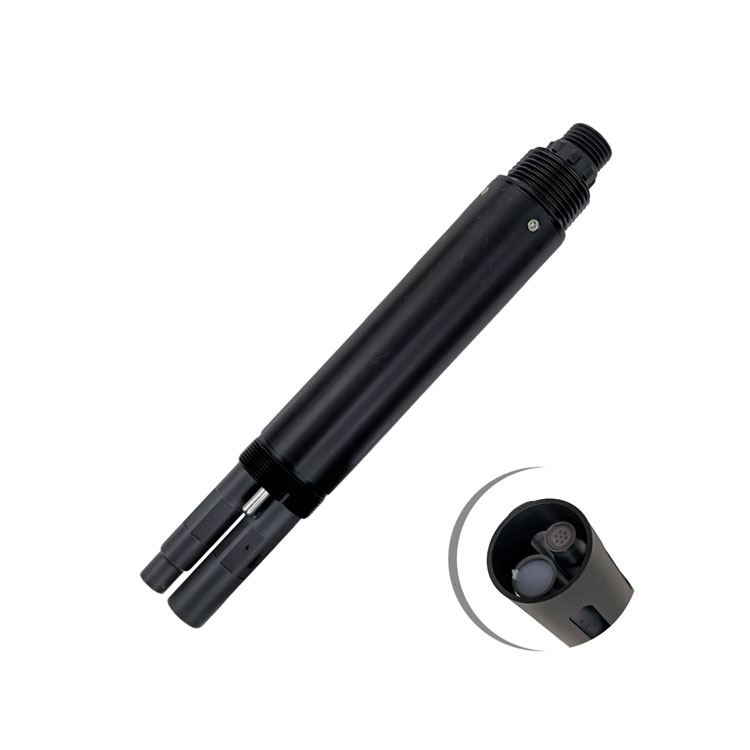
The ammonium-related probe below is useful where that specific measurement is required. A project needing it must establish whether a compatible integrated module is available or whether the channel should remain separate. The word "multiparameter" alone does not answer that question.
| Configuration item | NiuBoL model requirement |
|---|---|
| MPS-5A power | 12 V DC +/-5%; stated consumption 5 W at 12 V |
| MPS-5B power | 12 V DC; stated consumption 2 W at 12 V |
| Host interface | RS485 Modbus RTU; obtain the selected assembly's data map and serial settings |
| MPS-5B working envelope | 0-50 degrees C; pressure at or below 0.2 MPa; IP68; POM and 316L construction |
| MPS-5B pH module | 0-14 pH; 0.01 pH resolution; accuracy +/-0.1 pH |
| MPS-5B temperature channel | 0-50 degrees C; 0.1 degree C resolution; accuracy +/-0.3 degrees C |
| Cable and mounting | MPS-5A standard cable 5 m, configurable length; confirm each assembly's connector and jacket. Use designed supports, not cable tension, to carry the body. |
A 24 V cabinet suitable for some independent water probes is not automatically a suitable direct feed for these 12 V assemblies. Select regulation and protection deliberately. Include cleaning-related loads, the host and any conversion losses in the complete power assessment rather than treating the stated body consumption as the whole station requirement.
For separate devices on a shared RS485 bus, assign unique addresses and use each device's correct register map. For an integrated body, confirm how its fitted channels are exposed to the host. Do not assume that the internal modules retain the addresses or wiring of stand-alone products.
Write down which channels are interrupted when the body is lifted, its connector is disconnected, a module is removed or the common power supply is isolated. Then define what the operator will see during that period. A retained last value needs a visible age or maintenance state; it is not a current observation.
Separate probes reduce the need to retrieve unrelated channels for some tasks, but they are not independent redundancy by default. A failed common supply, damaged bus trunk or unavailable logger can still remove all readings. Where continuity is important, assess the whole path rather than counting sensor bodies.
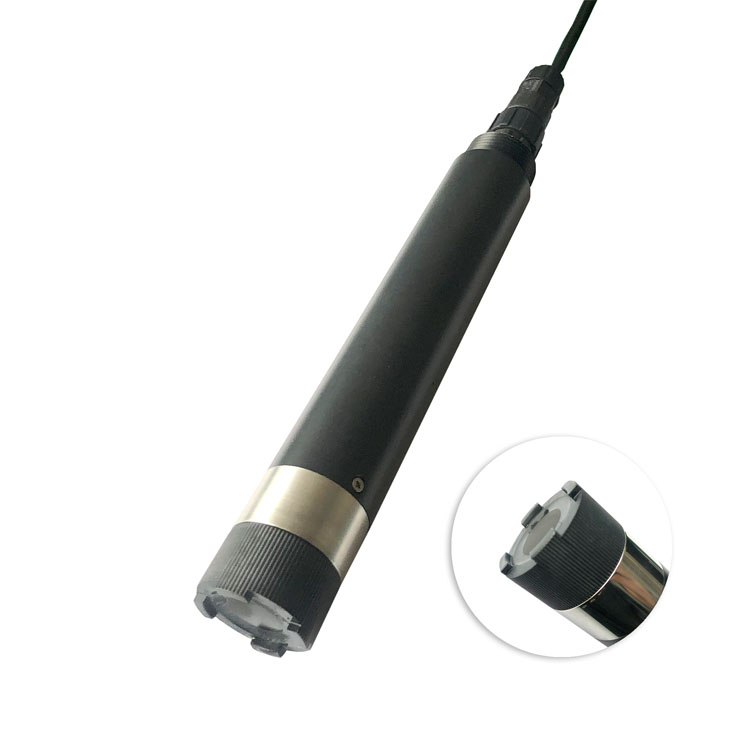
A removable connector is not a hot-swap guarantee. Confirm the permitted isolation, seal inspection, configuration and verification procedure before changing a module. Availability of a replacement module also needs agreement; a mechanically removable part is not necessarily a locally stocked service item.
A common brush can address deposits on the surfaces it reaches, but it does not calibrate pH, establish a COD correlation or prove that every protective opening is clear. Inspect the complete body and the individual sensing areas. Do not extend the service interval solely because cleaning is automatic.
Use channel-appropriate standards and handling. A pH electrode may need a storage arrangement different from an optical window or conductivity cell. Follow the compatible procedure for the fitted module rather than placing the whole assembly in one fluid assumed to suit every measurement.
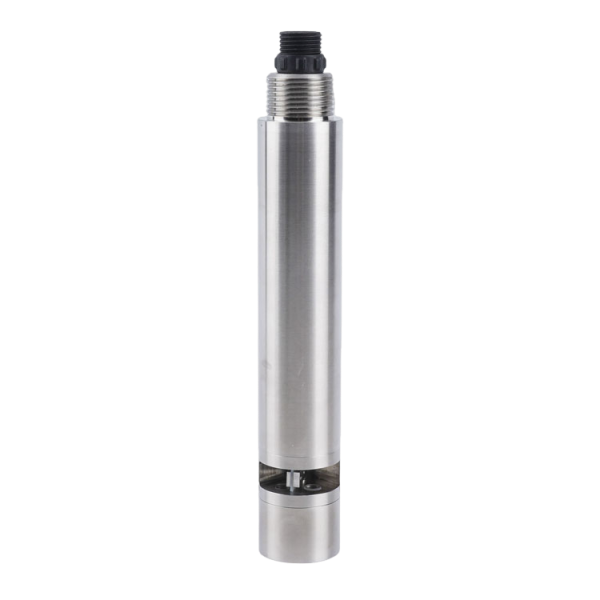
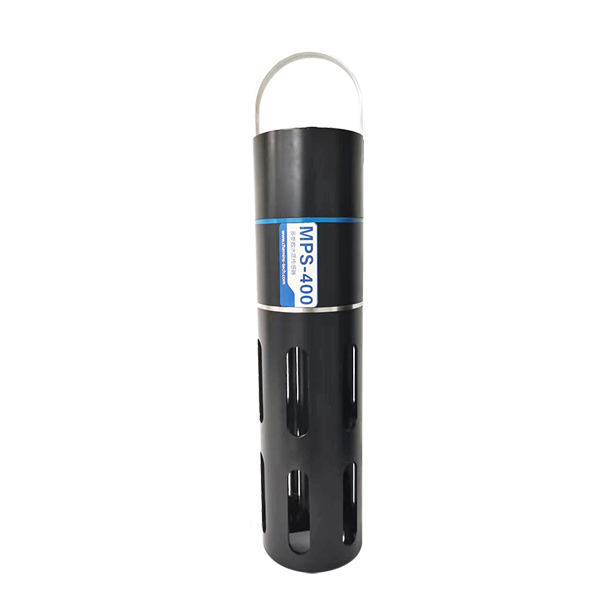
Where an optical COD channel is needed, qualify it against the actual wastewater and the intended reference method. The separate COD probe below illustrates why the range and measurement basis remain important even after the installer has settled the mechanical architecture.
At a reservoir measuring point, co-located temperature, DO and conductivity can favor a common retrievable assembly if one visit services all channels. Where different depths are required, one sonde at one depth cannot provide a profile without an additional measurement arrangement.
At a wastewater plant, pH after mixing, oxygen in a biological stage and final-water turbidity may belong at different locations. Grouping those instruments physically to save wiring would change what they measure. Separate points can be necessary even when one cabinet collects all the signals.
For aquaculture, the priority may be keeping the oxygen observation available while another channel is checked. Evaluate a temporary reference or separately supported channel where needed. The right arrangement follows that continuity requirement rather than an assumption that integration always lowers operating cost.
Compare quotations on fitted modules, supports, required power, service tools and the planned interruption procedure. Include the expected cost of replacing an assembly versus an individual module or probe. A body-only price can conceal different channel counts and service responsibilities.
No. The supplied channels depend on the selected family, compatible modules and order configuration. Confirm the fitted parameter and range list; do not infer COD, ammonia or other channels from the term "multiparameter."
It may simplify handling when all channels need service together. It may also interrupt several measurements for one module's service. Compare the actual retrieval and verification sequence before deciding.
Not on that assumption. These assemblies require their specified 12 V supply arrangement. Provide suitable regulation and verify voltage at the installed body under the required operating conditions.
No. They can still share power, an RS485 segment, a host and a data destination. Independent continuity requires assessment of those common dependencies and the operating response to failure.
Provide the required channels and ranges, whether they belong at the same location, and which must remain available during service. Add the host, supply, retrieval method and expected local spare strategy so integrated and separate arrangements can be compared on the same duty.
Integration is useful when measurement location, compatible modules and service workflow align. Separate probes are useful when those requirements diverge. Choose the architecture that preserves the measurements the site actually needs during operation and maintenance, then match the NiuBoL body, modules and host connection to it.
Prev:Professional Wireless Weather Station: Modular Sensors and Data Links
Next:Solar Irradiance Meter Price: Compare Output and Calibration Scope
Related recommendations
Sensors & Weather Stations Catalog
 Agriculture Sensors and Weather Stations Catalog-NiuBoL.pdf
Weather Stations Catalog-NiuBoL.pdf
Agriculture Sensors Catalog-NiuBoL.pdf
Water Quality Sensor Catalog-NiuBoL.pdf
Related products
 Combined air temperature and relative humidity sensor
 TDR Soil Moisture & Temperature Sensor for irrigation| RS485 |4-20mA| NBL-S-THR
 Soil pH sensor RS485 soil Testing instrument soil ph meter for agriculture |NBL-S-PH
 Wind Speed sensor Output Modbus/RS485/Analog/0-5V/4-20mA
 Tipping bucket rain gauge for weather monitoring auto rainfall sensor RS485/Outdoor/stainless steel
 Pyranometer Solar Radiation Sensor 4-20mA/RS485


Screenshot, WhatsApp to identify the QR code
WhatsApp number:+8615367865107
(Click on WhatsApp to copy and add friends)

